How do funding rates work in crypto: Reading perp carry and crowding risk
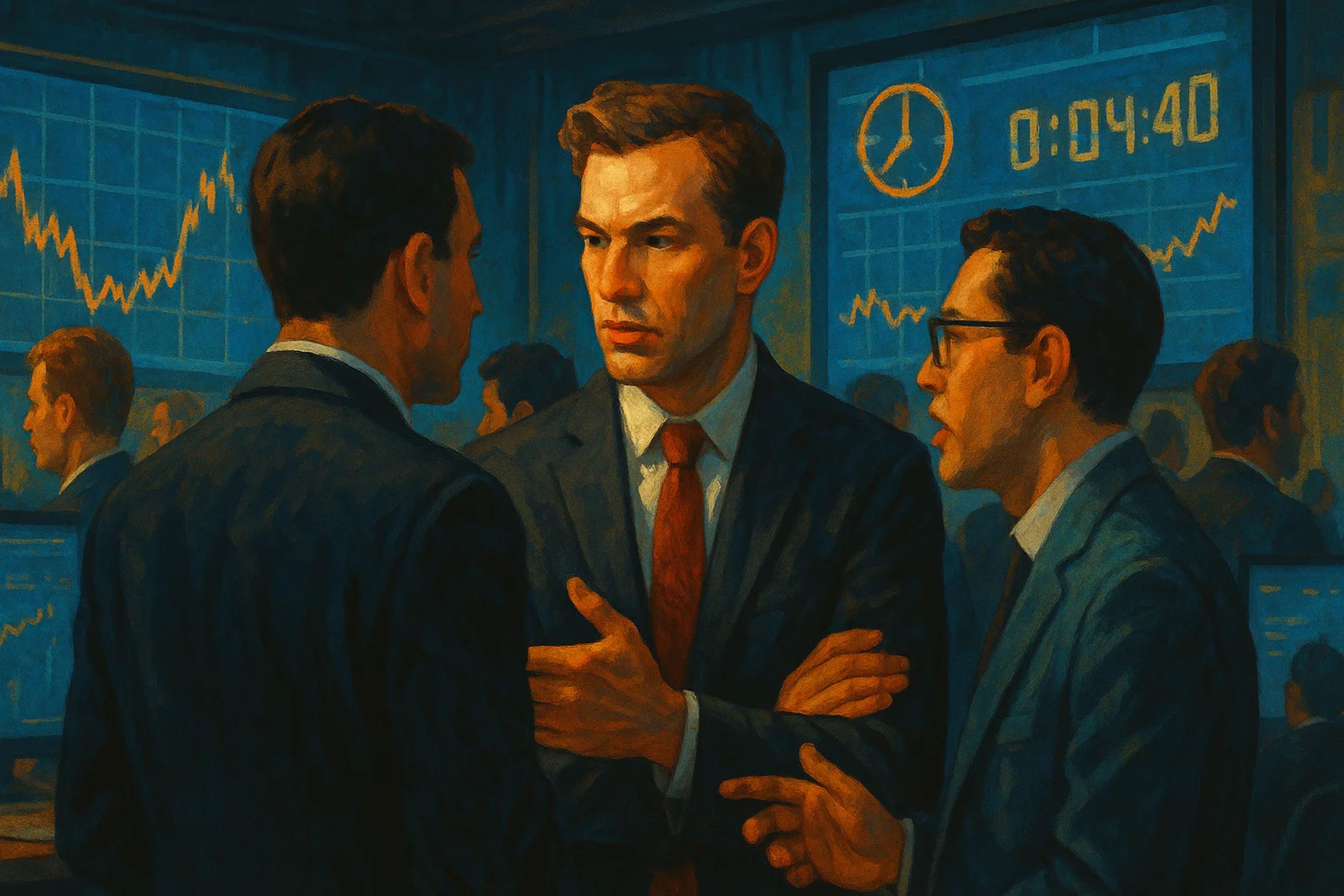
Funding rates are the periodic “carry” paid between traders in perpetual futures to keep the contract trading close to spot. Read them off the exchange screen by checking who pays whom, the countdown to the next timestamp, and whether the mark price is rich or cheap versus the index.
Key Takeaways
- Funding payments are exchanged between longs and shorts in perpetual futures, and the direction flips with whether the perp is trading above or below spot.
- Most venues settle funding on a clock, commonly every eight hours, so the countdown matters because carry hits PnL at the timestamp.
- Exchanges anchor funding to the gap between mark price and a spot index, typically combining an interest-rate component with a premium index.
- Extreme funding is a positioning stress gauge, and one dataset claims spikes often show up 12–24 hours before large liquidation events.
Why perpetual futures need funding
Perpetual futures concentrate liquidity into a single no-expiry contract, which is why they became the dominant crypto derivatives product. The academic literature describes perpetual futures as the most popular crypto derivative, with more than $100 billion traded daily, precisely because traders can hold exposure without rolling expiries. The catch is structural: without an expiry date, there is no calendar moment where the contract must converge to spot.
That missing expiry anchor is the whole reason a crypto funding rate exists. Funding is the mechanism that nudges the perpetual back toward spot by making it costly to sit on the side that is pushing the contract away from spot. When the perp is trading rich versus spot, the market is paying a recurring carry to keep that long exposure on. When it is trading cheap, the carry flips the other way.
This is why “funding is an exchange fee” is the wrong mental model. The exchange is mostly the calculator and settlement layer. The economic transfer is between counterparties, long short, and the transfer is designed to make the perp’s price less willing to drift away from spot for long.
For traders, the useful framing is that funding is a basis crypto signal without an expiry. It is the market’s way of settling the recent perp–spot spread on a schedule, so the cost of leverage and the crowd’s positioning show up as a number that can be monitored like any other risk metric.
Who pays whom and when
The direction is simple and it matters more than the magnitude when reading the screen quickly. When funding is positive, longs pay shorts. When funding is negative, shorts pay longs. That sign is the first thing to check because it tells which side is “paying rent” to keep exposure on.
The second thing to check is the clock. Funding is not charged continuously in the way taker maker trading fees are. It is crystallized at set timestamps. A common cadence is every eight hours, and the academic stylized description is that funding is typically paid every eight hours and roughly matches the average futures-spot spread over the preceding eight hours. On Binance Futures, the interface shows the current funding rate and a countdown to the next payment, and Binance’s own example uses a fixed 0.03% daily interest rate split into three 0.01% fundings.
That countdown is not UI decoration. It is the difference between “carry is theoretical” and “carry just hit the account.” If a position is held through the timestamp, the funding payments transfer occurs on schedule, even if the trader planned to close “soon.”
Funding also interacts with position sizing in a way that surprises newer perp users. The crowd is defined by where the perpetual is trading versus spot, not by any one trader’s leverage setting. A small, unlevered position can still pay meaningful carry if the market is extremely one-sided.
How exchanges set the funding rate
Two reference prices drive what traders experience: the mark price and the index price. The mark price is the exchange’s reference price for the perpetual contract, used for things like PnL and liquidation logic on many venues. The index price is a reference spot price built from underlying spot markets. Funding is tied to the gap between those two anchors so the contract is incentivized back toward spot.
On Binance’s framework, funding has two components: an interest-rate component and a premium index. The interest-rate component reflects a cost-of-capital or borrowing-cost differential between the base asset and the quote currency, and it tends to be small and stable relative to the premium. The premium index is the part that moves with positioning because it reflects whether the perpetual is trading above or below spot.
Exact formulas vary by venue, and that is not a footnote. It changes what “how to read funding rate” actually means on a given screen. Some exchanges clamp funding, some smooth it, and some weight the premium differently. The consistent part across the sources is the intent: the payment is tied to the perp–spot relationship, and it exists to keep the perpetual price aligned with spot.
For a trader, the clean operational read is: funding is the recent average spread, settled on a clock. That is why a perp can look like it is tracking spot tick-for-tick and still be quietly expensive to hold for days. The spread is being paid out in slices, and the slices are what show up as funding.
What funding rates signal to traders
Funding is a tradable carry, but it is also a positioning stress gauge. Persistent positive funding means the market is willing to pay to stay long, which often lines up with momentum regimes. The danger is that the same crowding that pushes funding higher also tightens the market’s tolerance for a pullback.
One liquidation-focused dataset claims funding-rate spikes often precede large liquidation events by 12–24 hours. That claim is not a law of nature, but it matches a mechanism traders see on screens: when open interest is elevated and the perp is trading rich, a small spot move can trigger forced de-risking. Liquidations are not just losses, they are market orders hitting thin books, which can turn a normal dip into an air pocket.
The liquidation context in that same dataset is a reminder of scale. During 2021 bull-market peaks, average daily liquidations regularly exceeded $250 million. On major crash days, daily liquidations can spike beyond $1 billion, and in May 2021 more than $700 million was liquidated in under one hour. Funding does not cause those numbers, but extreme funding often coexists with the leverage conditions that make those numbers possible.
A “negative funding rate signal” is the mirror image. When funding is negative, shorts are paying to stay short, which can happen in downtrends or panic hedging. That can set up violent squeezes if price stops going down and shorts have to cover into rising prices. Funding is not a directional indicator by itself. It is a price tag on crowded positioning.
Funding arbitrage and its real risks
The popular trade is described as “earning funding” by hedging direction: long spot and short the perpetual when the perp is rich, or the reverse when it is cheap. Conceptually, it is a basis crypto trade where the trader tries to capture carry while neutralizing price exposure.
The academic warning is the part most people skip. Funding-rate arbitrage is not risk-free even before margin and fees, because there is no predetermined expiration date that guarantees convergence when the position is unwound. Fixed-maturity futures have a calendar forcing function. Perpetual futures do not. A basis can stay wide longer than the trader can stay solvent or patient.
That timing risk shows up in very ordinary ways. The hedge can be “directionally neutral” and still lose money if the perp leg moves against the trader, if the spread widens before it narrows, or if the trader has to close at a bad time because margin is needed elsewhere. Funding can also flip sign. A position opened to receive carry can become a position paying carry without warning if the perp moves from rich to cheap.
Fees matter too, but they are the boring part. Taker maker schedules decide how much the entry and exit cost, and those costs can dominate small funding edges. The more important point is structural: without expiry, the trade is a position-management problem, not a free yield product.
Practical takeaways for managing funding
The exchange screen gives enough information to treat funding as a controllable input rather than a surprise line item. The goal is not to predict funding perfectly. It is to avoid holding exposure through a timestamp without knowing what will be paid and why.
1. Identify the contract type and confirm it is perpetual futures. Funding applies to perps, not to spot or every dated future. 2. Read the funding direction and the countdown timer. Positive means longs pay shorts, negative means shorts pay longs, and the payment hits at the timestamp shown on the venue. 3. Check the mark price versus the index price. A rich mark price relative to index is the setup for positive funding, and a cheap mark price is the setup for negative funding. 4. Translate the rate into a holding cost for the intended time horizon. A small rate can be irrelevant for a quick scalp and material for a multi-day hold because it compounds across timestamps. 5. Cross-check positioning stress with open interest. A high funding print paired with rising open interest is a different risk regime than high funding with flat or falling open interest. 6. Decide whether the position should be held through the next timestamp. If the carry is adverse and the market is crowded, the clean risk decision is often about exposure size and liquidation tolerance, not about being “right” on direction.
This is where the broader crypto perpetual futures toolkit becomes coherent. Funding is the carry line, mark price is the liquidation reference on many venues, and open interest is the crowding meter. Read together, they turn a single number into a risk decision.
The Take
I’ve watched traders treat funding like a tiny nuisance line item, then get blindsided when the Binance countdown hits and the carry crystallizes into PnL at the worst possible moment. The expensive version is holding through a string of positive prints while open interest is climbing, then getting caught in the same liquidation air pocket the funding was hinting at.
My rule of thumb is simple: before holding any perp through the next timestamp, check the sign and the timer, then sanity-check mark price versus the index. If funding is extreme, I treat it less like “yield” and more like a smoke alarm that leverage is crowded enough for the next move to be forced, not organic.
Sources
Frequently Asked Questions
What is a crypto funding rate and who actually receives it?
A crypto funding rate is a scheduled payment exchanged between traders holding long and short positions in perpetual futures. If funding is positive, longs pay shorts. If funding is negative, shorts pay longs.
How often are funding payments charged on perpetual futures?
Many venues settle funding on a fixed schedule, commonly every eight hours. Binance’s example uses a fixed 0.03% daily interest rate split into three 0.01% fundings, and the interface shows a countdown to the next timestamp. The key is that the payment hits at the timestamp, not when a trader closes the position.
How do I read funding rate on an exchange screen?
Start with the sign to see who pays whom, then check the countdown to the next funding time. Next, look at mark price versus the index price to understand whether the perp is trading rich or cheap to spot. That combination tells whether the carry is a cost or a credit for the next interval.
Is a negative funding rate signal bullish or bearish?
Negative funding means shorts are paying longs, which usually indicates the perpetual is trading below spot and short positioning is crowded. It can align with bearish momentum, but it can also set up sharp squeezes if price stops falling. Funding is a positioning price tag, not a standalone direction call.
Is funding rate arbitrage risk-free if I hedge spot and perps?
No. Research on perpetual futures notes the trade is not risk-free even ignoring margin and fees because there is no expiry date to guarantee convergence when unwinding. A basis can stay wide or widen further, and funding can flip sign before the position is closed.


