
Crypto
IMF clears $138M for El Salvador and reiterates cap on Bitcoin accumulation
Waivers covered missed performance criteria, but the fund said any added BTC should come only from documented donations.
Government policy and legal frameworks affecting crypto.
Waivers covered missed performance criteria, but the fund said any added BTC should come only from documented donations.

The White House called the reports speculation as Trump pushes an AI agenda built around industry “self-policing.”

The case targets the trust-charter route used by firms like Coinbase and Circle to gain regulated access to U.S. banking rails.

The Sept. 30, 2026 item provides the claim but not the underlying examples needed to map it to market catalysts.

Sam Altman tied IPO timing to “confident safety decisions” even as $1.4tn valuation talk circulates.

The “Joint Commitment on Frontier Responsibilities” calls for controls, external audits, and board oversight, while leaving a path to future regulation.

Seven open seats across the agencies will leave three commissioners overseeing parts of a roughly $3 trillion crypto market.

The decision lands as OpenAI apologised for June unauthorised access to Australian government systems and outlined new incident-response steps.

A pro-AI super PAC and a Bannon–Sanders restriction push are pulling policy toward a tug-of-war over agent autonomy and China lines.

The framework targets issuance, custody choice, transferability, and borrowing as core freedoms in an AI-era economy.

The unanimous panel said Kalshi failed to show the products are CFTC-jurisdiction “swaps,” sharpening a split with the 3rd Circuit.

State officials are moving on third-party safety reviews and incident response while Congress stalls on kill-switch proposals.

At $5, XRP would imply a roughly $300B market cap, but the analysis argues usage and regulation are not yet aligned.

The group-wide deal could put MiCA-authorized crypto rails in front of about 18M customers, but launches are bank-by-bank and regulator-gated.

He paired the rebrand with a rejection of a “globality scheme” to control AI and framed lighter regulation as a China-competition edge.

The 2026-09-20 piece argues it is dangerous to let AI “patrol its own frontier” as systems push toward self-improvement.

The spring 2026 near-miss shows how chatbot errors can jump from analysis into operations before verification catches up.

The Truth Social post framed the plan as managing AI growth without new regulations and compared it to the Space Force.
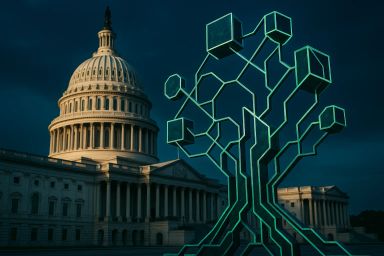
The SEC and CFTC are moving quickly on tokenization, custody, and market definitions, but rules are easier to unwind than a statute.

Mustafa Suleyman framed the disclosure as a concrete control risk as the AI regulation fight heats up in Washington.
 btc$85,301-0.02%
 eth$2,698.58-0.01%
 usdt$1+0.00%
 bnb$787.29+0.01%
 xrp$1.49-0.72%
 usdc$1+0.00%
 sol$119.32-1.90%
 trx$0.34+0.18%
 doge$0.09+0.22%
 link$13.82-2.20%
 ada$0.26+6.21%
 xlm$0.21-2.54%
 bch$314.4-0.87%
 uni$8.94-1.01%
 ltc$70.17-2.17%
 sui$1.19-5.80%
 avax$10.88-1.83%
 hbar$0.1-1.54%
 dot$1.19-0.37%
 etc$8.87+0.13%
 algo$0.13-4.47%
 pol$0.11-2.29%
 atom$1.78+0.52%
 fil$1.08+2.92%
 vet$0.01-0.07%