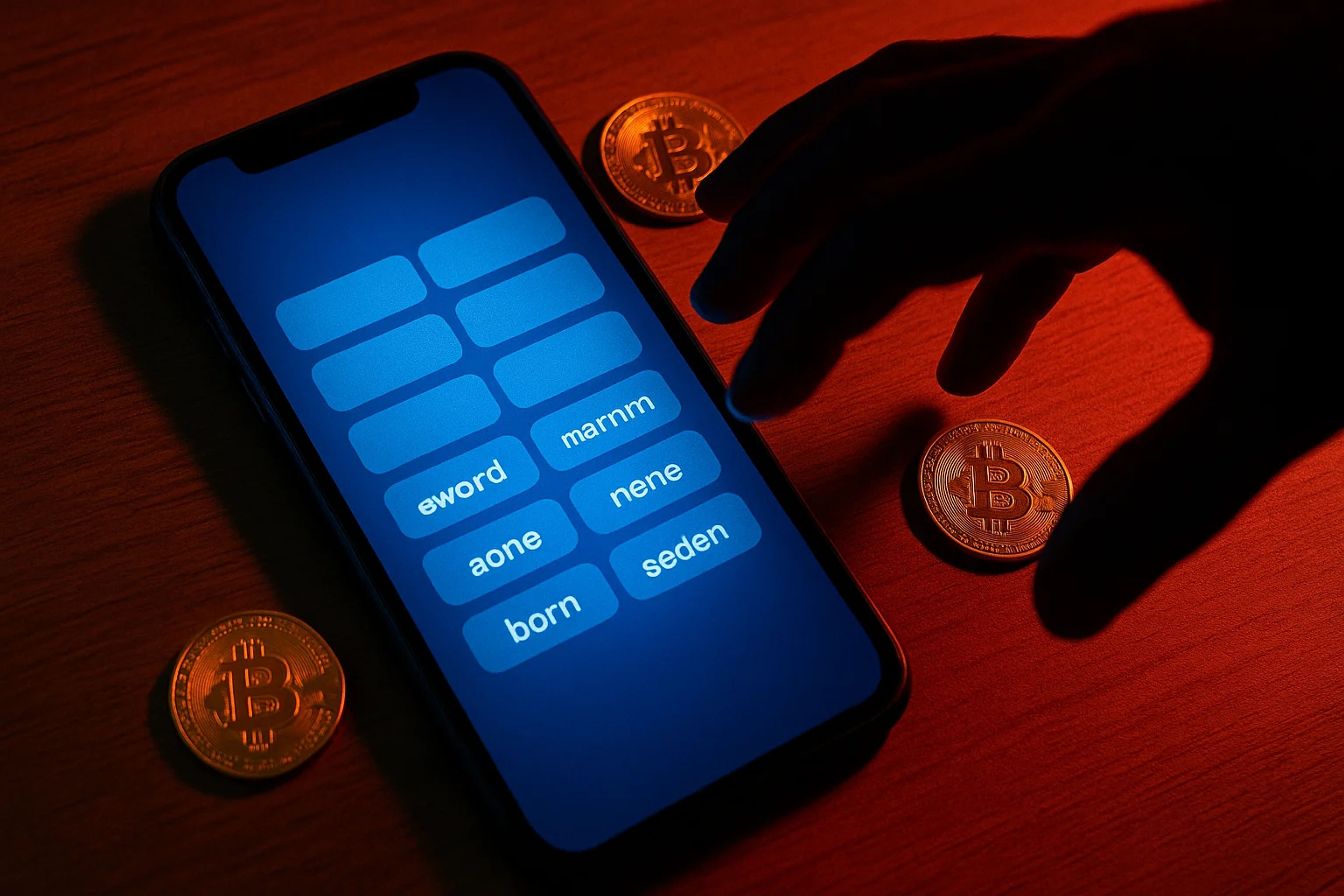
Apple sued in federal court over alleged $1.8M Bitcoin losses from fake Sparrow Wallet app
The complaint says three users entered seed phrases into an App Store impersonator, enabling transfers that drained their BTC.
Three Apple customers sued the company in the US District Court for the Northern District of California, alleging a fake “Sparrow Wallet” app on the App Store led to more than $1.8 million in Bitcoin losses. The complaint says the users entered seed phrases into the fraudulent app, after which scammers transferred out their BTC.
Key Takeaways
- A federal lawsuit in Northern California alleges an App Store app impersonating Sparrow Wallet led to more than $1.8 million in combined Bitcoin losses.
- The complaint centers on seed-phrase disclosure, alleging the users typed recovery words into the fake app and their BTC was then transferred away.
- Two of the three alleged losses were roughly $875,000 and $840,000, with a third at about $120,000, all during 2025.
- Sparrow Wallet does not offer an official iOS app and is distributed for Windows, macOS, and Linux.
Apple Hit With Federal Suit Over Alleged Fake Sparrow Wallet App Losses
Apple is facing a federal lawsuit from three users who allege they lost more than $1.8 million in Bitcoin after downloading a fraudulent app that presented itself as “Sparrow Wallet” on Apple’s App Store.
The complaint was filed in the US District Court for the Northern District of California. The plaintiffs are James Ramirez, Christopher Ellis, and Jalen Delgado. They argue Apple failed to adequately review and monitor apps while promoting the App Store as a trusted marketplace.
Apple has said it removed apps impersonating Sparrow Wallet and terminated developer accounts linked to those apps. The company also said developers and users can report apps that violate App Store guidelines.
Seed Phrases Entered, Bitcoin Drained: The Alleged Failure Mode
The alleged loss mechanism is not a protocol exploit or a wallet software vulnerability. It is operational security failure at the user interface layer.
A seed phrase is the set of recovery words that controls access to a wallet. The complaint alleges the plaintiffs entered their seed phrases into the fraudulent app. Once those words were disclosed, the attacker could recreate the wallet elsewhere and initiate transfers, which is consistent with how most self-custody drains actually happen when secrets are handed over.
For traders, the practical point is that this failure mode bypasses market structure entirely. There is no liquidity event to front-run and no chain-level anomaly required. The “edge” is simply convincing a user to type the one thing that should never be typed into an unverified interface.
Sparrow Wallet Has No Official iOS App: Why Impersonation Was Plausible
Sparrow Wallet is available on Windows, macOS, and Linux, and, as stated in the source material, “The wallet has no official iOS app.” That detail matters because it increases the odds that an iPhone user searching the App Store for a known wallet name will treat a plausible-looking listing as legitimate.
Sparrow Wallet developer Craig Raw has previously criticized Apple over fake versions of Sparrow appearing in the App Store, underscoring that impersonation risk is not hypothetical. When a product has strong brand recognition but no official iOS distribution, the gap becomes an obvious hunting ground for lookalikes.
Court Docket Signals and App Store Enforcement Clues to Track Next
The next public docket entries in the Northern District of California case will set the tone, especially Apple’s initial response and any motion to dismiss. An amended complaint with more detail would also matter because the current packet leaves key specifics unresolved.
Traders and self-custody users should watch for filings that identify the impersonating app or apps by developer name and listing history, including how long they were live and what review steps they passed. Those facts would clarify the real “time-on-shelf” exposure window.
Apple’s statement that it removed impersonating apps and terminated related developer accounts reads as reactive enforcement after identification. Any follow-on policy updates aimed specifically at wallet impersonation and seed-phrase harvesting would be a more meaningful signal than one-off removals.
What This Case Suggests About Mobile Self-Custody Risk for Traders
I don’t see this as a market-moving event. I see it as a clean reminder that the dominant risk for BTC held in self-custody is still operational, not technical. The complaint’s core allegation is seed-phrase disclosure, and once that happens, the rest is just transaction finality doing what it always does.
The threshold that matters is whether the court record eventually shows how the impersonating listing cleared App Store review and how long it stayed live. If that window is measured in weeks rather than hours, the setup starts to look structural rather than narrative-driven, because it implies repeatable distribution for seed-phrase harvesters at scale.


