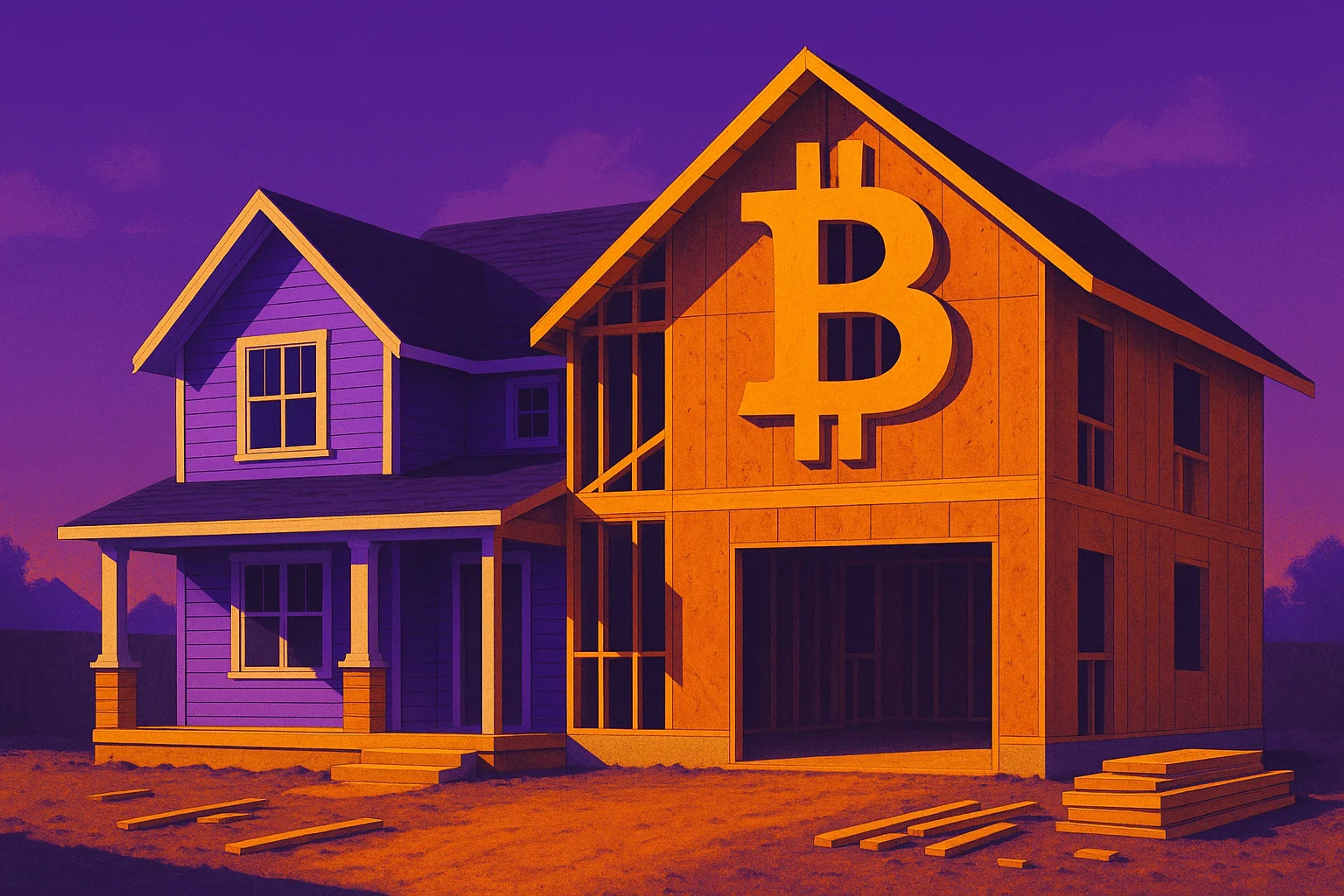
Better and Coinbase make Bitcoin-backed down payments generally available in the US
The structure keeps BTC in custody on Coinbase Prime and allows liquidation only after 60 days of payment delinquency.
Better Mortgage and Coinbase have opened a Bitcoin-backed mortgage structure to US homebuyers, letting borrowers pledge BTC as down-payment collateral without selling. The product pairs a Fannie Mae-backed mortgage with a separate BTC-secured down payment loan held in custody on Coinbase Prime.
Key Takeaways
- Better Mortgage and Coinbase opened a Bitcoin-backed down-payment structure to US homebuyers, allowing borrowers to pledge BTC instead of selling it to fund a purchase.
- The setup combines a Fannie Mae-backed mortgage with a separate down payment loan secured by Bitcoin and repaid as part of a single monthly payment.
- Borrowers must post Bitcoin worth at least 250% of the down payment loan, with the collateral moved into Better’s custodial account on Coinbase Prime.
- Bitcoin price drops do not trigger margin calls, but Better can liquidate the pledged BTC if the borrower becomes 60 days delinquent. Coinbase One members may qualify for a 1% rebate capped at $10,000.
Better and Coinbase Open Bitcoin-Backed Down Payments to US Homebuyers
Better Mortgage and Coinbase have made their Bitcoin-backed mortgage product generally available to US homebuyers, expanding access beyond the early-access rollout the companies opened in March 2026.
The pitch is straightforward and trader-native: a borrower can keep spot BTC exposure while still meeting a down payment requirement, because the Bitcoin is pledged as collateral rather than sold for dollars. Eligibility is limited to US residents with a verified Coinbase account, and applicants still have to clear Better’s standard credit, income, and underwriting checks.
Better also tied a consumer incentive to Coinbase’s subscription tier. Coinbase One members are eligible for a 1% rebate from Better, capped at $10,000, that can be applied toward closing costs and fees.
How the Two-Loan Structure Works: Fannie Mae Mortgage Plus a BTC-Secured Down Payment Loan
Mechanically, this is not a single “Bitcoin mortgage” that rewrites conventional underwriting. Coinbase’s product description frames it as two loans packaged to behave like one borrower experience.
The first leg is a Fannie Mae-backed home loan. The second is a separate down payment loan secured by Bitcoin. Coinbase says the two loans carry the same interest rate and amortization term, and the borrower repays them through a single monthly payment.
That packaging matters because it tries to keep the crypto component inside a workflow the mortgage market already knows how to process, rather than forcing a standalone crypto-credit product into a home purchase. The borrower is still taking a conventional mortgage, just with the down payment financed via a BTC-secured loan.
Coinbase says the pledged BTC is returned once the mortgage is fully repaid or refinanced, subject to the loan terms. The packet does not include the underlying Help Center documentation, so details like the precise repayment waterfall between the two loans, or how refinancing interacts with the BTC-secured leg, are not confirmed beyond that description.
Collateral, Custody, and Liquidation: 250% BTC Pledge on Coinbase Prime and a 60-Day Delinquency Trigger
The key trader-relevant terms sit in the collateral rules and the liquidation trigger.
Borrowers must pledge Bitcoin worth at least 250% of the down payment loan, with the pledged BTC transferred to Better’s custodial account on Coinbase Prime. That is meaningful overcollateralization by design, and it likely narrows the addressable pool to borrowers who already hold a large BTC position relative to the down payment they need.
The more unusual feature, relative to typical crypto-backed lending, is what does not happen when BTC sells off. Coinbase says, verbatim, “Bitcoin price declines alone do not trigger margin calls or changes to the mortgage terms.” In other words, there is no described margining mechanism that forces a borrower to top up collateral because the BTC/USD price moved against them.
Liquidation is instead tied to borrower performance on the payment schedule. Coinbase says Better can liquidate the pledged BTC if a borrower becomes 60 days delinquent on payments. That shifts the forced-sell risk from volatility-driven mechanics to credit-event mechanics, which is a different kind of pressure point for BTC holders. It also leaves open operational questions not answered in the packet, including how the BTC collateral is valued and monitored over time beyond the 250% minimum at pledge, and whether any additional risk controls exist alongside the delinquency trigger.
Crypto as Mortgage-Underwriting Input: FHFA’s 2025 Directive, Other Lenders’ Moves, and the $400,000 Home-Price Backdrop
The Better–Coinbase rollout lands inside a broader, still-in-motion effort to make crypto legible to US mortgage underwriting.
In June 2025, the Federal Housing Finance Agency, which oversees Fannie Mae and Freddie Mac, directed the two government-sponsored enterprises to develop proposals to consider cryptocurrency held on US-regulated centralized exchanges as an asset in single-family mortgage risk assessments without requiring conversion to US dollars. The directive also required risk-mitigation measures for crypto volatility, and it set a process constraint: any proposed changes would need board approval at Fannie Mae and Freddie Mac before Federal Housing Finance Agency review.
Private lenders have been moving in parallel. Newrez announced in January 2026 that it would recognize certain cryptocurrency holdings when evaluating mortgage applications beginning in February, including for home purchases and refinancing.
The affordability backdrop is not subtle. The median sales price of a new US home was about $400,000 in 2026, based on US Census Bureau and Department of Housing and Urban Development data compiled by the Federal Reserve Bank of St. Louis. In that context, products that let borrowers avoid selling an appreciating asset to meet a down payment are likely to keep showing up, even if the fine print ends up doing most of the real work.
What This Signals for BTC Holders: Credit Rails That Don’t Force a Spot Sale—But Still Create Default-Linked Sell Pressure
The filing-style detail most people will skip is the trigger. By explicitly stating that BTC price declines alone do not cause margin calls or mortgage-term changes, the product is positioned to reduce volatility-driven forced selling compared with the margin-based crypto loan playbook, where collateral drawdowns can cascade into liquidations at the worst possible time.
The threshold that matters is whether this structure can scale without quietly reintroducing price-based risk controls through undisclosed valuation rules, fees, or state-by-state constraints, and whether the Federal Housing Finance Agency’s June 2025 directive produces concrete underwriting changes at Fannie Mae and Freddie Mac rather than proposals that stall in board approvals and review. If Better and Coinbase publish fuller term detail and adoption moves from “generally available” to measurable uptake, this starts to look like a real credit rail for BTC holders rather than a one-off marketing wrapper around a conventional mortgage.


