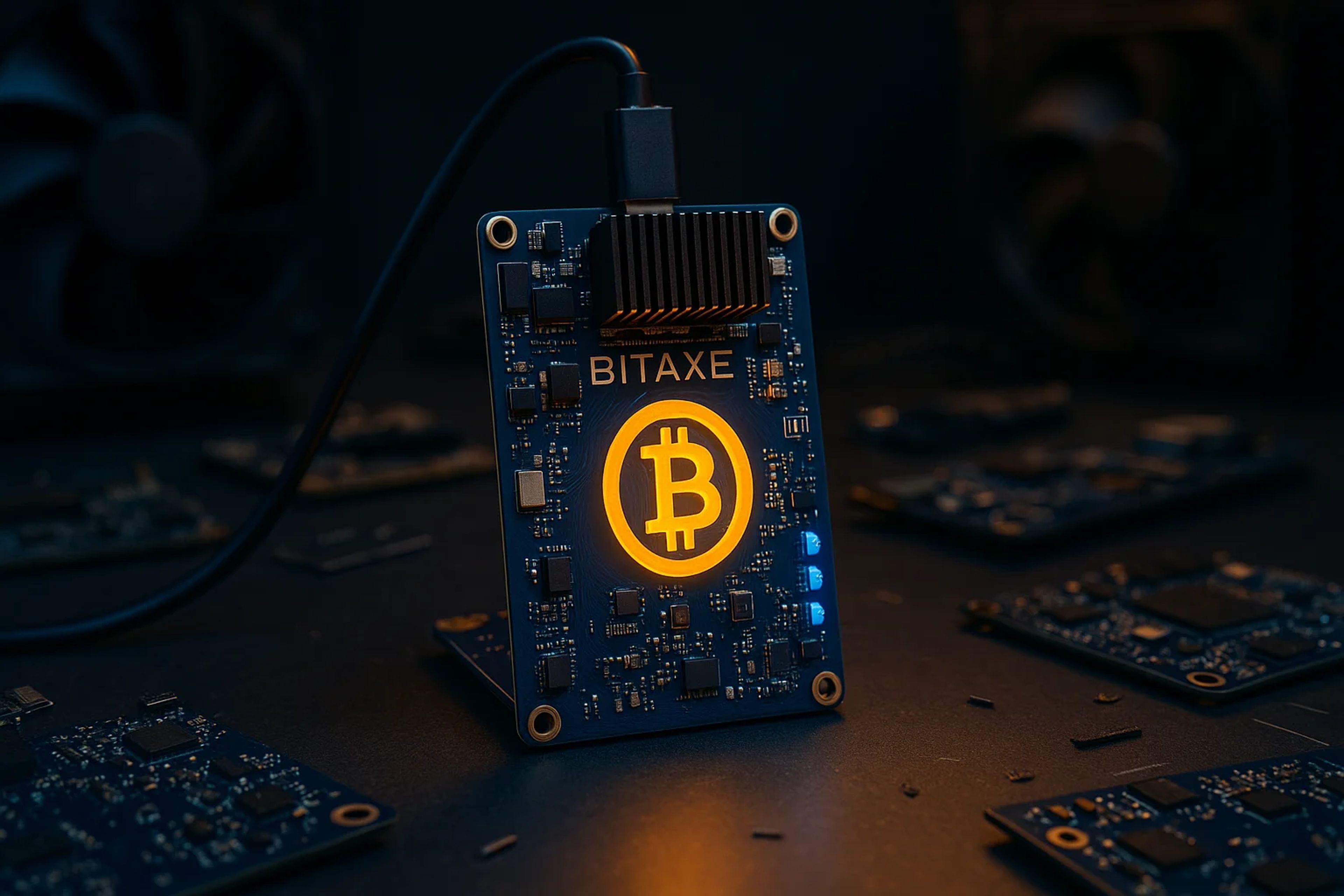
Bitaxe hobby miner lands Bitcoin block 957,382 for 3.1382 BTC
The ~$60–$150, ~1 TH/s device hit via Public Pool as solo block finds rose 41% YoY and difficulty fell to 127.17T.
A solo Bitcoin miner using a low-power Bitaxe device mined Bitcoin block 957,382 through Public Pool and earned 3.1382 BTC worth roughly $200,000. The hit lands as solo-mined blocks have increased over the past year and network difficulty recently eased to 127.17 trillion.
Key Takeaways
- Bitcoin block 957,382 was mined by a solo participant running a Bitaxe, paying out 3.1382 BTC worth roughly $200,000.
- The device averaged about 995 GH/s (~1 TH/s) and had been running for around eight hours on Public Pool when it found the block.
- Bitaxe is an open-source, credit-card-sized ASIC built on Bitmain’s BM1370 chip, rated around 1–1.3 TH/s at 15–21 watts and priced about $60–$150.
- Solo miners have found 24 blocks in the past 12 months (+41% YoY) for total payouts of 75.44 BTC, while Bitcoin difficulty fell 5% to 127.17T on July 12.
A $150 Bitaxe Hits Bitcoin Block 957,382 for 3.1382 BTC
A solo miner using a hobbyist-grade Bitaxe device mined Bitcoin block 957,382 and collected a 3.1382 BTC payout, valued at roughly $200,000 at the time of publication.
The miner ran the unit through Public Pool for about eight hours and averaged roughly 995 GH/s, or about 1 TH/s, while the winning block was found. Public Pool described the event as the second time a single Bitaxe has solo-mined a block on the service.
For traders, the headline number is the payout. The more important detail is the hashrate. At ~1 TH/s, this is a statistical outlier, not evidence that low-hash hobby mining has suddenly become a repeatable edge.
Bitaxe Specs: Open-Source ASIC Using the BM1370 Chip
Bitaxe is described as an open-source, credit-card-sized ASIC miner built around Bitmain’s BM1370 chip, the same chip family used in industrial Antminer S21 machines. The Bitaxe Gamma version is cited at roughly 1–1.3 TH/s while drawing 15–21 watts, with a purchase price in the $60–$150 range.
That combination of low capex and low power is exactly why these wins travel fast on social feeds. The setup reads like a retail-friendly decentralization story. Mechanically, though, the network does not care whether the hash comes from a garage rig or a warehouse. A ~1 TH/s device is still competing against an industrial-scale hashrate base, which is why the expected-time-to-win remains extreme even if a single unit occasionally gets lucky.
Solo Mining Is Showing Up More Often: 24 Blocks in 12 Months
Solo mining activity has been showing up on-chain more frequently. Over the past 12 months, solo miners found 24 blocks, a 41% increase year over year, with total payouts of 75.44 BTC. As of the article’s publication, solo miners had already found 12 blocks in 2026.
Recent examples underline the range of “small” setups attempting solo. On June 29, a miner on Solo CKPool landed a 3.16 BTC payout. On May 31, a miner running a cluster of 14 Canaan Nano devices totaling 157 TH/s found a block on Braiins Solo.
The second-order effect is narrative fuel. More solo hits can be read as more small-hash participants, or simply more attempts routed through solo services. Either way, it supports a decentralization storyline without meaningfully changing aggregate network security.
Difficulty Backed Off to 127.17T After a Mid-June Drop
Bitcoin mining difficulty dropped 5% to 127.17 trillion on July 12. That followed a plunge of more than 10% in mid-June before a partial recovery.
That difficulty path is the forward signal that matters for miner economics. The next difficulty adjustment(s) will show whether the mid-June drop was a one-off air pocket or the start of a softer regime. Traders also have a clean scoreboard for the “solo is back” narrative: whether the count of solo-mined blocks continues to run above the prior-year pace after the reported 24-block, 12-month tally.
One more near-term tell is repetition. Public Pool characterized this as the second Bitaxe solo block on the service. Additional hits from very low-hash devices around ~1 TH/s would keep the story in circulation, even if the base-rate math stays brutal.
This Is a Lottery Win, but the Difficulty Trend Is the Tradable Tell
I treat the Bitaxe win as a sentiment catalyst, not a fundamental shift. A ~1 TH/s device landing a full block after roughly eight hours is the kind of outlier that happens in any probabilistic system, and it does not rewrite expected value for hobby miners.
The threshold that matters is the next set of difficulty adjustments after the July 12 reading of 127.17T. If difficulty stays soft or extends lower, the setup starts to look structural rather than narrative-driven because it changes expected block economics across the entire network, which is what actually feeds through to miner margins and mining-linked equities.


