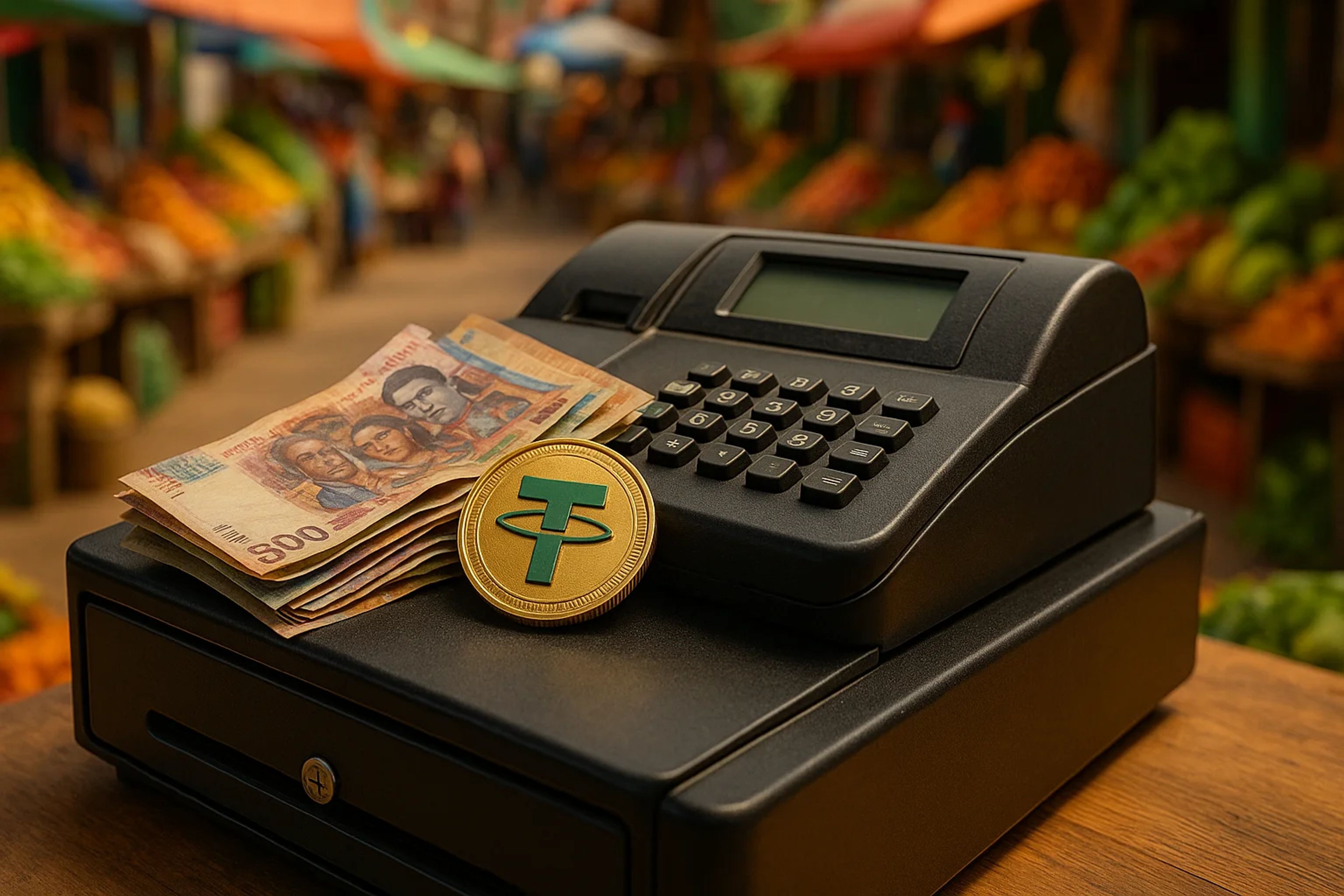
Bolivia reviews framework to let USDT circulate in domestic payments
Finance minister Jose Gabriel Espinoza tied any rollout to AML safeguards as Bolivia remains on the FATF grey list.
Bolivia’s finance ministry says it is assessing a regulatory framework that could allow Tether’s USDT to circulate inside the national payments system alongside the boliviano and the US dollar. The review is being framed as a response to dollar scarcity and FX dislocations, with anti-money laundering design positioned as a gating requirement.
Key Takeaways
- Bolivia’s economy minister said the government is assessing rules that would let USDT circulate “as just another currency,” alongside the boliviano and the US dollar.
- The framework under review would recognize USDT for “payments, savings and trade,” aiming to reduce reliance on cash and traditional banking channels.
- FATF grey-list status is shaping the proposal, with officials flagging the need for a “robust regulatory framework” and strong AML safeguards.
- The policy push follows Bolivia’s 2024 reversal of its crypto ban and a late-2025 pledge to integrate digital assets into the formal financial system, including bank-offered stablecoin accounts.
Bolivia Floats USDT as “Just Another Currency” in Domestic Payments
Bolivia is weighing a regulatory framework that would allow Tether’s USDT to circulate inside the country’s payments system, a policy signal that puts stablecoins on the agenda at the ministerial level rather than at the margins of informal use.
Economy and Public Finance Minister Jose Gabriel Espinoza said Monday the government is assessing a framework that would allow USDT to circulate “as just another currency,” alongside the boliviano and the US dollar. The stated intent is everyday utility, not a niche trading product.
The framework remains under review. As described in the policy outline referenced in the source text, if adopted it would recognize USDT for “payments, savings and trade,” positioning the stablecoin as a practical dollar proxy for households and businesses.
USDT’s scale matters in this context. Its market capitalization exceeds $184 billion, according to CoinMarketCap, which helps explain why policymakers looking for a dollar-denominated instrument keep landing on USDT rather than smaller alternatives.
Dollar Shortage, Abandoned Peg, and the Parallel FX Premium
The macro driver is straightforward. Bolivia has faced a prolonged shortage of US dollars, which are widely used domestically alongside the boliviano.
That stress intensified after the country abandoned its long-held exchange-rate peg earlier in 2026. Bolivia maintained an official exchange rate of 6.86 bolivianos per US dollar for purchases and 6.96 for sales from 2011 until earlier in 2026, when pressure on foreign exchange reserves forced the peg’s exit.
Once the peg broke, a parallel foreign exchange market expanded and the dollar traded at a steep premium to the official rate. That gap is the kind of market structure that pulls dollar substitutes into day-to-day commerce. In that environment, exploring USDT is less about crypto ideology and more about plugging a functional settlement problem.
AML and FATF Grey-List Constraints Shape Any Stablecoin Rollout
Espinoza explicitly tied any rollout to compliance architecture. He said implementation would require a “robust regulatory framework” and strong anti-money laundering safeguards because Bolivia remains on the Financial Action Task Force grey list.
That constraint matters for how any “integration” is likely to be designed. Grey-list monitoring raises the cost of permissive, open-ended access. It increases the odds that stablecoin usage is routed through regulated institutions, with KYC and transaction monitoring embedded in bank and payment-provider rails, rather than a blanket approach that resembles legal tender.
Bolivia’s recent policy trajectory supports that reading. The country lifted its longstanding crypto ban in 2024, and the current administration, in office since late 2025, has pledged to integrate digital assets into the formal financial system, including stablecoin-based accounts offered by banks.
What Would Count as “Integration” for Payments, Savings, and Trade
For traders, the near-term signal is not immediate on-chain volume. The signal is whether Bolivia turns a ministerial soundbite into legible policy.
The next concrete milestone would be draft rules or a formal decree clarifying whether USDT is treated as legal tender or as a permitted payment instrument under a new framework. The market will also want named implementation partners, including banks, payment processors, or national payment rails, and explicit authorization for regulated institutions to offer stablecoin-based accounts.
AML is the gating item. Any FATF-related updates or domestic AML/CFT measures tied to the proposal will likely determine how broad access can be. Separately, further guidance on FX policy after the peg abandonment will shape demand for dollar substitutes, including whether measures tighten or ease the incentives that have pushed users toward USDT.
The Tradeable Signal Is Policy Legibility, Not Instant On-Chain Volume
I treat Bolivia’s comments as a policy-level adoption signal for USDT in LATAM, but it is still a “framework under review” story, not an implementation decision. The difference matters because stablecoin narratives move fast, while payment integration moves at the speed of regulation, banking partnerships, and compliance sign-off.
The threshold that matters is whether Bolivia publishes rules that define USDT’s legal classification and routes access through regulated rails in a way that satisfies grey-list scrutiny. If that holds, the setup starts to look structural rather than narrative-driven, because it turns dollar scarcity into a repeatable demand channel for stablecoin settlement inside the formal system.


