Brazil Federal Police allege cartel laundered via crypto-enabled brokers. Courts freeze up to R$1B
July 23 operation logged nine arrests and dozens of warrants across four states as investigators targeted a multi-rail laundering network.
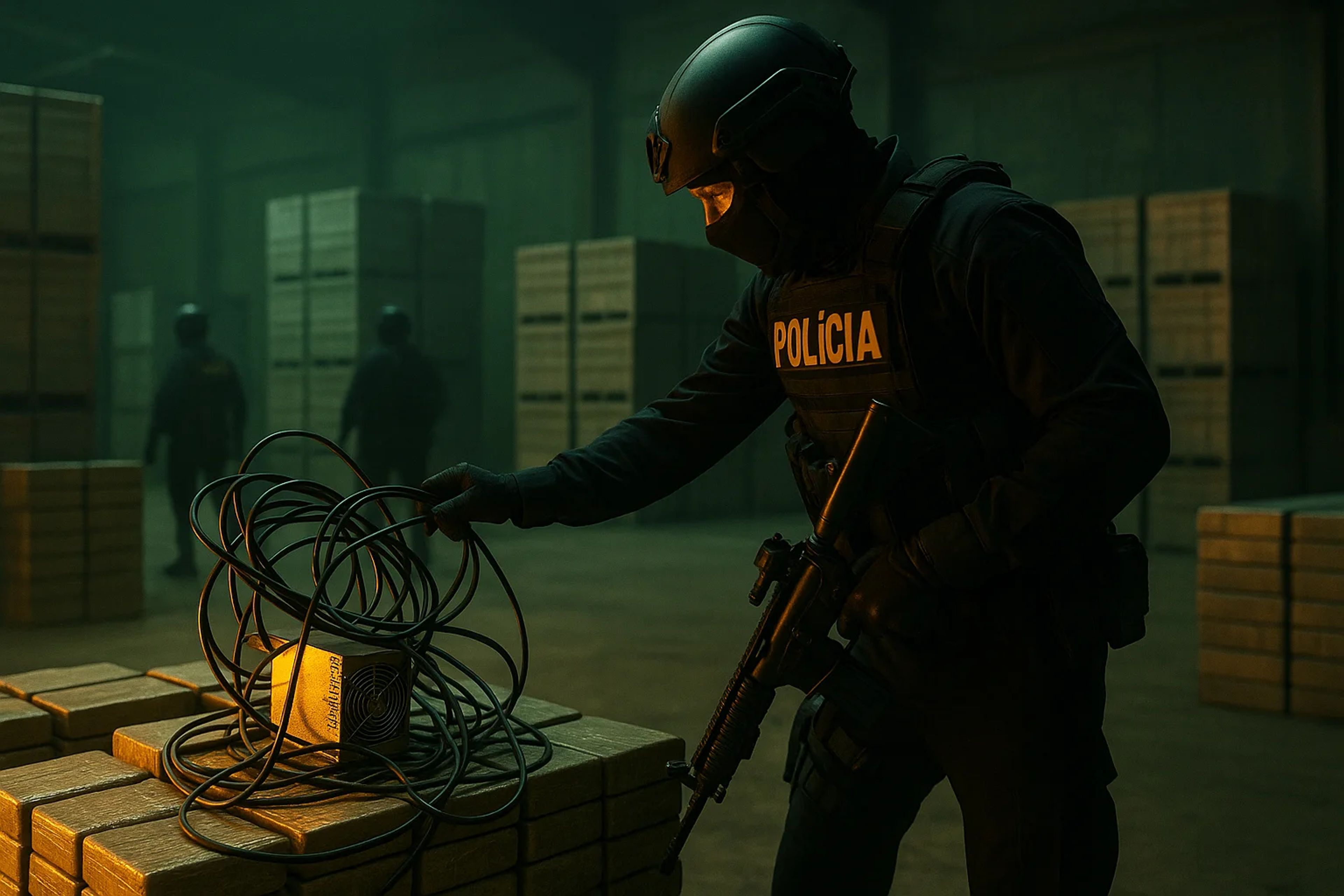
Brazil’s Federal Police alleged an international drug cartel trafficked around 6.5 metric tons of cocaine and laundered “billions in Brazilian reals,” including through “crypto-enabled illicit money brokers.” Courts authorized an asset freeze of up to 1 billion reais ($197 million) as part of a July 23 operation spanning four states.
Key Takeaways
- Brazilian Federal Police tied an alleged cartel’s laundering activity to “crypto-enabled illicit money brokers” alongside shell companies, luxury assets, and real estate.
- A July 23 operation produced nine arrests plus 13 pretrial detention warrants and 44 search-and-seizure warrants across four Brazilian states.
- Courts authorized authorities to “freeze up to 1 billion reais ($197 million) in assets” during the investigation.
- Suspects were said to face charges including participation in a transnational criminal organization, international drug trafficking, and money laundering.
Brazil Police Operation Targets Alleged Cartel Using Crypto-Enabled Brokers
Brazil’s Federal Police said a coordinated action on July 23 targeted an alleged international drug cartel suspected of shipping “around 6.5 metric tons of cocaine” and laundering proceeds through multiple concealment channels, including “crypto-enabled illicit money brokers.”
The operation resulted in nine arrests. Authorities also executed 13 pretrial detention warrants, which are court orders allowing suspects to be detained before trial, typically to reduce flight risk or interference with the investigation.
Police executed 44 search-and-seizure warrants across São Paulo, Minas Gerais, Santa Catarina and Espírito Santo. A search-and-seizure warrant authorizes law enforcement to search specified locations and seize evidence or assets.
Courts authorized investigators to “freeze up to 1 billion reais ($197 million) in assets.” An asset freeze blocks the transfer or sale of assets while an investigation proceeds, and it often functions as a disruption tool as much as an accounting of total proceeds.
The Alleged Laundering Stack: Shell Firms, Luxury Assets, Real Estate—and Crypto Brokers
Police described the alleged laundering toolkit as deliberately multi-rail. The organization was accused of moving “billions in Brazilian reals” using shell companies, “crypto-enabled illicit money brokers,” luxury assets and real estate.
That mix matters for how enforcement pressure typically lands. When investigators frame a case around brokers, front companies, and hard assets, the center of gravity is usually intermediaries and off-chain touchpoints, not a single token or chain. Crypto is presented as one leg of a broader conversion and concealment pipeline.
The suspects were said to face charges including participation in a transnational criminal organization, international drug trafficking and money laundering. Those alleged charges increase the odds that investigators pursue financial link analysis across jurisdictions and counterparties, even if the public record is still thin on the crypto mechanics.
Enforcement Risk for LATAM Crypto Rails After a R$1B Freeze Order
For traders and compliance-aware market participants, the immediate signal is not “crypto crackdown” headlines. It is the combination of a large freeze ceiling and explicit language about “crypto-enabled illicit money brokers,” which can pull scrutiny toward local brokers, OTC-style intermediaries, and fiat payment rails that connect to cross-border cash-out routes.
The R$1 billion figure is a court-authorized cap, not a confirmed measure of total laundering. Still, a freeze order of that size indicates investigators are prioritizing seizure and disruption. That posture can translate into tighter onboarding, more aggressive transaction monitoring, and de-risking behavior by service providers that touch BRL flows, even before any chain-level details become public.
What’s Still Unspecified in the Crypto Angle
The police description does not name specific blockchains, stablecoins, exchanges, wallet addresses, or transaction volumes tied to the alleged “crypto-enabled illicit money brokers.” The alleged laundering amount is described only as “billions” of reais, with no precise figure beyond the freeze ceiling.
The next disclosures that would move this from narrative risk to operational risk are concrete identifiers. Watch for follow-up statements that name venues or addresses, updates on whether the R$1 billion ceiling is approached or converted into seizures or forfeiture actions, and any additional arrests or indictments that broaden the probe beyond São Paulo, Minas Gerais, Santa Catarina and Espírito Santo.
Brazil’s announcement also sits in a wider enforcement backdrop. In May, the US Treasury’s Office of Foreign Assets Control (OFAC), which administers economic sanctions including crypto address designations, sanctioned six Ethereum addresses tied to a Sinaloa Cartel-linked laundering network alleged to have converted drug proceeds into cryptocurrency. Any future reference to international coordination or sanctions-style actions would raise the stakes for cross-border rails.
Why ‘Crypto-Enabled Brokers’ Mentions Matter More Than the Token Ticker
I treat this as a multi-rail laundering probe with a crypto leg, not a crypto-only case. The threshold that matters is whether authorities start naming specific intermediaries, payment rails, or on-chain identifiers, because that is when compliance pressure stops being abstract and starts hitting liquidity access.
The real test is whether the R$1 billion freeze order evolves into visible seizures and follow-on cooperation that constrains cash-out routes. If that escalation shows up alongside concrete venue or address disclosures, the setup starts to look structural rather than narrative-driven, and it matters in practical terms because it can tighten BRL on/off-ramps where traders actually move size.


