CleanSpark jumps on 20-year, 175-MW Georgia data-center lease pegged at $6.6B
The move outpaced the bitcoin miner ETF as the deal frames a long-dated AI/HPC revenue stream alongside mining.
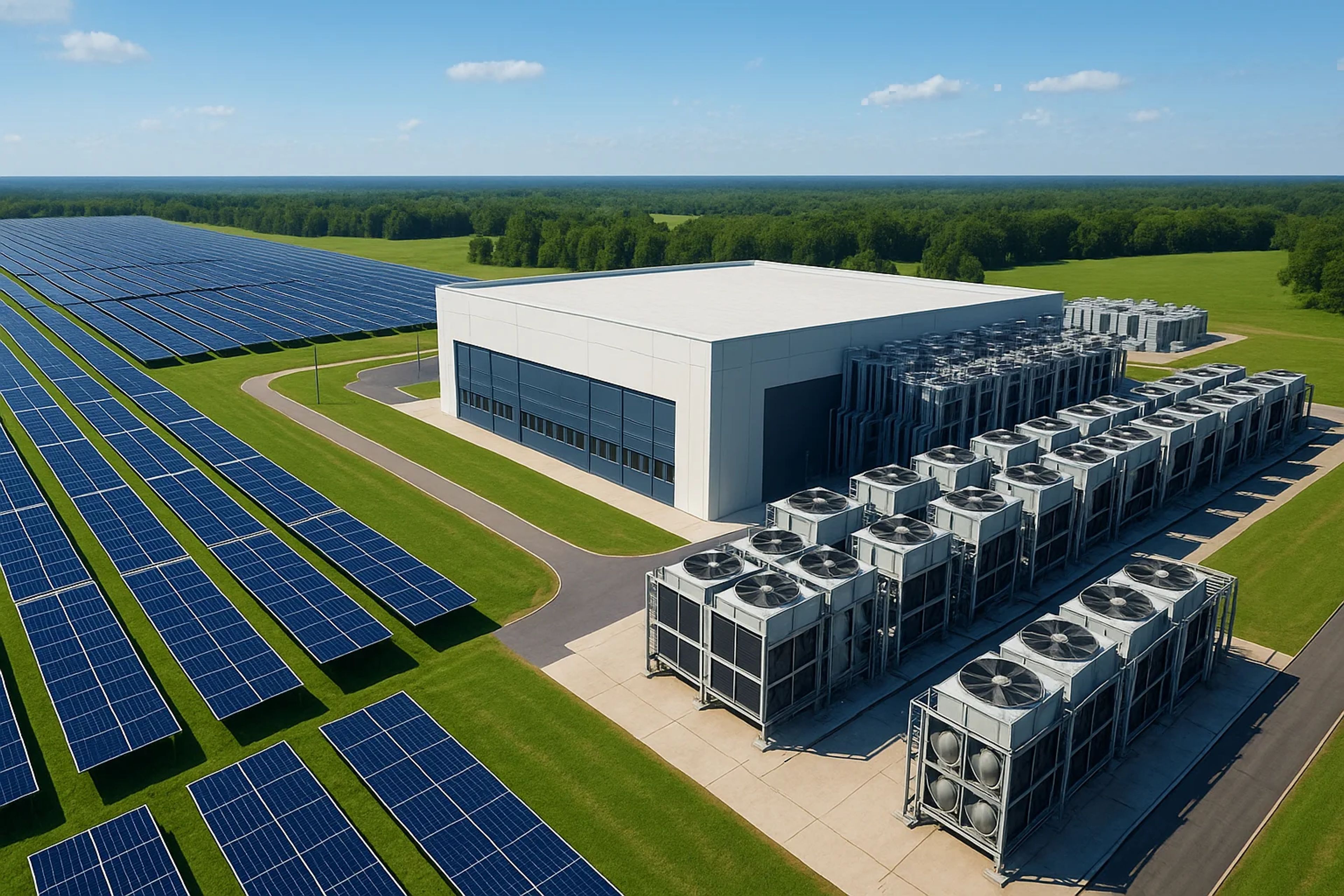
CleanSpark shares jumped on July 14 after the bitcoin miner disclosed a 20-year triple-net lease for a 175-megawatt data center at its Sandersville, Georgia campus. The company projects about $6.6 billion in contracted revenue over the initial term, with phased tenant infrastructure deliveries expected to begin in Q4 2027.
Key Takeaways
- A 20-year triple-net lease was signed for a 175-megawatt data center at CleanSpark’s Sandersville, Georgia campus with an “undisclosed investment-grade global technology company.”
- CleanSpark estimates roughly $6.6 billion of contracted revenue over the base term, rising to $11.6 billion if two five-year extension options are exercised.
- CLSK traded up as much as 22% intraday on July 14, 2026, touching $15.10 before paring to about +11% around the US lunch hour.
- The CoinShares Bitcoin Miners ETF (WGMI) gained less than 1% over the same window, underscoring the move as company-specific.
CleanSpark’s 20-Year Georgia Lease Sparks a CLSK Re-Rate
CleanSpark’s stock reaction was the tell. On July 14, 2026, CLSK gained as much as 22% intraday, hit $15.10, then trimmed to about +11% around the US lunch hour. Over that same period, the CoinShares Bitcoin Miners ETF (WGMI) was up less than 1%.
That divergence matters for how traders should frame the move. This was not a broad “miners up” tape. The market treated the lease disclosure as idiosyncratic information that changes how CleanSpark can be modeled, at least at the narrative level. The pattern worth noting is the re-rate impulse: a miner prints a headline that looks like contracted infrastructure revenue, and the stock trades like it just acquired a second business line.
CleanSpark positioned the agreement as part of its push beyond pure bitcoin mining into digital infrastructure tied to AI and high-performance computing (HPC). The company also emphasized it remains one of the largest publicly traded bitcoin holders, which keeps the equity’s sensitivity to BTC intact even as it tries to add a non-mining revenue frame.
Inside the Deal: 175 MW, Triple-Net Terms, and a Q4 2027 Buildout Start
The disclosed structure is straightforward and, importantly, long-dated. CleanSpark signed a “20-year triple-net lease” for a 175-megawatt data center at its Sandersville, Georgia campus with an “undisclosed investment-grade global technology company.” In a triple-net lease, the tenant typically pays property taxes, insurance, and maintenance in addition to rent, shifting many operating costs away from the landlord.
CleanSpark estimated approximately $6.6 billion in contracted revenue over the initial lease term. The company also laid out the explicit upside case: contracted revenue could rise to $11.6 billion if the tenant exercises two five-year extension options.
That split is the first modeling fork traders should keep in mind. The base term is the base term. The extension math is optionality, and it is tenant-controlled optionality.
The second fork is timing. Under the agreement, the tenant will install computing infrastructure at the site, with “phased deliveries expected to begin in the fourth quarter of 2027.” HPC, in practice, means power-dense compute deployments that require specialized facilities and large power capacity. CleanSpark is selling the shell and power footprint, but the earnings relevance is gated by execution and schedule.
What stands out here is how far out the operational handoff is. Q4 2027 is not next quarter’s catalyst. It is a long execution window where construction, commissioning, and tenant deployment cadence can slip without violating the basic narrative that a lease exists.
Why This Matters for Miner Valuations After the 2024 Halving
The market context is doing a lot of work in this re-rate. After the 2024 bitcoin halving cut the block subsidy, miners faced weaker mining economics, including lower revenues and tighter profit margins. In that regime, equity valuations tend to compress into a function of hashprice sensitivity, balance-sheet durability, and access to capital.
A long-term data-center lease tied to AI/HPC demand is attractive because it offers a different story than “wait for BTC price.” CleanSpark’s disclosure gives investors a revenue framework that is legible: $6.6 billion over the initial term, with a clearly stated $11.6 billion scenario if extensions are exercised.
But the same facts also define the limits. This is not a near-term earnings driver because the tenant’s computing infrastructure deliveries are not expected to begin until Q4 2027. The deal can change sentiment today while leaving the income statement largely unchanged for a long stretch.
CleanSpark’s recent financials help explain why a diversification headline can move price even before cash flows arrive. In March, the company reported a fiscal second-quarter net loss of $378 million, with nearly 60% of that loss attributed to a decline in bitcoin’s price. That is the core miner problem in one line: earnings can be dominated by BTC.
The company also sold a portion of its BTC holdings in February to fund operations and growth initiatives, while still being described as a net accumulator versus peers. That peer context matters because it signals balance-sheet pressure across the cohort. Publicly traded miners sold roughly 15,000 BTC between October and the end of February, though the timeframe year was not specified in the available excerpt.
Signals to Watch for CleanSpark $6.6B Georgia data center lease
Aug. 6 is the near-term volatility point. CleanSpark is expected to report fiscal Q3 results on Aug. 6, with analyst consensus calling for a loss of $0.25 per share versus earnings of $0.79 in the comparable quarter last year (per Yahoo Finance). The company has missed Wall Street estimates in the last three consecutive quarters, which raises the odds that even a strong “strategic” headline week does not translate into a clean earnings tape.
Beyond earnings, the market needs more specificity to keep the re-rate durable. The tenant remains undisclosed beyond being described as an “investment-grade” global technology company. Any disclosure that identifies the tenant or clarifies the economics beyond the contracted revenue estimates would reduce uncertainty and tighten how the market can handicap counterparty and renewal risk.
Execution markers matter because the timeline is long. The key operational checkpoint is whether progress stays consistent with phased computing-infrastructure deliveries beginning in Q4 2027, or whether the schedule slips.
Finally, watch the relative tape. CLSK’s move was sharply different from WGMI on the day. Follow-through versus the ETF after the initial repricing will signal whether the market is treating this as a durable fundamental reframing or a one-day optionality bid.
The Trade Setup—AI/HPC Optionality vs Execution and Disclosure Risk
I read the July 14 move as a clean example of single-name repricing rather than miner beta. When CLSK can print +22% intraday while WGMI is up less than 1%, the market is telling you it is paying for the lease narrative specifically, not for a generalized improvement in mining conditions.
The bull case embedded in the disclosure is simple and modelable because management handed the market two numbers. Base case is about $6.6 billion in contracted revenue over the initial term. Upside case is $11.6 billion if the tenant exercises two five-year extensions. The confirmation point for that upside is not a spreadsheet. It is evidence over time that the tenant is committed enough to deploy, operate, and then renew.
The bear case is also grounded in the same facts. First, the tenant is undisclosed. That keeps counterparty assessment fuzzy, even with the “investment-grade” label. Second, the timeline is long. “Phased deliveries expected to begin in the fourth quarter of 2027” means the market is paying today for something that is not positioned to show up quickly in reported results. In a sector where quarterly prints can reset sentiment, that gap matters.
That brings me to the near-term path dependency. Aug. 6 earnings are the next hard catalyst, and consensus expects a loss of $0.25 per share. CleanSpark has missed estimates three quarters in a row. If the company uses that call to add concrete detail on the Sandersville execution path, it can help stabilize the re-rate by turning a headline into a timeline. If the call is dominated by mining sensitivity, or if guidance language stays high level, the market can start treating the AI/HPC angle as distant optionality again.
I’m watching three confirmation or invalidation points. Confirmation is (1) incremental disclosure that reduces tenant and economics uncertainty, (2) consistent progress toward the Q4 2027 delivery start, and (3) CLSK holding relative strength versus WGMI after the initial repricing. Invalidation is the opposite pattern: no added disclosure, timeline slippage, and a mean reversion where CLSK’s outperformance fades back into the miner basket, confirming the move was mostly a one-day optionality bid rather than a durable re-rate driver.


