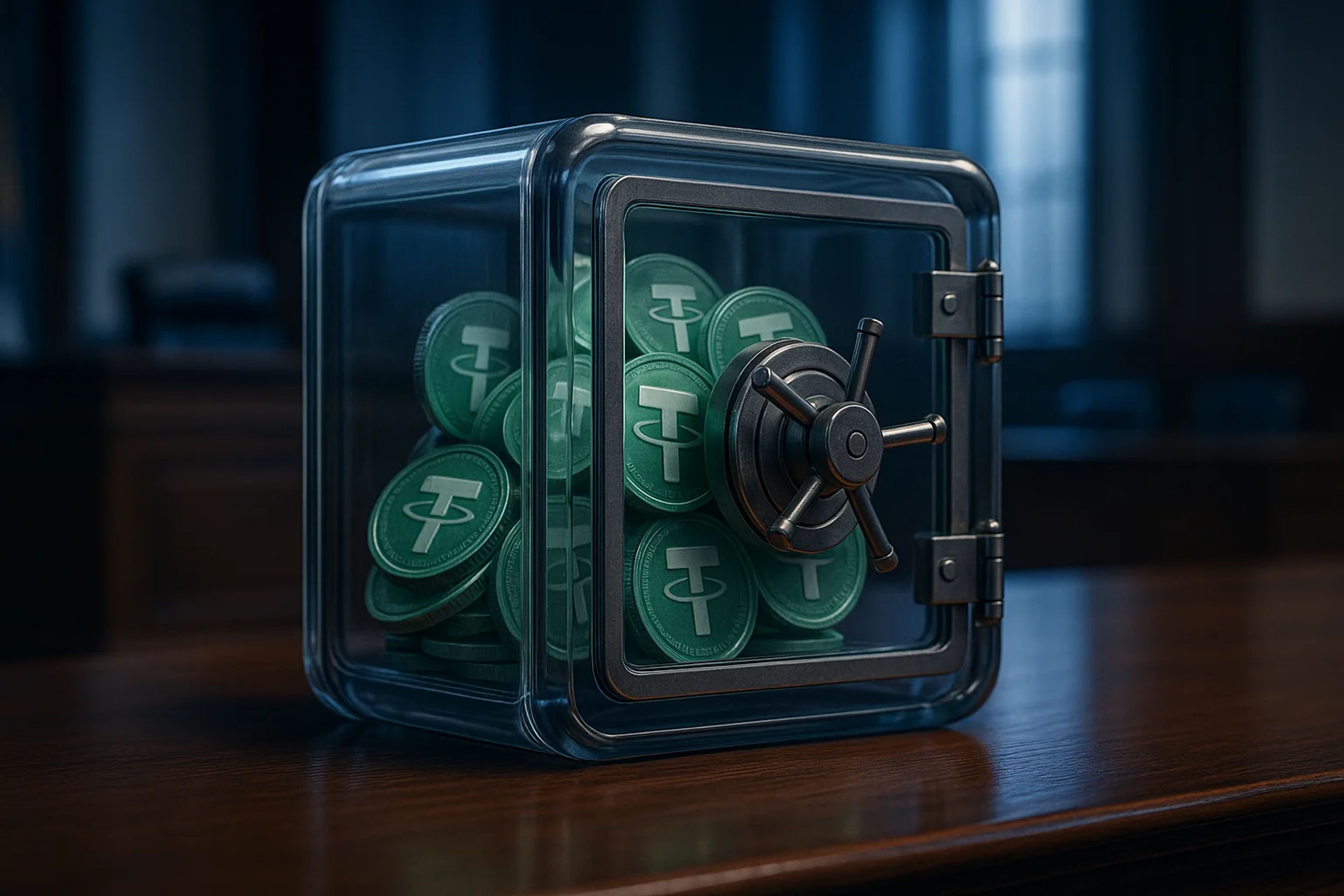
Conduit sues Tether in SDNY over alleged $2.76M USDT treasury-wallet freeze
The complaint says the Sept. 24, 2025 lockup lacked justification and still had not been lifted as of Oct. 6, 2026.
Cross-border payments platform Conduit Technology sued stablecoin issuer Tether in the US District Court for the Southern District of New York on Oct. 6, 2026, alleging Tether froze $2.76 million in USDT held in Conduit’s treasury wallet. Conduit says the freeze began Sept. 24, 2025 without explanation and has continued despite repeated requests to restore access.
Key Takeaways
- Conduit Technology filed a complaint in the US District Court for the Southern District of New York on Oct. 6, 2026 over an alleged USDT freeze.
- The suit alleges Tether froze $2.76 million in USDT in Conduit’s treasury wallet on Sept. 24, 2025 without justification and has not unfrozen the funds.
- Conduit argues Tether had “no legal entitlement” and “no claim” to the USDT and says the lockup “materially impacted its business.”
- The complaint links the freeze to a Brazilian federal police investigation opened in 2024, alleging Tether connected Conduit’s wallet to two entities using its own criteria.
Conduit’s SDNY filing targets a $2.76M USDT freeze dating to Sept. 2025
Conduit Technology, a cross-border payments platform, sued Tether in the US District Court for the Southern District of New York (SDNY) on Oct. 6, 2026, alleging the stablecoin issuer froze $2.76 million in USDt (USDT) held in Conduit’s treasury wallet.
The complaint centers on an issuer-initiated lockup Conduit says began on Sept. 24, 2025, when Tether allegedly froze “all $2.76 million” in the wallet. Conduit characterizes the action as unexplained and unjustified, and it frames the dispute as a denial of access to company funds rather than a loss caused by a hack or smart-contract failure.
Conduit’s filing uses unusually direct language for what is, mechanically, an administrative control feature: it alleges Tether froze funds to which it had “no legal entitlement” and “no claim,” and says the freeze “materially impacted its business.” The complaint also states: “The funds are unequivocally Conduit’s, but Tether has taken them and is denying Conduit access to them.”
As of the filing date, Conduit says it had repeatedly asked Tether to unfreeze the USDT and had not regained access. Tether did not provide an immediate response to a request for comment on the lawsuit.
Treasury-wallet USDT isn’t just “cash”: the issuer can lock it
USDT is designed to trade as a dollar-pegged stablecoin, but on-chain USDT is also an instrument with issuer-level controls on supported networks, including the ability to freeze tokens at specific wallet addresses. In practice, an address freeze prevents the tokens at that address from being transferred, which can turn what looks like working capital into a stranded balance.
That distinction matters most for operators who treat USDT as a treasury asset rather than a trading position. Conduit says it began holding USDT in its digital treasury wallet in May 2025, and it describes the subsequent freeze as a business interruption event, not a market move.
For traders and treasury desks, the lawsuit is a reminder that issuer-level freeze risk is a separate variable from peg risk. A USDT balance can remain notionally “worth a dollar” and still be unusable if it is locked at the address level, which is why the complaint’s emphasis is on access and entitlement rather than price.
The operational read is straightforward even before any court findings: if a payment operator’s treasury wallet can be frozen based on issuer determinations, then settlement reliability depends not only on blockchain finality and counterparties, but also on the issuer’s compliance and attribution process and the timeline for reversing a freeze.
Brazil probe link: Conduit says Tether used its own criteria to connect the wallet
Conduit’s complaint ties the Sept. 2025 freeze to a Brazilian federal police investigation launched in 2024 into Bull Intermediação de Negócios and Onix. Conduit alleges Tether identified Conduit’s treasury wallet as tied to those companies “on its own initiative using its own criteria,” then froze the $2.76 million on Sept. 24, 2025.
The timeline Conduit lays out is tight: it began holding USDT in May 2025, then says the wallet was frozen in September 2025, cutting off access to the full balance. Conduit also alleges it sought an unfreeze repeatedly and still did not have access as of Oct. 6, 2026, which implies a dispute that persisted for more than a year before landing in SDNY.
The complaint’s core factual gap, at least from what is publicly described so far, is that the packet contains Conduit’s characterization but no issuer-side explanation for the freeze and no court finding on whether the alleged Brazil-probe linkage was accurate or sufficient. That uncertainty is part of the risk surface for firms that hold USDT in treasury wallets, because the trigger for a freeze can be compliance-driven and based on attribution heuristics that are not visible to the holder.
Conduit’s filing also arrives in a moment when Tether’s freezing practices are already being litigated elsewhere. About a month before Conduit’s SDNY complaint, two Thai nationals sued Tether alleging it froze $42.4 million in USDT following what they described as an “informal request” from US Homeland Security Investigations. That separate dispute was described as tied to an alleged $61 million pig-butchering case in the US District Court for the Eastern District of North Carolina, which issued a seizure warrant for the USDT in February, though the year of that warrant is not specified in the excerpt.
Signals to monitor as the case develops in SDNY
The next meaningful datapoint is procedural: whether Tether appears in SDNY with a response or a motion, and how it frames the basis for the Sept. 24, 2025 freeze. The distinction that will matter for market participants is whether Tether argues from contractual terms and issuer discretion, or whether it anchors the freeze in a law-enforcement or compliance rationale tied to the Brazil investigation.
Court orders and docket updates will also matter more than public statements. Any move for expedited relief, a request for an injunction, or an early discovery schedule would increase the odds that details about the alleged Bull Intermediação de Negócios/Onix linkage and the “own criteria” attribution process surface on a defined timeline.
The separate Thai nationals case is another variable, but only once its procedural details are pinned down. The excerpt references a seizure warrant issued in February in the Eastern District of North Carolina without specifying the year, and that missing timestamp affects how readers should interpret the “informal request” allegation and whether it reflects a pattern or a one-off dispute.
Finally, any confirmation or rebuttal from Tether on whether Conduit’s wallet was linked to Bull Intermediação de Negócios or Onix, and what criteria were used, would change the risk read from abstract issuer control to a more concrete compliance playbook that treasury operators can attempt to model.
My read: this is a pricing signal for issuer-level freeze risk, not a USDT peg story—yet
The filing is being read in some corners as a referendum on USDT itself, and that skips the more immediate point in the complaint. Conduit is alleging an issuer-initiated freeze of a corporate treasury wallet, with no hack narrative to hide behind and no on-chain exploit to blame, which makes this an operational and counterparty-risk story first: USDT can be administratively locked in a way that interrupts payment flows and working-capital access.
The threshold that matters is whether SDNY filings force clarity on the basis for the Sept. 24, 2025 freeze, because the complaint’s Brazil-probe linkage implies compliance-driven freezes can be triggered by issuer attribution heuristics that are not legible to the holder. If that remains opaque and resolution stays litigation-dependent, the practical consequence is simple: USDT in treasury wallets needs to be priced with the possibility of long-duration access risk, even when the peg is stable.


