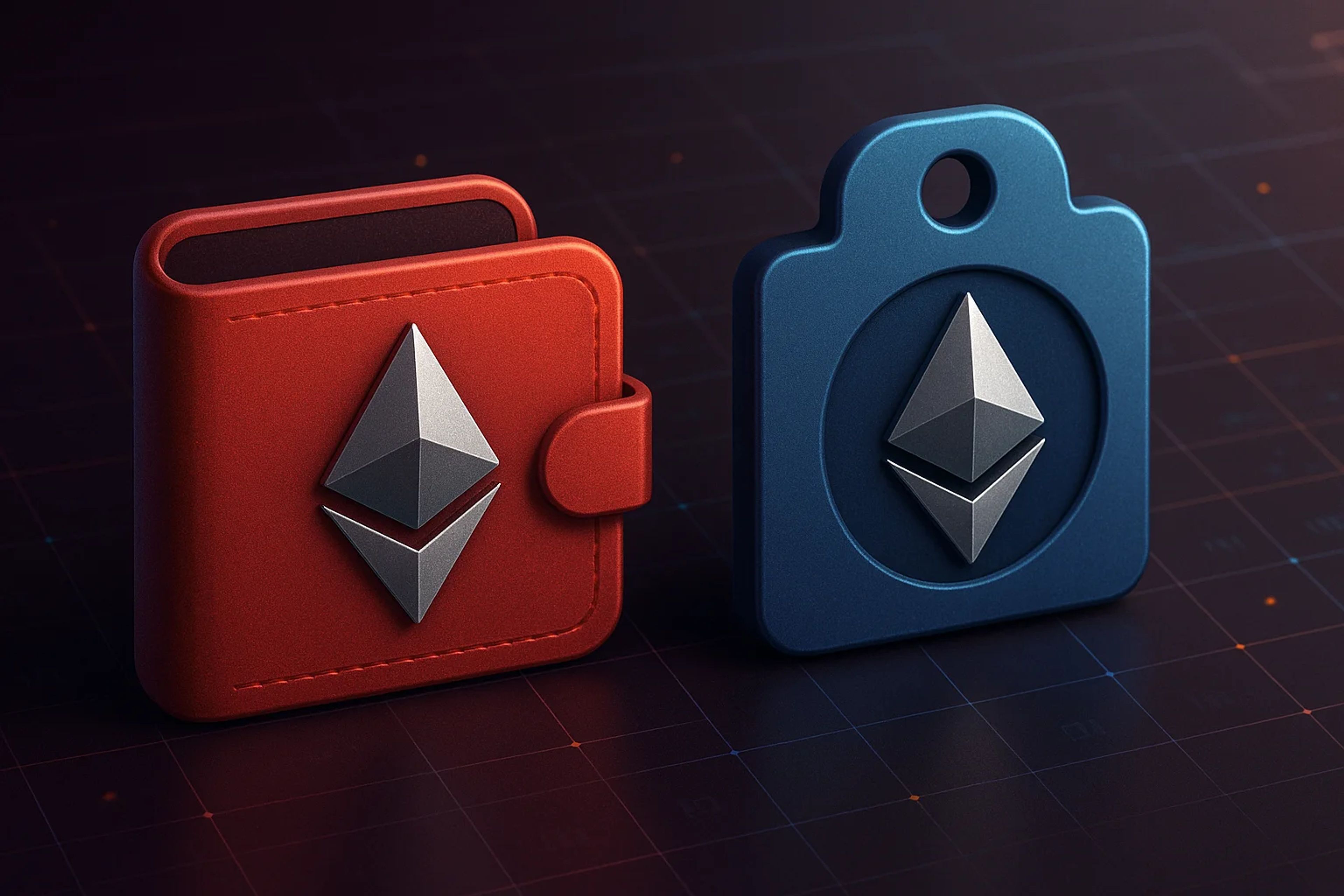
Ethereum and Base abandon shared account abstraction standard after talks break down
Ethereum is pushing EIP-8141 Frame Transactions, while Base is advancing EIP-8130 Keystore on devnet.
Ethereum and Coinbase’s Base will pursue different native account abstraction standards after attempts to agree on a shared approach broke down last week. The split raises the odds that wallets and tooling will need to handle dual transaction formats across Ethereum L1 and Base L2.
Ethereum and Base are now explicitly on different paths for native account abstraction after efforts to align on a shared standard broke down last week, setting up a split that is less about ideology than about who has to absorb the complexity. The immediate practical consequence is that cross-network transaction handling may no longer converge on a single “native AA” format, even as users increasingly treat Ethereum mainnet and Base as one execution surface.
Derek Chiang, a founding member and researcher at Ethlabs and a co-author of Ethereum Improvement Proposal 8141, said interoperability standards became secondary to each chain’s core goals, which is how a coordination problem becomes a wallet problem. In Chiang’s framing, the divergence risks “putting the burden on wallets,” because wallet developers may need to support separate transaction formats to keep the user experience consistent when moving between Ethereum layer 1 and Base layer 2.
Account abstraction, in this context, is the design space that lets accounts use programmable rules for authorizing transactions and paying fees, rather than relying only on the default externally owned account flow. That matters for power users because AA is where features like richer signing policies, sponsorship patterns, and more flexible fee payment tend to land first, and it is also where incompatibilities surface fastest when the same wallet is expected to behave identically across multiple networks.
The split also comes with a clear sequencing mismatch. Ethereum’s native AA direction is being positioned as part of a broader layer-1 roadmap that emphasizes security properties and long-horizon cryptography, while Base is iterating on an implementation that is already running in a developer environment, which tends to pull wallet and tooling teams toward whatever is shippable first.
Wallets Face Dual Transaction Formats as EIP-8141 and EIP-8130 Diverge
On Ethereum’s side, developers are advancing “Frame Transactions” under EIP-8141 as a “headliner” item under the planned Hegotá upgrade. The stated aim is to introduce native account abstraction on Ethereum mainnet and create a path toward post-quantum authentication, tying the AA work to the chain’s security roadmap rather than treating it as a purely UX-driven wallet feature.
Base, by contrast, is developing native account abstraction via “Keystore” under EIP-8130, and that implementation is currently live on devnet. Devnet status does not guarantee a production timeline, but it does signal that Base can iterate in public and pressure-test design choices earlier, which can pull ecosystem tooling toward its transaction format even before Ethereum’s equivalent path is ready.
Chiang framed the divergence as a reflection of different layer-1 versus layer-2 priorities. In his account, layer-1 networks are increasingly focused on censorship resistance, capture-resistance, open-source, privacy, and security features, which can drive different account standards, while scalability-focused layer-2 networks are more aligned with standards such as EIP-8130.
The open question is whether this becomes lasting fragmentation or a temporary period of parallel experimentation. Chiang argued the separation is not necessarily negative because Ethereum and Base are now “free to innovate on AA to the maximal extent in accordance with their own visions.” That is directionally true, but it still leaves wallets and middleware as the place where “two visions” have to be reconciled into one button that says “send.”
My Read: AA Fragmentation Becomes a UX and Tooling Risk Before It Becomes a Price Story
The filing-equivalent detail here is that the split is happening at the transaction format layer, not at the marketing layer, which is why the near-term risk is operational rather than narrative-driven. The threshold that matters is whether major wallets commit to supporting both Frame Transactions (EIP-8141) and Keystore (EIP-8130) or ship a compatibility layer that avoids dual formats, because without that bridge, users will feel the divergence as inconsistent signing flows and uneven feature support across Ethereum and Base.
The real test is cadence: Base’s Keystore is already live on devnet, while Ethereum’s EIP-8141 is tied to Hegotá, which developers could begin implementing in late 2026 after Glamsterdam, and Ethereum’s public roadmap places Glamsterdam’s mainnet launch sometime in the second half of 2026. If those timelines hold without a renewed interoperability effort or third-party standardization proposal, the split becomes practical in wallets long before it becomes legible in market pricing.


