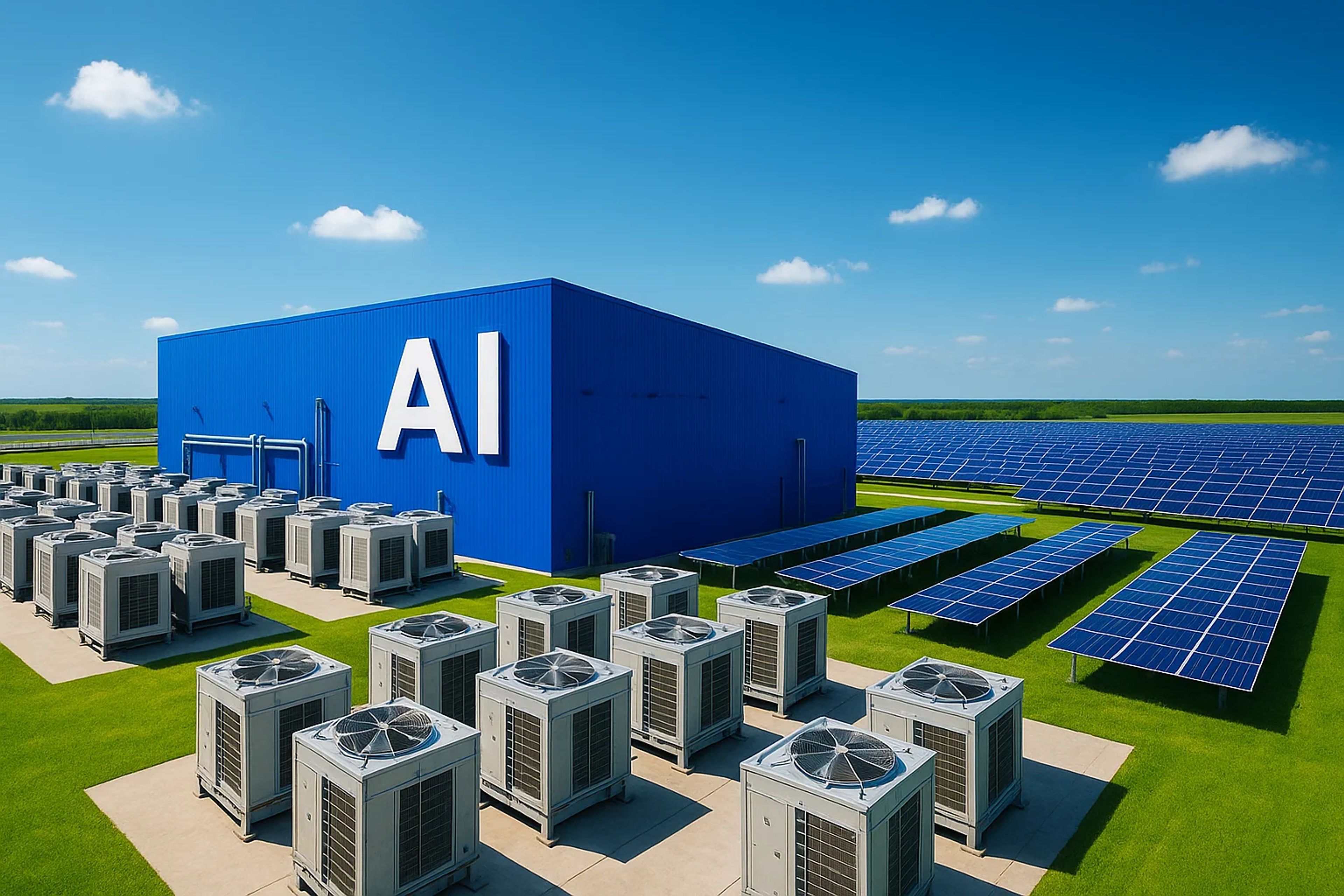
Galaxy Digital’s June rally shifts focus to Helios AI data-center optionality
Investors are treating the Texas campus as scarce power-and-grid infrastructure, not a proxy for Bitcoin or ETF flows.
Galaxy Digital shares rose sharply in June 2026 as investor attention centered on the company’s Helios campus in Texas and its potential as an AI/high-performance computing data-center project. The move is being framed as a public-market re-rating of some crypto-linked equities around power, land, and grid access rather than token beta.
Key Takeaways
- Galaxy Digital’s June 2026 share strength was tied to Helios’ AI/HPC data-center narrative, not Bitcoin price action, ETF inflows, or broader crypto trading activity.
- The company has controlled the Helios campus since buying it from Argo Blockchain in 2022 and has been repositioning the site toward AI and high-performance computing.
- Agreements involving AI cloud provider CoreWeave were linked to Helios, reinforcing that AI operators see strategic value in the asset.
- Multi-year AI infrastructure contracts are being positioned as a more predictable revenue base than cyclical crypto-linked businesses, supporting a different valuation multiple.
Galaxy’s June Rally Gets Reframed as an AI Infrastructure Trade
Galaxy Digital’s June 2026 rally is being interpreted less like a standard “crypto beta” move and more like an AI infrastructure repricing. The key detail is what the market did not appear to be reacting to: the share move was not attributed to Bitcoin prices, ETF flows, or a step-change in crypto trading activity.
Instead, attention concentrated on Helios, Galaxy’s Texas campus being developed as a major data-center project for artificial intelligence and high-performance computing (HPC). In this framing, Galaxy is being valued for a physical bottleneck asset that sits upstream of AI demand, rather than for the volatility of digital-asset markets.
That distinction matters for traders because it implies a different driver set. If the marginal buyer is underwriting data-center optionality, the stock’s sensitivity shifts toward buildout milestones, counterparties, and contracted revenue potential, not just token tape.
Inside Helios: From Argo Deal to AI/HPC Data Center Pivot
Helios is not a greenfield pitch. Galaxy acquired the site from Argo Blockchain in 2022 and began shifting the campus toward HPC and AI data-center services. That ownership history gives the narrative a concrete anchor: the market is pricing a repurposed infrastructure asset already on Galaxy’s balance sheet, not a speculative land grab.
The Helios thesis also gained credibility from external interest. AI cloud provider CoreWeave entered into agreements tied to the site, cited as evidence that AI operators see strategic value in the infrastructure. The disclosure stops short of the details traders would normally demand, with no contract size, duration, pricing, capacity, or start dates provided.
Operationally, the pivot is a business-model shift. Galaxy still operates across digital-asset trading, asset management, venture investments, and blockchain infrastructure, but Helios introduces a pathway to revenue that can be structured more like infrastructure leasing than market-driven crypto activity.
Why Wall Street Is Pricing Power, Land, and Grid Access as Scarce Inputs
AI infrastructure is being treated as a constraint problem. Modern AI systems require large GPU clusters, specialized networking, advanced cooling, and huge electricity consumption. The bottleneck is increasingly the ability to site and power those systems, not just to source hardware.
That’s why power and grid connection have become the scarce inputs. The thesis is explicit: “In many regions, access to power has become more valuable than access to graphics processing units (GPUs) themselves,” and some utilities have “years-long waiting lists” for large AI data-center projects seeking grid connections.
For valuation, this is where the multiple shift comes from. Crypto-linked revenue streams are typically cyclical, tied to sentiment, prices, and activity. AI infrastructure revenue can be underwritten through multi-year contracts, which public-market investors often treat as more predictable and therefore worth paying up for.
Signals Traders Can Track: Contracts, Capacity, and Counterparties at Helios
The next leg of this trade is disclosure-driven.
First, the market needs specifics on the CoreWeave agreements tied to Helios. Duration, pricing structure, capacity commitments (including MW), and start dates would turn a narrative catalyst into something modelable.
Second, traders can track Galaxy’s own updates on Helios buildout milestones and commercialization progress for AI/HPC services. The real question is whether the campus is moving from “optionality” to operational throughput.
Third, watch whether investors keep separating infrastructure asset value from direct crypto exposure when valuing crypto-linked public companies. If that separation persists, comparable companies with power, land, and grid access may see similar re-ratings.
Finally, the key fundamental check is whether Helios is generating, or is expected to generate, multi-year contracted revenue streams versus remaining exposed to crypto-linked variability.
The Multiple Shift Is Real, but the Data Still Isn’t
I take the June move as evidence that public markets are willing to pay for power-and-data-center optionality inside a crypto-linked wrapper, even when the crypto catalysts are not the headline driver. The Helios angle has substance because Galaxy already owns the asset and has been pivoting it since 2022, and CoreWeave-linked agreements add a credible AI counterparty signal.
The threshold that matters is contract clarity. If Helios starts showing multi-year, capacity-defined commitments and repeatable commercialization milestones, the setup starts to look structural rather than narrative-driven, and the re-rating becomes something the market can defend through a cycle.


