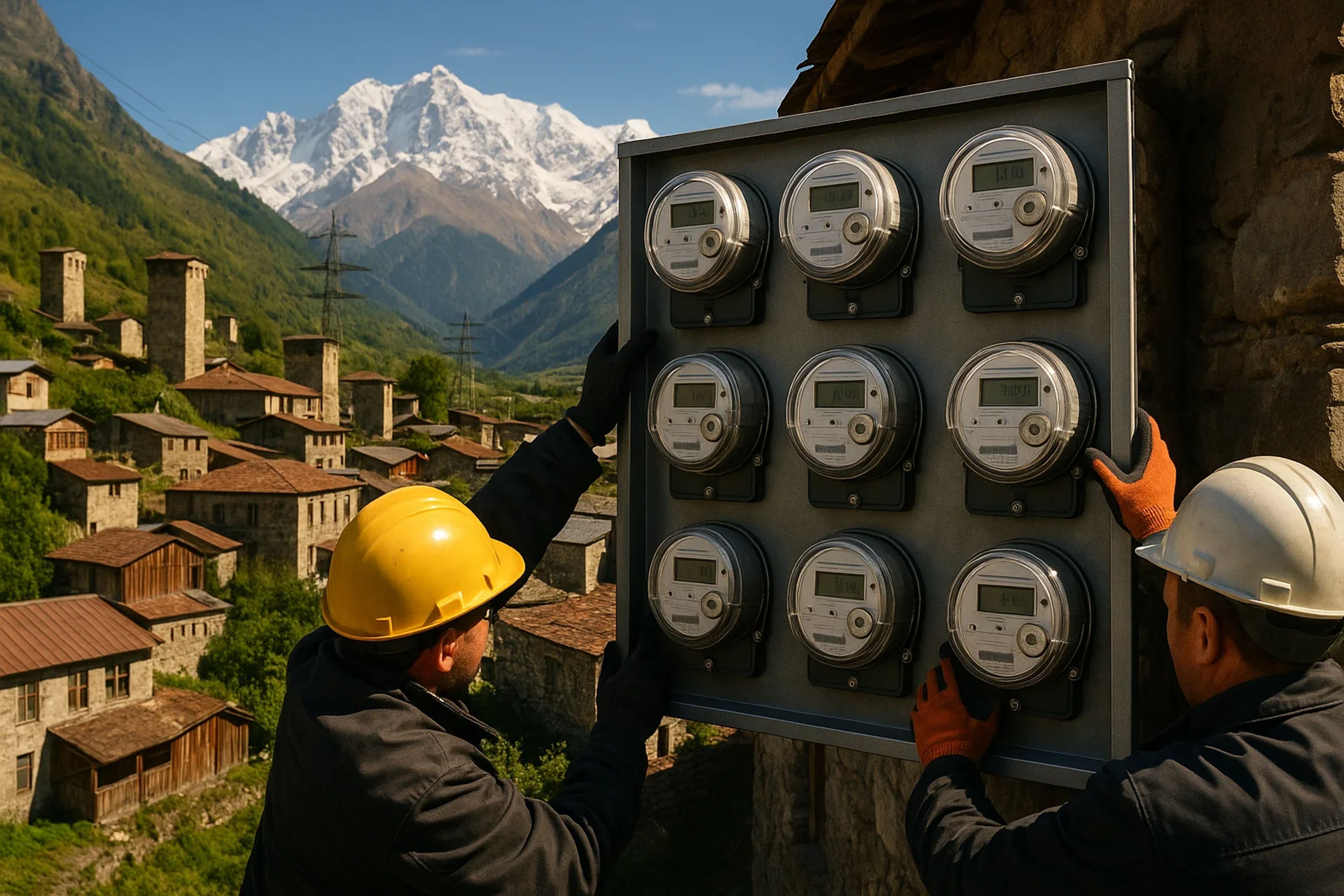
Georgia orders Mestia meter rollout as officials blame illegal mining for grid strain
Vice PM Mamuka Mdinaradze cited 133M kWh of 2025 consumption and tasked law enforcement to identify illicit operations.
Georgia’s government says illegal crypto mining in Mestia has overloaded the local grid and triggered outages, and it plans to respond with village-level electricity metering and law-enforcement identification of illicit operations. Vice Prime Minister Mamuka Mdinaradze tied the push to a claimed 133 million kWh of electricity consumption in 2025 and estimated 20–25 million lari in annual damages.
Key Takeaways
- Electricity meters are set to be installed across Mestia’s villages and settlements as part of a crackdown on illegal crypto mining.
- Officials put Mestia’s 2025 electricity consumption at 133 million kWh, more than 13 times the roughly 10 million kWh cited for comparable municipalities.
- Annual financial damage tied to the extra electricity output was estimated at about 20–25 million lari (up to about $9.4 million).
- Law enforcement has been tasked with identifying illegal mining operations, while Svaneti electricity is expected to remain free up to a predetermined quantity.
Mestia Meter Rollout Targets Illegal Mining Load
Georgia’s government is moving to install electricity meters across villages and settlements in Mestia, a municipality in the Svaneti region, after officials blamed illegal crypto mining for grid strain and repeated outages.
Vice Prime Minister Mamuka Mdinaradze said large-scale illegal mining has deteriorated the energy supply and overloaded the grid, resulting in “numerous outages in the region, affecting both residents and tourists.” Alongside the metering rollout, he said law enforcement agencies have been tasked with identifying illegal mining operations.
For traders who track mining-linked policy risk, the key shift is operational. Village- and settlement-level metering is a practical mechanism for pinpointing high-load users, not just a public complaint about grid stress. If implemented as described, it can compress the time between suspicion and enforcement by turning consumption patterns into an addressable target set.
The Numbers Officials Cited: 133M kWh and 20–25M Lari in Damages
Mdinaradze pegged Mestia’s electricity use at “electricity consumption to 133 million kilowatt-hours in 2025, more than 13 times the level of comparable municipalities.” He framed the baseline for similar regions at about 10 million kilowatt-hours.
A kilowatt-hour (kWh) is a unit of energy use. It is the amount of energy consumed by a 1,000-watt load running for one hour, which makes it a clean way to compare aggregate demand across municipalities.
Mdinaradze also estimated the financial impact of the additional electricity output at “financial damages of about 20-25 million lari, or up to $9.4 million annually.” The packet does not include an independent breakdown of how that damage figure was calculated, but the magnitude of the consumption gap is the point that matters for market structure. A 133 million kWh print against a ~10 million kWh peer baseline implies the dominant marginal load is not households or tourism seasonality. It is something industrial and persistent, which is consistent with the government’s mining thesis.
How the Crackdown Is Supposed to Work: Village-Level Metering and a Free-Use Allowance
Mdinaradze said metering will be implemented locally and “on a larger scale across each village or settlement,” with the stated goal of identifying the exact sources of illegal mining operations. In practice, that design choice matters because it shifts enforcement from broad regional restrictions to targeted identification of outlier consumption.
He also said electricity in Svaneti will remain free for every consumer up to a predetermined quantity. That carve-out reads as an optics and compliance tool. Keeping a free-use allowance preserves the household and tourism narrative while still creating a hard boundary where outsized consumption becomes visible and actionable.
Georgia’s broader context explains why even a localized move can matter. The country has attracted Bitcoin mining activity due to cheap electricity from hydropower and favorable tax treatment, including free industrial zones and VAT exemptions on certain crypto-related activities. VAT is a value-added tax, and exemptions can materially lower operating costs. Bitfury built a 20-megawatt Bitcoin mining facility in Georgia in 2014, known as the Gori Data Center.
Signals to Watch for Georgia crackdown on illegal mining in
The next leg of this story is about specificity. The market will need clarity on penalties, sanctions, or confiscation policies once the metering program is in place, because deterrence depends on consequences, not just measurement.
Timing is the other variable. Any announced schedule for meter installation across Mestia’s villages and settlements, and when enforcement actions begin, will determine whether this is a near-term disruption risk or a slow administrative rollout.
The “predetermined quantity” of free electricity in Svaneti is also a key threshold. Traders should watch for whether that allowance differs for commercial users, and whether the threshold is adjusted once metering data reveals the true distribution of consumption.
Finally, the first confirmed raids, shutdowns, or identified operations following the law-enforcement tasking will be the real proof point that the policy is moving from messaging to execution.
Hashrate Risk Signals From Local Enforcement and Power Policy
I treat this as a localized enforcement story with a potentially clean transmission mechanism. Metering at the village and settlement level is the kind of plumbing change that can turn “everyone knows it’s happening” into a list of addresses with abnormal load profiles, which is when enforcement accelerates.
The threshold that matters is the free-use allowance and how aggressively authorities treat consumption above it. If the allowance is set to protect normal households and tourism while isolating industrial draw, the setup starts to look structural rather than narrative-driven, and the practical impact is a measurable reduction in local power demand that forces illicit miners to relocate or shut down.


