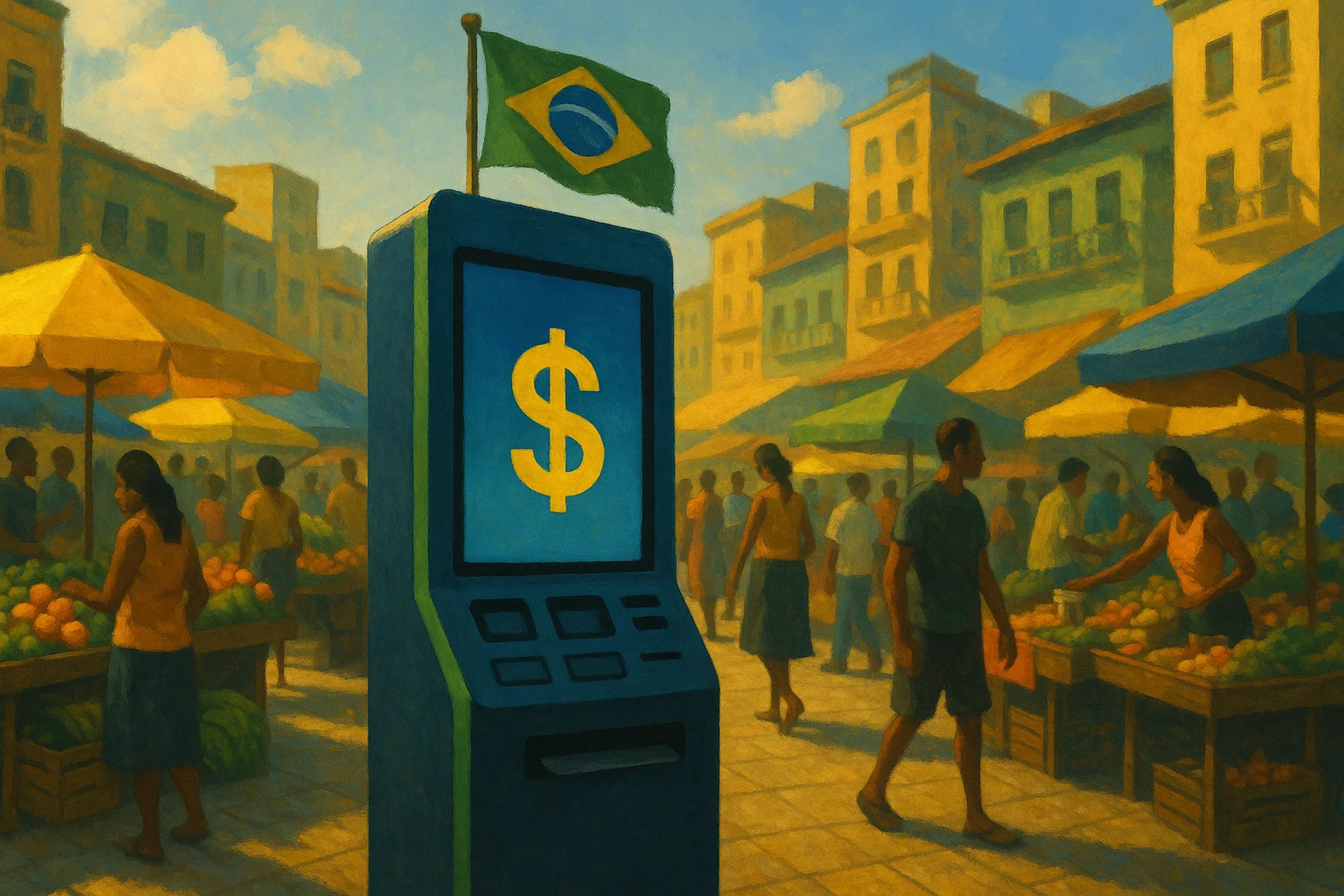
IMF flags Brazil’s stablecoin cross-border flows as fast-growing and shock-sensitive
Brazil’s central bank has already tightened cross-border rails under Resolution BCB No. 561 for eFX providers.
The International Monetary Fund is treating Brazil’s USD-stablecoin-led crypto market as a financial-stability issue as cross-border crypto flows grow faster than traditional capital flows. The warning lands as Banco Central do Brasil tightens parts of the cross-border rulebook for electronic FX providers under Resolution BCB No. 561.
Key Takeaways
- Brazil’s crypto asset market, led by US dollar-pegged stablecoins, has expanded rapidly since 2017 and is drawing closer oversight attention from the IMF.
- Cross-border crypto flows in Brazil have “been steadily increasing,” outpacing traditional capital-flow channels in the IMF’s framing.
- Stablecoin purchases were assessed as two to three times more sensitive to global shocks than portfolio investment or foreign direct investment.
- Resolution BCB No. 561 updated Brazil’s eFX framework, restricting the use of digital assets in certain international payment and transfer services and pushing settlement back onto FX or non-resident BRL account movements.
IMF Puts Brazil’s Stablecoin Boom on the Financial-Stability Radar
The IMF’s latest Financial System Stability Assessment puts Brazil’s crypto market in the same bucket as other macro-relevant plumbing: large, fast-growing, and increasingly connected to the traditional financial system. The report’s emphasis is not on speculative altcoin cycles. It is on US dollar-pegged stablecoins and the way they are being used as functional rails for moving value.
The IMF’s language is explicit about the direction of travel. It wrote: “The crypto-asset market in Brazil is large and fast-growing, and increasingly interconnected with the traditional financial system,” a framing that elevates stablecoin activity from niche adoption to a potential financial-stability transmission channel.
Cross-Border Crypto Flows vs Traditional Capital Flows: The Divergence the IMF Highlighted
The core divergence the IMF highlighted is speed and sensitivity. Cross-border crypto flows have “been steadily increasing,” and the IMF said those crypto flows are growing faster than traditional capital flows.
For macro-sensitive traders, the key metric is the IMF’s shock sensitivity claim: stablecoin purchases are two to three times more sensitive to global shocks than traditional portfolio investment or foreign direct investment flows. In practice, that implies stablecoin demand can reprice and reroute faster than the channels policymakers typically monitor, turning stablecoin rails into a higher-frequency conduit for risk-on and risk-off behavior.
That matters because the market structure is different. Stablecoins can be acquired and moved quickly, and the IMF is effectively warning that this speed can amplify external shocks into domestic flow dynamics sooner than portfolio or FDI data would reveal.
Regulatory Gaps the IMF Says Still Matter: Custody Protections, Issuance Rules, and AML/CFT
The IMF said Banco Central do Brasil has already taken steps to regulate crypto asset service providers, but it still sees gaps in three areas: customer asset protection, stablecoin issuance rules, and AML/CFT compliance.
The sequencing is important. The central bank is not starting from zero, but the IMF is signaling that the remaining gaps are the ones that tend to matter when stablecoins become a mainstream cross-border tool. Customer asset protection goes to custody and failure modes at intermediaries. Stablecoin issuance rules go to who can issue, under what backing and governance standards. AML/CFT goes to the compliance perimeter around flows that can move across borders without the same friction as bank rails.
Signals to Watch for IMF flags Brazil stablecoin flows risk
The next market-moving information is likely to come from rulemaking detail rather than headline statements. Traders should watch for follow-on Banco Central do Brasil actions that directly address the IMF’s cited gaps, especially any framework touching stablecoin issuance rules, customer asset protection standards, or AML/CFT requirements.
Resolution BCB No. 561 is also not a one-and-done event until implementation is clear. The rule amended the electronic foreign exchange (eFX) framework, prohibiting the use of digital assets for certain international payment and transfer services. It also requires payments and receipts between eFX providers and foreign counterparties to be conducted through foreign exchange transactions or movements in non-resident Brazilian real accounts. Clarifications on which “international payment and transfer services” are covered, and how enforcement will work in practice, will determine whether this is a narrow compliance change or a broader constraint on stablecoin-based settlement.
Finally, the IMF assessment excerpt does not provide absolute figures for stablecoin volumes or cross-border magnitudes. Any future IMF commentary that adds quantitative sizing would tighten the market’s ability to price regulatory and liquidity risk.
Why Shock-Sensitive Stablecoin Demand Raises Policy and Volatility Risk in Brazil
I read the IMF’s “two to three times” shock-sensitivity point as the real signal. The threshold that matters is whether stablecoin rails keep absorbing global risk shocks faster than traditional portfolio and FDI channels, because that is when policymakers start treating payment plumbing like a macro lever.
If Resolution 561’s settlement requirements end up being enforced broadly across the payment and transfer stack, the setup starts to look structural rather than narrative-driven. In practical terms, this development matters if stablecoin cross-border demand continues to lead Brazil’s flow cycle and forces policy to tighten around the rails, not just the intermediaries.


