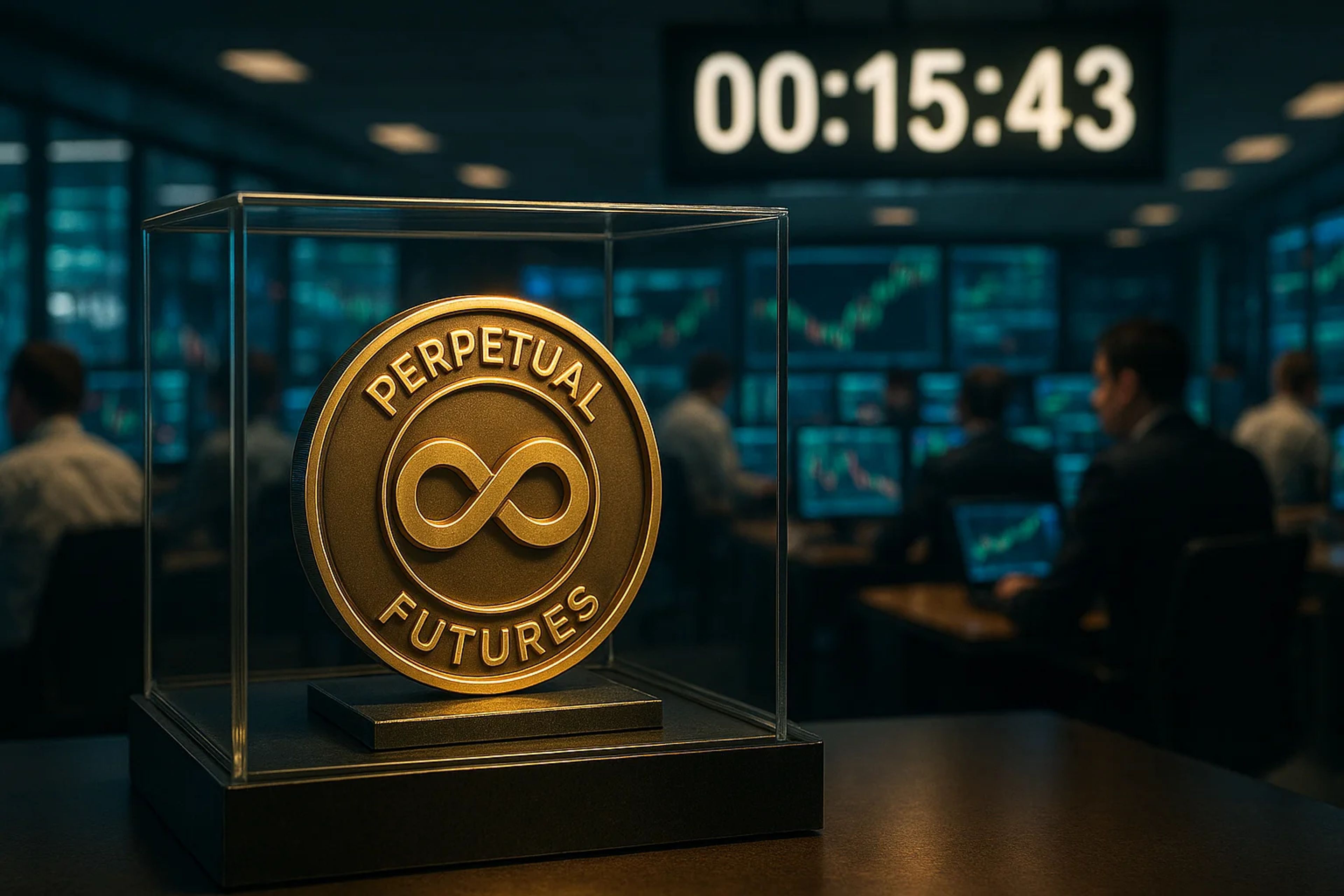
Kraken plans U.S.-regulated perpetual futures on Kraken Pro within weeks
Kalshi says its newly launched U.S. perps crossed $1B in volume, offering an early demand signal.
Kraken expects to launch U.S.-regulated perpetual futures on Kraken Pro in the coming weeks after building a CFTC-regulated derivatives footprint through acquisitions. The timing lands as Kalshi says its U.S. perps product has already cleared $1 billion in trading volume days after launch.
Key Takeaways
- Kraken expects a Kraken Pro rollout of perpetual futures in the coming weeks.
- The exchange entered U.S. regulated derivatives through the NinjaTrader and Bitnomial acquisitions, securing CFTC-regulated FCM, exchange, and clearing licenses.
- Kalshi launched U.S. perpetual futures last week and said it crossed $1 billion in trading volume on Wednesday.
- Perpetual futures keep leveraged exposure without an expiry, avoiding the roll mechanics required by dated futures.
Kraken Targets a Kraken Pro Perps Launch as U.S. ‘True’ Perps Arrive
Kraken is preparing to list perpetual futures on Kraken Pro “in the coming weeks,” pushing a product that has historically lived offshore onto U.S.-regulated rails. The company’s route matters. Rather than running the typical offshore playbook, Kraken entered the U.S. regulated derivatives market via its acquisitions of NinjaTrader and Bitnomial, which provide access to futures commission merchant, exchange, and clearing licenses overseen by the Commodity Futures Trading Commission.
That combination is the tell that U.S. perps are shifting from a regulatory talking point to live market structure. For active derivatives traders, the practical change is venue choice. Perps have been the dominant crypto derivatives instrument globally, but U.S. access has been constrained for years.
Kalshi’s $1B Volume Print: An Early Read on Onshore Perp Demand
Kalshi’s early volume number is the first real datapoint that onshore perps can attract flow quickly. The prediction market platform launched U.S. perpetual futures last week and said on Wednesday it had already crossed $1 billion in trading volume.
That figure does not settle the long-term liquidity question, but it does reduce the odds that “regulated perps” remain a niche product with no natural user base. Offshore venues have trained the market to express risk through perps, and the U.S. now has at least one regulated on-ramp showing immediate activity.
Who Shows Up First: Kraken’s ETF-Style Adoption Map for Perps
Kraken’s head of derivatives, John Palmer, expects the first wave to look like the early spot bitcoin ETF rollout in January 2024. In his view, sophisticated proprietary traders and retail users move first, while investment advisers and large asset managers arrive later.
“When I think about those participants in trading, typically the first movers are going to be the ones that are more sophisticated in nature,” Palmer said, adding, “So they're either already connected to exchanges and trading themselves in a proprietary manner.”
He framed the institutional lag as process, not interest. “When you take further steps back in the asset management chain, then you have investment committees. There could be more additional governance, depending on the entity type,” Palmer said. “Those will typically require them to move a little bit slower.” He added: “I think we will see the same thing for perps,” pointing to how advisers and asset managers trailed retail and sophisticated flows in spot bitcoin ETFs.
Launch Details Traders Still Need: Underlyings, Leverage, Margin, and Eligibility
The market still lacks the details that decide whether this becomes meaningful liquidity or just a headline. Kraken has not specified an exact launch date, the initial list of perp underlyings, leverage limits, margin model, or which customer segments will be eligible at launch.
Mechanically, perps are popular because they remove the operational friction of dated futures. Perpetual futures allow traders to maintain leveraged positions without an expiration date, unlike traditional futures that require rolling into a new contract to maintain exposure. Palmer argued that simplicity is a core reason perps won offshore: “I think it's a simple derivative structure compared to some of the nuances of dealing with dated futures,” he said.
Kraken has also signaled a goal of eventually allowing crypto assets to be used as collateral, but provided no timeline. Kalshi’s next disclosures matter too. Follow-on volume and any open-interest reporting after the initial $1B milestone will show whether activity is sticky or launch-week churn.
Marcus Hale’s Take: Regulated Perps Could Shift U.S. Derivatives Liquidity, but Specs Will Decide the Impact
I treat this as the first credible onshore attempt to recreate the instrument that actually drives crypto price discovery. Kraken’s path through CFTC-regulated FCM, exchange, and clearing licenses is the opposite of the offshore model, and Kalshi’s $1B volume print suggests there is real pent-up demand for a compliant venue.
The threshold that matters is whether Kraken’s launch specs make perps operationally competitive with offshore alternatives. If leverage, margining, eligible customer access, and collateral rules land in a trader-friendly range, the setup starts to look structural rather than narrative-driven, and U.S. derivatives liquidity can begin migrating onshore in size.


