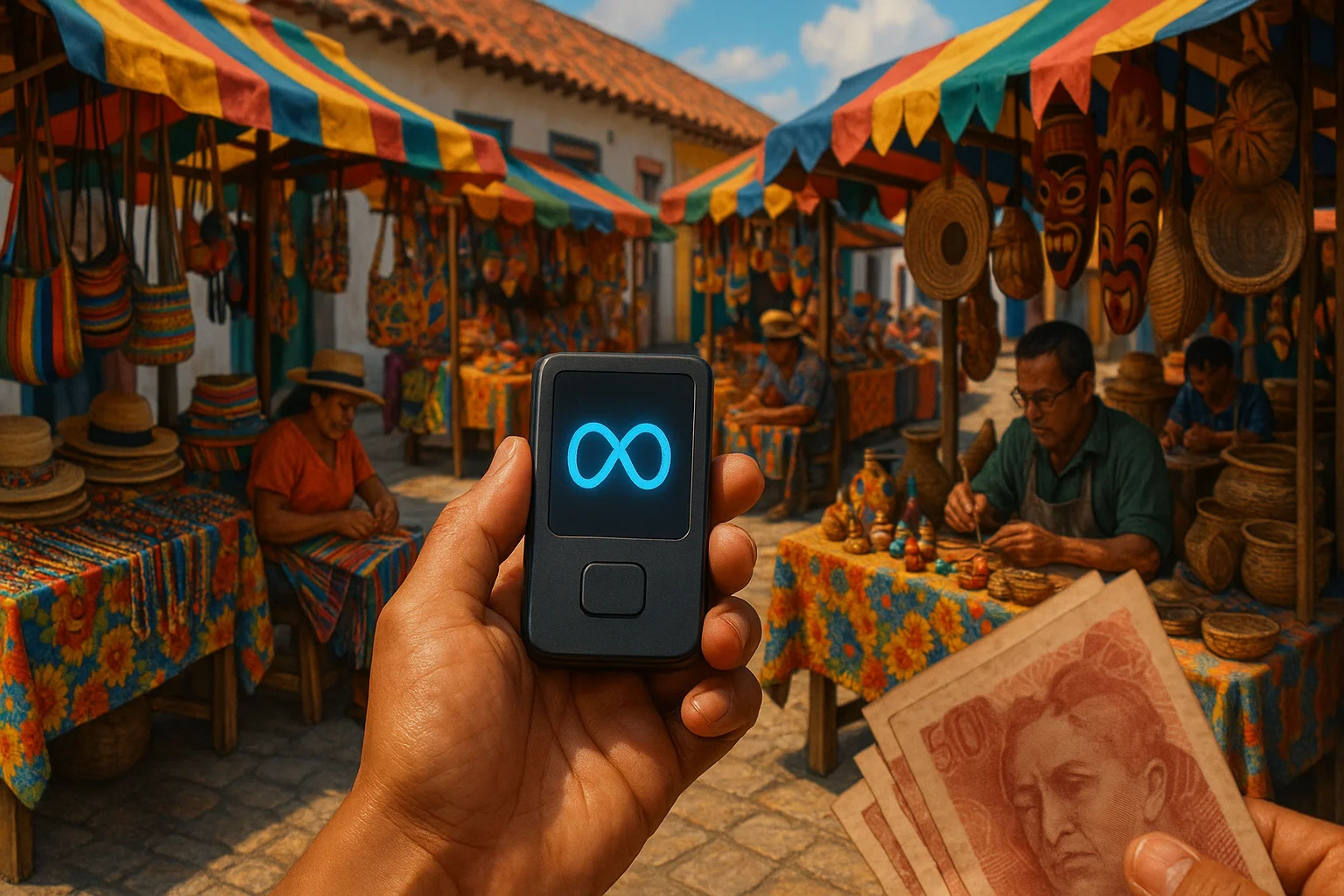
Meta to pay creators in USDC in Colombia and the Philippines
The company expects to expand stablecoin payouts to more than 160 countries, shifting conversion and custody work to creators.
Meta plans to begin paying creators in USDC in Colombia and the Philippines, with a stated goal of expanding to more than 160 countries. The move puts a payout flow described as nearly $3 billion annually onto onchain settlement rails, while leaving creators to handle wallets and local fiat conversion.
Key Takeaways
- USDC creator payouts are set to start in Colombia and the Philippines, with expansion to more than 160 countries expected by year-end.
- A payout program described as nearly $3 billion per year is being routed through onchain settlement rather than traditional banking rails.
- Creators must connect an external wallet, pick a supported network like Solana or Polygon, and self-custody funds.
- Stablecoin transaction volumes were cited at $33 trillion in 2025, up 72% year over year.
Meta’s USDC Creator Payouts: Colombia and Philippines First, 160+ Countries Next
Meta’s March plan centers on paying creators in USDC in Colombia and the Philippines, with an expansion target of more than 160 countries by the end of the year. The scale matters. Meta’s creator payouts are described as nearly $3 billion annually, and the program is positioned as onchain settlement replacing standard banking rails for disbursements.
For stablecoin markets, that is not a niche integration. It is a mainstream platform choosing a blockchain-based settlement leg for recurring payouts, which is the kind of flow that tends to harden infrastructure choices over time.
Onchain Settlement at Meta Scale: What Changes in the Payout Rail
The settlement pitch is straightforward: near-instant transfer, negligible costs, and cross-border movement that is materially cleaner than correspondent banking for smaller payments. That is the part stablecoins already do well, and Meta’s design leans into it.
The more important second-order effect is where the product boundary sits. Meta is not shipping a full payments experience. It is shipping a faster settlement rail between accounts, then stepping out. That framing matters for traders because it shifts the competitive battleground away from chain throughput narratives and toward the businesses that monetize the last mile.
The source also cites scale in the broader stablecoin complex: “Stablecoin transaction volumes reached $33 trillion in 2025 , up 72 percent on the previous year, with institutional adoption continuing to accelerate.” The underlying dataset is not identified in the excerpt, but the directionally important point is that usage is already large enough that integration and off-ramp UX become the constraint.
Wallets, Networks, and Self-Custody: The New Operational Burden for Creators
Creators receiving USDC must connect an external wallet, choose a supported network such as Solana or Polygon, and manage self-custody. Meta’s warning is explicit: “Meta warns that funds sent to the wrong address or an unsupported chain cannot be recovered.”
That is a clean operational handoff, and it increases user-level risk for non-crypto-native recipients. Network selection becomes a failure mode. Address hygiene becomes a support issue. The conversion path to spendable local currency is also external: creators may need to route funds to an exchange or liquidity provider, clear compliance checks, sell into fiat, then withdraw through domestic rails.
In markets like the Philippines, where mobile wallets like GCash and Maya are already embedded in daily commerce, the friction is not whether digital value can move. It is whether USDC can be turned into pesos inside existing habits without turning creators into part-time payments operators.
Confirmation Signals Traders Can Track in the Rollout
The rollout’s market impact will hinge on implementation details that are not specified in the excerpt. The first confirmation signal is which networks are actually supported beyond the examples of Solana and Polygon, and whether one chain becomes the default payout route.
The second is partnership disclosure. If Meta names wallet onboarding, compliance, or local fiat off-ramp partners in Colombia and the Philippines, that is where volume and fees concentrate. If it keeps off-ramping fully external, the winners skew toward exchanges, liquidity providers, and wallets that can reduce steps without Meta owning custody.
Third, traders should track timeline and milestone updates tied to the stated 160+ country expansion. Finally, watch for creator-facing guardrails prompted by the unrecoverable-funds warning, like address verification, chain auto-detection, or in-product friction that reduces mis-sends.
Marcus Hale’s Take: The Settlement Leg Is Solved—Distribution Shifts to Off-Ramp Winners
I treat this as validation of stablecoins as a settlement rail because the flow is recurring and large, and Meta is explicitly choosing onchain settlement over banking rails. The threshold that matters is whether Meta keeps the crypto layer exposed to creators or starts to abstract it with partners, because that decision determines where the economics land.
This looks more like a sentiment catalyst than a fundamental shift for any single chain until the supported-network list, defaults, and off-ramp integrations are confirmed. If the off-ramp layer gets packaged into a low-friction, compliant experience, the setup starts to look structural rather than narrative-driven, because that is what turns USDC from “received” into “spendable” at scale.


