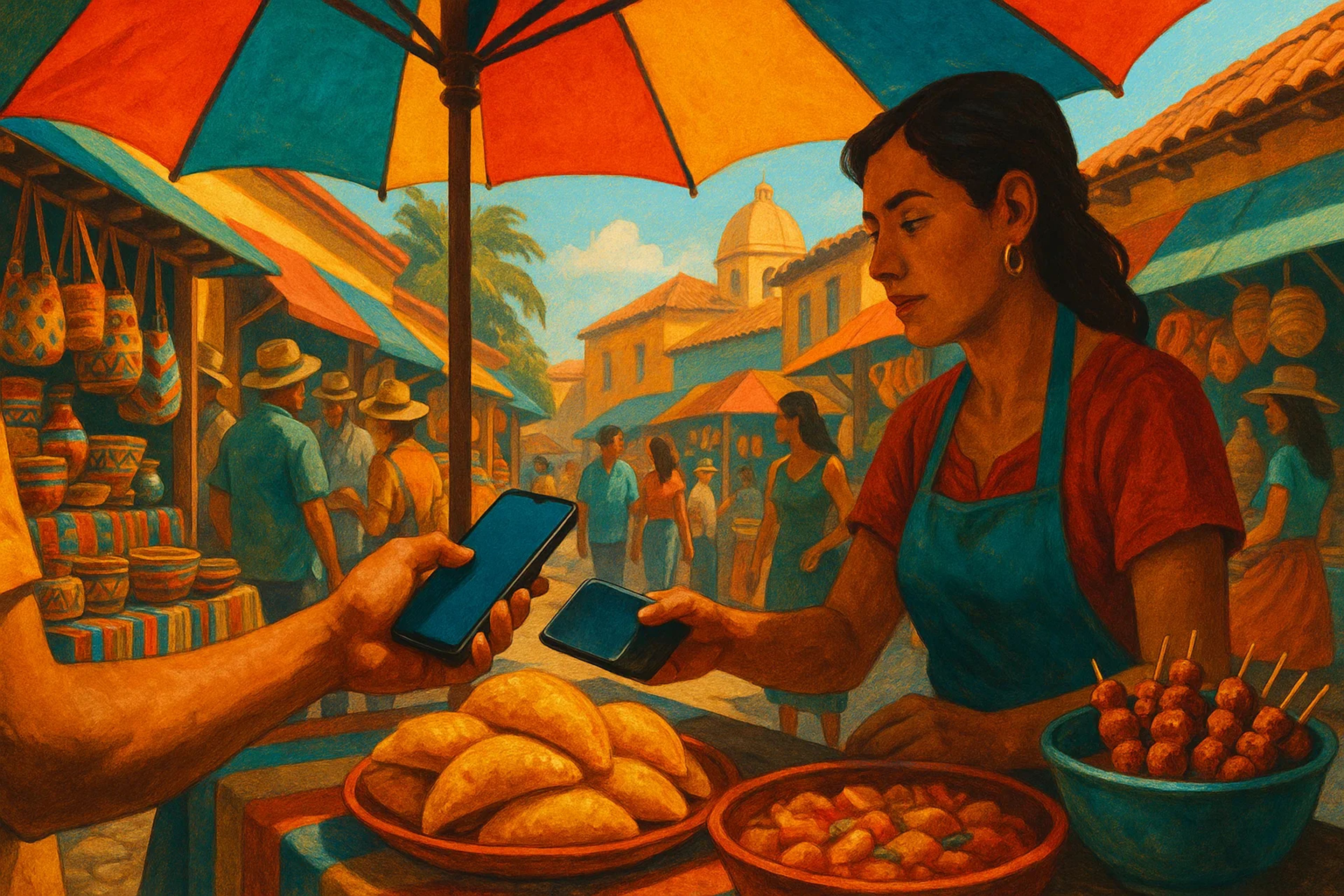
Oobit launches Colombia as ninth market, pushing USDT-led crypto payments
The firm cites Colombia’s stablecoin demand and reports 200%+ activity growth in Brazil since Nov. 2024.
Oobit launched its crypto payments platform in Colombia on May 14, 2026, calling it the company’s ninth live market as it expands across Latin America. The company is framing the rollout around stablecoin-heavy consumer spend, with USDT leading transaction share and Brazil usage metrics pointing to routine retail payments.
Key Takeaways
- Oobit went live in Colombia on May 14, 2026, bringing the payments platform to a ninth market.
- The company describes the product as non-custodial and Visa-linked, enabling wallet-based spending at more than 150 million merchants across 80+ countries.
- Brazil activity has increased more than 200% since the November 2024 launch, with active users averaging about $400 per month across 20 transactions.
- USDT represents the largest share of transactions on the platform, ahead of Oobit’s native token and USDC.
Colombia Becomes Oobit’s Ninth Live Market
Oobit launched its crypto payments platform in Colombia on May 14, 2026, and said the country is its ninth live market. The company positioned the move as a continuation of its Latin America rollout, following expansions that include Brazil, Argentina, and Chile.
The Colombia push is being marketed as a stablecoin-led bet. Chainalysis data cited by the company showed the Colombian peso ranked second globally in the share of centralized-exchange stablecoin purchases by currency, though the underlying dataset and time window were not specified in the materials provided. For traders, that framing matters because it ties the expansion to an existing stablecoin on-ramp footprint rather than a greenfield payments experiment.
How Oobit’s Non-Custodial, Visa-Linked Spend Flow Works
Oobit describes its product as a non-custodial crypto payments platform, meaning users keep control of assets in their own wallets rather than depositing funds with Oobit. The company says users can spend digital assets directly from their wallets through a Visa-linked payment system accepted at more than 150 million merchants across more than 80 countries.
The operational claim is that users spend from wallet without converting funds through traditional bank off-ramp services. In practice, that pitch targets two friction points that typically cap payments adoption: custody risk and the extra step of cashing out to a bank account before spending.
Brazil Metrics and Token Mix: USDT Leads the Payment Rail
Oobit’s most concrete traction disclosure in the packet is Brazil. The company said activity in Brazil increased more than 200% since launching there in November 2024, with active users spending an average of about $400 per month across 20 transactions.
That spend profile reads like routine consumer behavior rather than occasional, high-ticket purchases. Oobit also broke out merchant-category mix across its Latin American markets, saying grocery stores and supermarkets accounted for 35% of activity, followed by restaurants, food stores, and department stores. In Brazil specifically, it said users also spent crypto at gas stations, beauty shops, and electronics retailers.
On the asset mix, Oobit said USDT accounted for the largest share of transactions on its platform, ahead of Oobit’s native token and USDC. That hierarchy is consistent with the company’s narrative that stablecoins are functioning as the unit of account for everyday payments in these markets, not just as trading collateral.
Signals to Watch for Oobit expands USDT payments into Colombia
The first real adoption read will be whether Oobit publishes Colombia-specific metrics after the May 14 launch, including active users, transaction counts, and the USDT versus USDC split. Without that, Colombia remains a distribution headline rather than a usage story.
Brazil is the other pressure test. The company’s “200%+” figure is directionally useful, but the packet does not define “activity” or “active users,” or the measurement window behind the growth claim. Clearer definitions and follow-up prints would determine whether the Brazil ramp is sustaining or simply reflects early-base effects.
Two external benchmarks also matter for the narrative. Any update to Chainalysis’ stablecoin purchase-by-currency ranking could confirm or weaken the cited Colombian peso positioning. And the macro backdrop is stablecoin supply growth itself, with DefiLlama data cited showing the stablecoin market grew from about $243 billion a year ago to more than $322 billion today.
What This Says About Stablecoin Adoption Trades
I treat Oobit’s Colombia launch as a distribution expansion with a stablecoin wrapper, not proof of a step-change in payments adoption by itself. The threshold that matters is whether Colombia prints the same kind of small-ticket, high-frequency spend profile Oobit is reporting in Brazil, because that is where “payments rail” stops being marketing language and starts looking like measurable velocity.
USDT leading transaction share is the cleanest signal in the packet. If that dominance holds in Colombia and the company starts reporting consistent transaction counts and user cohorts, the setup starts to look structural rather than narrative-driven, and it becomes a more credible input into how traders think about real-world stablecoin usage alongside the headline market-cap growth.


