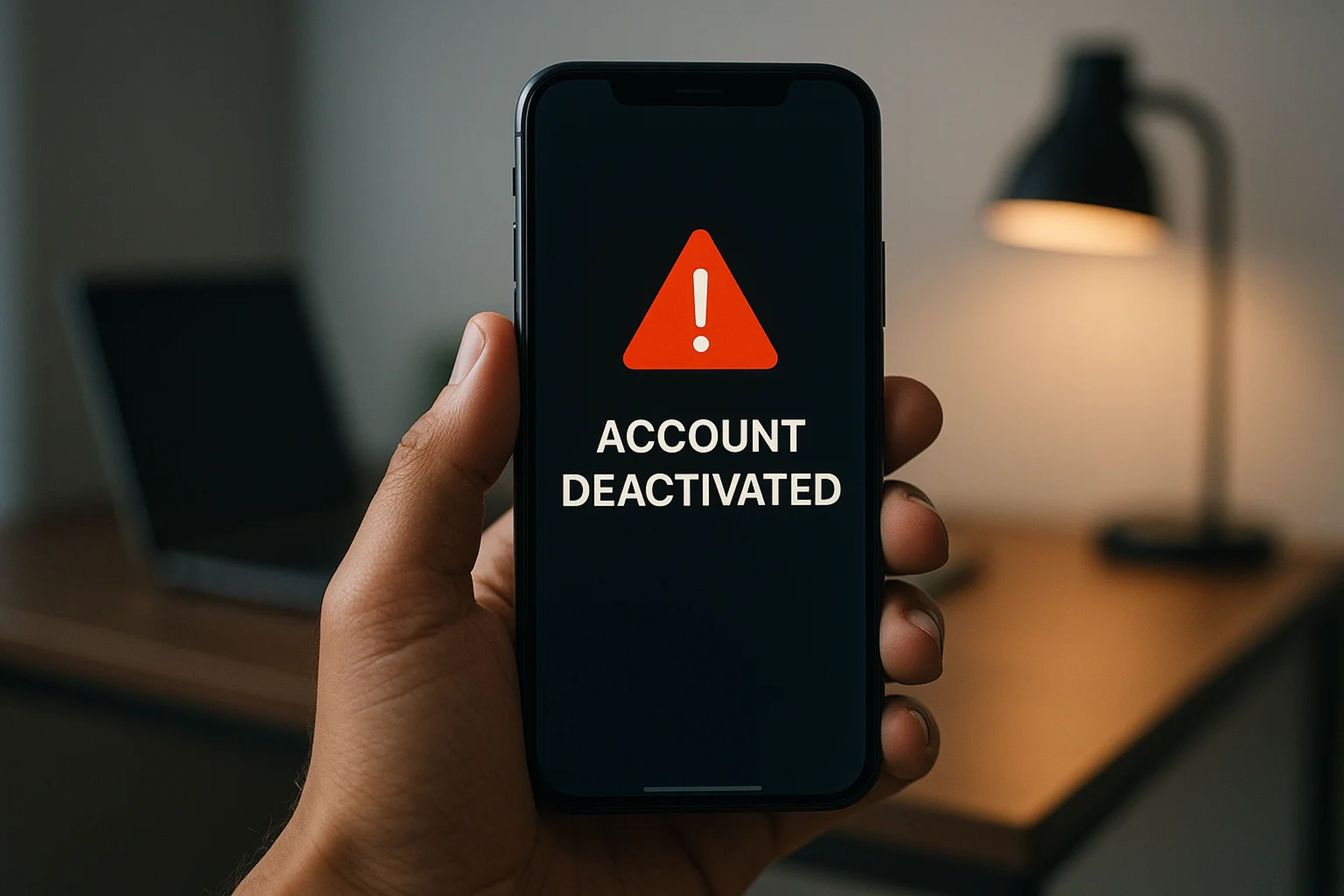
Ready users report non-EEA USDC card access cut within an hour after provider change
In-app notices cited users “primarily outside the EEA” and promised subscription refunds within 10 business days.
Ready users reported that the wallet’s USDC-linked payment card was rapidly deactivated for accounts outside the European Economic Area after a card provider change. Screenshots circulating on June 17 showed an in-app warning that the card would be shut off “within the next hour,” underscoring how quickly card rails can disappear when issuer partners change.
Key Takeaways
- Non-EEA Ready Card users shared in-app notices warning the card would be deactivated “within the next hour” after a provider change, affecting users “primarily outside the EEA.”
- Screenshots of the message also promised automatic refunds for any remaining subscription period within 10 business days.
- The replacement card provider and the reason for the switch were not disclosed, while public documentation linked the prior issuer-side partner to Kulipa.
- Ready did not provide a response to a request for comment by publication time.
Ready Card Users Report One-Hour Shutdown for Non-EEA Accounts
Users reported losing access to Ready’s USDC-linked payment card outside the European Economic Area (EEA) following a card provider change. Multiple screenshots showed an in-app notice stating, “Your Ready Card will be deactivated within the next hour,” and describing the change as affecting users “primarily outside the EEA.”
The speed matters. A one-hour window implies the spending layer can be switched off operationally at the issuer or program-manager level, regardless of whether the user’s underlying wallet is self-custodial. For traders and power users who treat stablecoin cards as a last-mile cash-out rail, that is a reminder that availability is a partner dependency, not a protocol guarantee.
Screenshots of the same message stated users would receive automatic refunds for any remaining subscription period within 10 business days. Separately, one user posting under the X handle TapSatoshi criticized Ready’s product roadmap, pointing to delayed Apple Pay support and prioritization of a “Rewards” section.
Issuer Switch Leaves Key Details Unanswered
Key details behind the shutdown remain unresolved. The identity of the new card provider was not specified, and the reason for the issuer or provider change was not stated.
Publicly available documentation linked the prior issuer-side partner for the program to Kulipa. Beyond that, the market is operating on screenshots and user reports, with no confirmed scope on how many accounts were impacted or whether any non-EEA users retained access.
Ready did not respond to a request for comment by publication time. Until the issuer-side partner is named and updated terms are published, regional availability should be treated as uncertain rather than temporarily “down.”
How a USDC Card Can Fail While the Wallet Still Works
Ready is a self-custodial wallet and payments company formerly known as Argent. It is built for Starknet, an Ethereum layer-2 network that uses zero-knowledge rollups.
Ready’s wallet supports multiple assets, including BTC and ETH, but the Ready Card is described as primarily built around USDC. The spending flow described in Ready documentation is straightforward: the system checks a user’s USDC balance in real time at purchase, routes the transaction through Mastercard’s payment network, and converts crypto into fiat at the point of sale.
That bridge is the issuer-side partner. When that link breaks or is re-scoped by geography, the card can stop working even if the user still controls funds in-wallet. Under the described model, users can still hold and transfer USDC onchain without interruption, framing the event as a payments-rail outage rather than a custody event.
Signals to Track for Non-EEA Access Returning
The first signal is simple identification: the new card provider or issuer-side partner, plus updated program terms that explicitly define supported geographies across the EEA and non-EEA regions.
A second signal is a direct Ready statement clarifying what drove the provider change and whether non-EEA access will be reinstated, including any timeline. Absent that, user reports will function as the de facto status page, especially confirmation of whether deactivations remain limited to users “primarily outside the EEA” or expand further.
Finally, the operational follow-through matters. The screenshots promised subscription refunds within 10 business days. Whether those refunds land on time will be a clean, observable test of how orderly the transition is behind the scenes.
The Hidden Counterparty in ‘Self-Custody’ Spending
I treat this as a reminder that “self-custody” and “self-sufficient payments” are not the same product. The threshold that matters is whether Ready can name the new issuer-side partner and publish terms that clearly restore non-EEA coverage, because without that, the card is a revocable permission layered on top of an onchain balance.
This looks more like a sentiment catalyst than a fundamental shift in stablecoin usage, but it is a real stress test of last-mile liquidity. If non-EEA access returns with transparent terms and refunds clear inside the stated window, the setup starts to look structural rather than narrative-driven, because it would show the program can swap counterparties without stranding users at the point of sale.


