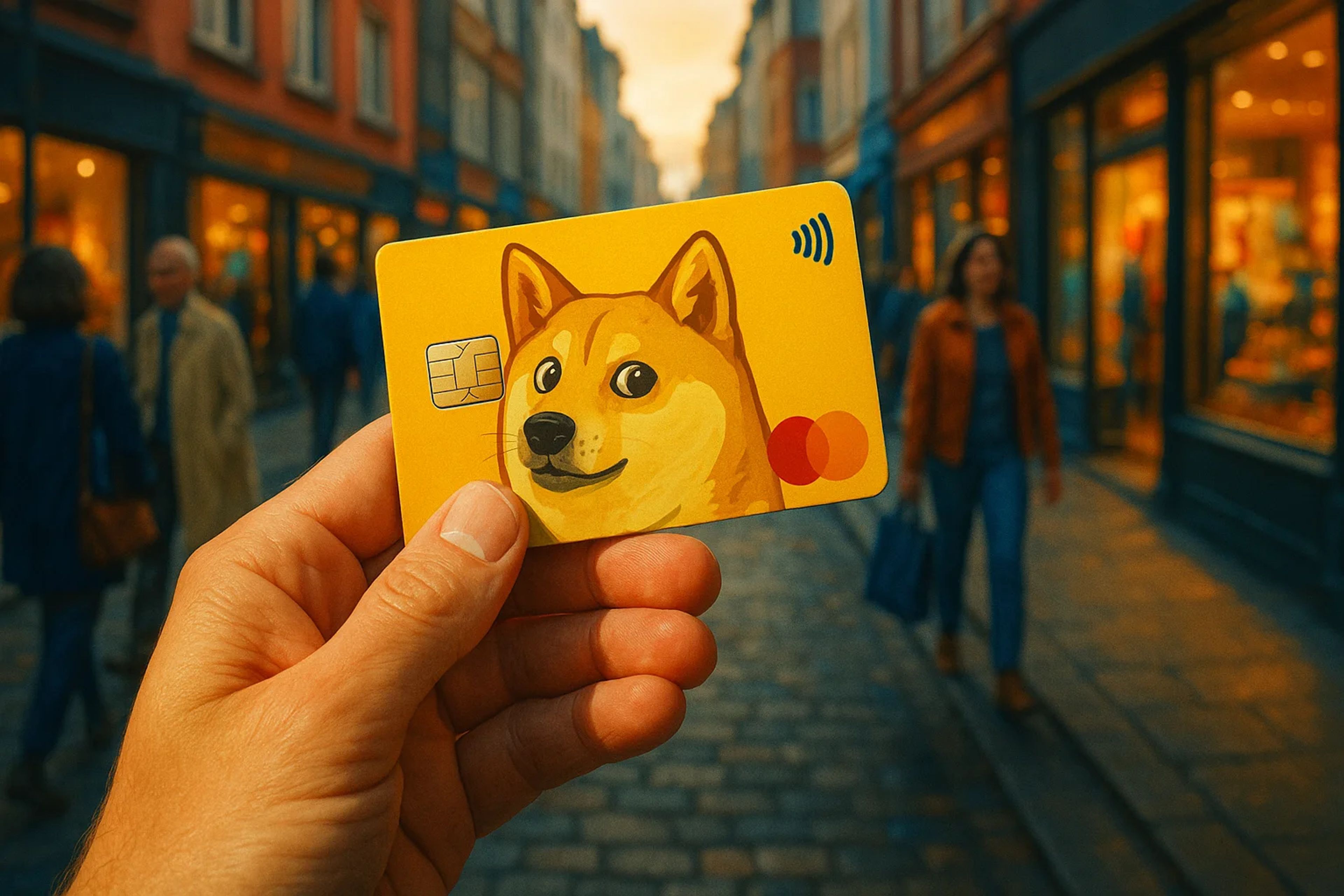
Revolut launches DOGE-themed physical debit card across U.K. and most of the EU
The card runs on Visa and Mastercard acceptance, with real-time conversion pricing and tax caveats flagged to users.
Revolut has unveiled a Dogecoin-themed physical debit card that can be used wherever Visa and Mastercard are accepted, with rollout starting in the U.K. and most of the EU. The company is marketing “no additional exchange fees” for purchases, while warning that live conversion rates at checkout and local tax rules can still shape the true cost of spending crypto.
Key Takeaways
- Revolut introduced a Dogecoin-branded physical debit card designed for use at any merchant that accepts Visa or Mastercard.
- The first wave covers the U.K. and most EU countries, with Hungary, Switzerland and Portugal excluded.
- Revolut says purchases come with no additional exchange fees, but conversion happens at the exchange rate at the moment of payment and may trigger tax obligations depending on local rules.
- DOGE was shown at $0.1032, up 6.40% at the time displayed alongside the announcement.
Revolut Brings a DOGE-Themed Physical Card to Visa/Mastercard Merchants
Revolut rolled out a Dogecoin-themed physical debit card that can be used anywhere Visa and Mastercard are accepted, pushing a memecoin-branded product directly onto mainstream payment rails.
For traders, the product design matters more than the meme. A themed physical card is a distribution play, not a protocol upgrade. Revolut is effectively framing DOGE as something you can spend in ordinary commerce, which is a different positioning than “hold it and hope.” The beneficiary is clear: Revolut gets higher engagement and transaction volume routed through its app, while DOGE gets a fresh narrative hook tied to real-world usage.
DOGE was referenced at $0.1032 (+6.40% at the time shown), giving the market a clean spot level to anchor any short-term sentiment response.
Where It’s Launching First: U.K. and Most of the EU
The initial rollout is regional. Revolut said the card will launch first in the U.K. and the EU, excluding Hungary, Switzerland and Portugal.
That constraint caps near-term impact. Even with globally recognizable branding, a U.K. and mostly-EU footprint keeps the first-order effects concentrated in those corridors. If there is a usage-driven narrative bid for DOGE, it likely shows up first in regional user metrics and social chatter rather than as an immediate global demand shock.
No Extra Exchange Fees, But Real-Time Pricing and Tax Rules Still Apply
Revolut stated on X that users “will not face additional exchange fees when making purchases.” The same message also carried the caveats that matter: crypto card payments execute at the exchange rate at the point of transaction, and spending “may also create tax obligations depending on local rules.”
In practice, “no additional exchange fees” is a strong adoption lever, but it is not the same thing as “no cost.” The effective cost and user experience will hinge on the live conversion rate at checkout, plus whatever spread or plan-level conditions sit behind the headline promise. The excerpt also leaves a key mechanic unresolved: whether spending draws from DOGE specifically or from broader crypto balances converted at point-of-sale.
Tax is the other friction point. If each spend is treated as a disposal in a given jurisdiction, the after-tax P&L can turn routine payments into a recordkeeping problem, which tends to suppress real usage even when the UX is slick.
Signals Traders Can Track From Here: Rollout Scope, Terms, and Usage Patterns
The next catalysts are operational, not ideological. Traders can track whether Revolut expands availability beyond the initial U.K./EU rollout and whether excluded markets are added later.
The real tell will be commercial terms. Any clarification on spreads, plan tiers, limits, and whether the card spends DOGE balances specifically or converts from a broader crypto wallet will determine whether this is a niche collectible or a scalable payments feature.
Revolut’s broader trajectory also matters. The company’s application for a de novo U.S. banking license is a distribution wildcard, and any follow-on updates could change how far crypto payment features can be pushed across new regulatory perimeters.
DOGE Branding Meets Mainstream Rails—But the Fine Print Drives the Real Adoption
I treat this as a distribution experiment with a memecoin wrapper. Visa and Mastercard acceptance is the point, because it turns “crypto spending” into something that looks like normal card usage, and Revolut is big enough for that framing to travel.
The threshold that matters is whether Revolut can keep the “no additional exchange fees” promise credible once users experience live conversion at checkout and the tax reality of spending. If those frictions stay contained and the rollout expands beyond the current U.K./EU footprint, the setup starts to look structural rather than narrative-driven, and that is when a DOGE-branded card becomes more than a marketing moment.


