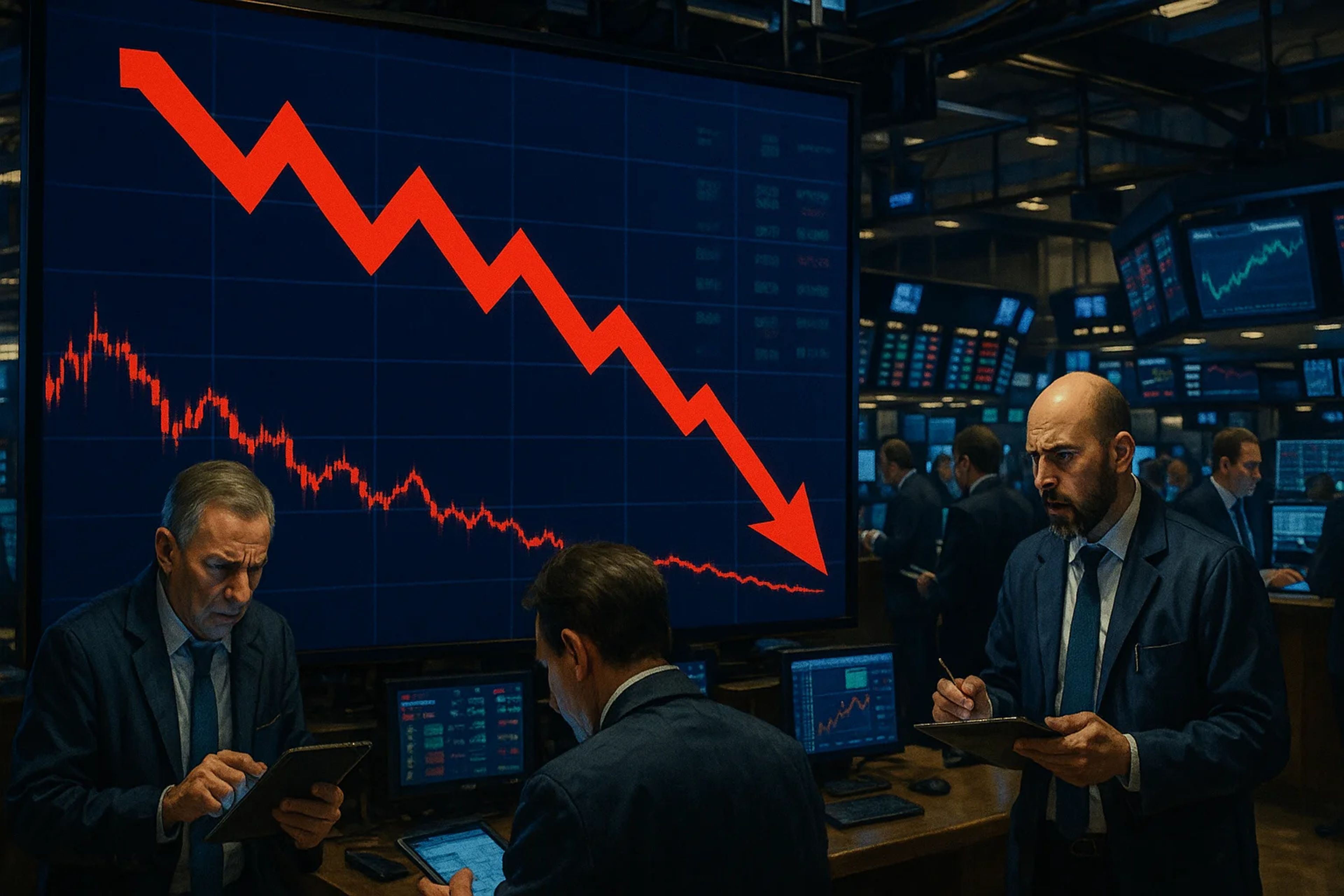
Securitize’s SECZ drops about 40% in first week after Cantor SPAC merger
Arca CIO Jeff Dorman attributed the slide to post-SPAC turnover and a weak crypto-equity tape, not a new fundamental shock.
Securitize (SECZ) is down roughly 40% since completing its SPAC merger with Cantor Equity Partner II last week, despite tokenization remaining a marquee Wall Street theme. Arca CIO Jeff Dorman said the move looks driven by SPAC mechanics and risk-off positioning in crypto-adjacent equities rather than company-specific deterioration.
Key Takeaways
- SECZ fell roughly 40% in the week after Securitize completed its merger with Cantor Equity Partner II.
- Shares dropped as much as 25% intraday on Tuesday before paring losses, signaling unstable early post-close trading.
- Arca CIO Jeff Dorman said no major negative fundamental catalyst was visible and pointed to post-SPAC investor-base turnover as the main driver.
- Tokenization forecasts circulating alongside the selloff include Citi’s $5.5 trillion estimate by 2030 and a BCG-and-Ripple projection approaching $19 trillion by 2033.
SECZ’s First-Week SPAC Hangover: Down ~40% After the Cantor Deal
Securitize, described as BlackRock-backed and BlackRock’s tokenization partner, has started public trading with a sharp drawdown. The stock, now trading under ticker SECZ following its SPAC merger with Cantor Equity Partner II, was down roughly 40% since the deal closed last week.
The week’s volatility has been front-loaded. On Tuesday, SECZ fell as much as 25% intraday before recovering some of the move. The source material does not provide exact price levels, market cap, or the precise close date, which matters because early post-SPAC price discovery is often path-dependent and sensitive to float.
Why Arca Says This Looks Like SPAC Turnover, Not a Securitize-Specific Shock
Arca chief investment officer Jeff Dorman framed the selloff as structure-first rather than story-first. “There is no major negative fundamental catalyst that we can see,” Dorman said.
His core explanation is the standard SPAC handoff: the shareholder base rotates from SPAC buyers, often positioned more like fixed-income or arbitrage participants, to longer-horizon equity holders who reprice the company on fundamentals. “These kinds of big movements are common after SPACs because the entire investor base turns over from fixed-income-oriented SPAC buyers to new, fundamentally driven long-term equity owners,” Dorman said.
Mechanically, that turnover can be amplified by limited float, pre-close run-ups, and other deal plumbing that can concentrate supply and demand into a narrow window. None of the key mechanical variables are disclosed here, including redemption rate, PIPE participation, or lockup schedules, leaving traders to infer structure from the tape rather than confirm it from filings.
Crypto-Equity Risk-Off Tape Adds Pressure: Nasdaq -2%, CRCL/BTGO/FIGR Lower
Tuesday’s -25% intraday downdraft in SECZ did not occur in isolation. The same session saw the Nasdaq down 2%, with multiple crypto-related equities also lower: Circle (CRCL) fell 5%, BitGo (BTGO) dropped over 4%, and Figure (FIGR) declined nearly 8.8%.
Dorman also pointed to a broader “crypto IPO hangover” that has conditioned investors to fade new listings. “Given how horrible recent crypto IPOs have been — Coinbase (COIN), Bullish (BLSH), Gemini (GEMI), BitGo (BTGO) and Circle (CRCL) — it's not that surprising,” he said. The cited comps were heavy: BitGo was down 70% since its February IPO, Gemini was down 85% from its September debut, and Bullish was down over 70% from its $90 debut price in August 2025 and below its $37 IPO price. Circle remained more than double its $31 IPO price but slightly below its $69.50 opening trade and 77% off its June 2025 peak, while Coinbase traded 56% below its $381 opening from its April 2021 direct listing.
Signals to Watch for Securitize stock drops after SPAC debut
The first validation point is disclosure. Any hard details on post-close trading dynamics, including float, redemption rate, PIPE participation, and lockup schedules, would help confirm whether the move is primarily mechanical or if incremental supply is hitting the market.
The next signal is whether SECZ volatility compresses over the next several sessions as the shareholder base transitions from SPAC holders to longer-term public-equity owners. If the turnover thesis is correct, the tape should eventually look less air-pocketed.
The third variable is the broader risk backdrop. The real-time test is whether crypto-adjacent equities stabilize or continue to trade heavy after the session where Nasdaq fell 2% and CRCL, BTGO, and FIGR were also lower.
How Traders Can Read SECZ’s Volatility Without Overfitting the Narrative
I treat a first-week, post-SPAC -40% drawdown as a market-structure event until proven otherwise, especially when a credible institutional allocator is explicitly saying there is no visible fundamental catalyst. The threshold that matters is whether the stock can transition from forced or transient holders to a steadier base without repeated air pockets.
Tokenization’s long-run forecasts can be enormous, and Citi’s $5.5 trillion by 2030 alongside the BCG-and-Ripple estimate approaching $19 trillion by 2033 will keep the theme alive. But the real test is whether SECZ can trade like an equity with durable sponsorship rather than a post-close positioning unwind, because that is what determines whether tokenization exposure is investable in public markets beyond the headline narrative.


