TeraWulf pursues $3.5B Morgan Stanley-led debt package for Kentucky AI campus
The push follows a 20-year Anthropic lease that TeraWulf says carries about $19B in contracted revenue.
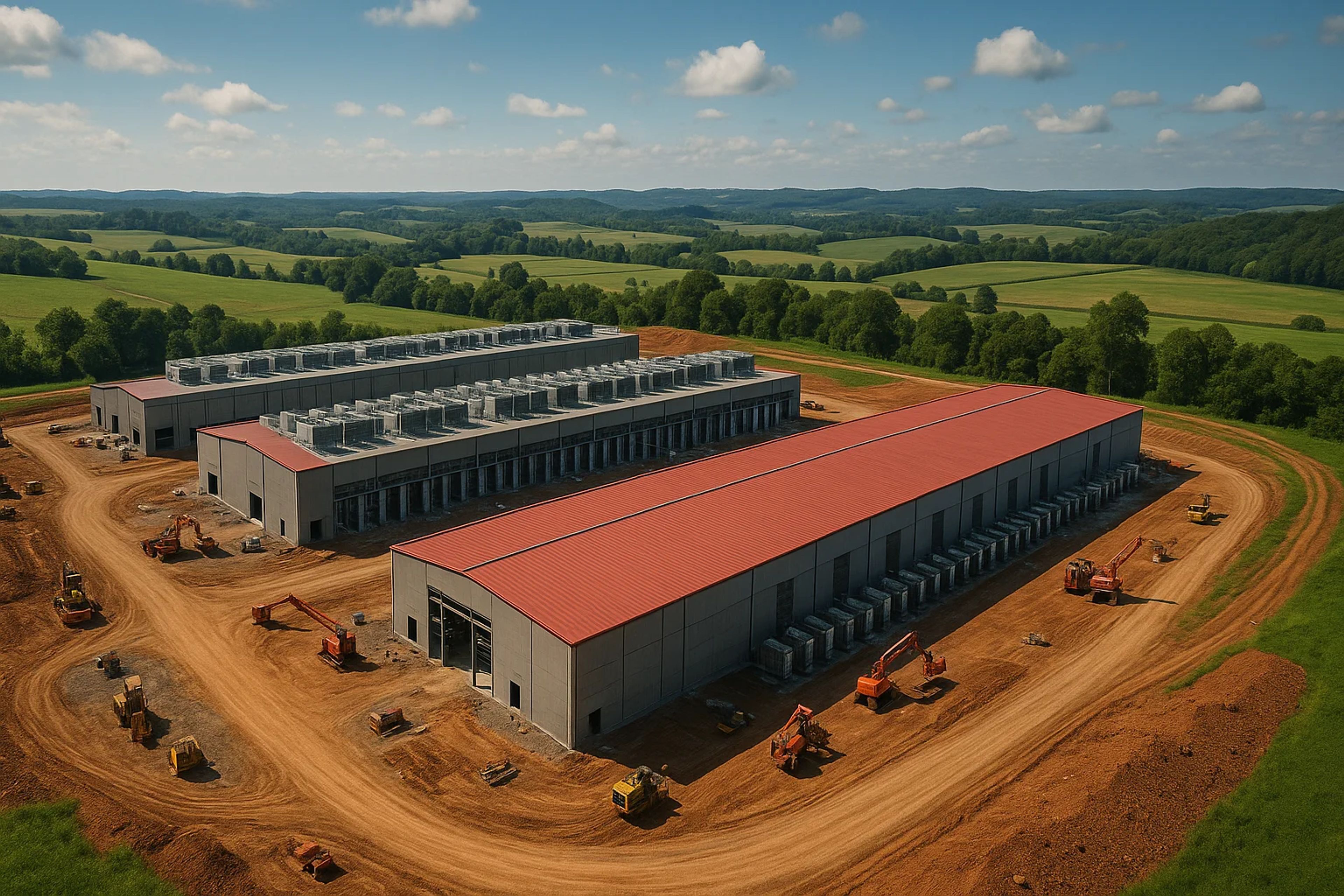
TeraWulf is pursuing a reported $3.5 billion debt financing led by Morgan Stanley to expand its Justified Data campus in Hawesville, Kentucky, a data center project tied to AI workloads. The effort lands days after the company signed a 20-year lease with Anthropic that TeraWulf says supports about $19 billion of contracted revenue over the initial term.
Key Takeaways
- A Morgan Stanley-led debt package of about $3.5 billion is being explored to fund expansion of TeraWulf’s Justified Data campus in Hawesville, Kentucky.
- Anthropic signed a 20-year lease for the Kentucky facility days before the financing plan surfaced, and TeraWulf has cited roughly $19 billion in contracted revenue over the initial term.
- The proposed raise could blend leveraged loans and high-yield bonds, which would put TeraWulf into the leveraged loan market for the first time.
- The project timeline is long-dated, with initial operations expected in 2H 2027 and full buildout targeted for early 2028.
Morgan Stanley-Led $3.5B Debt Plan Tied to TeraWulf’s Kentucky Expansion
TeraWulf, a US-listed Bitcoin miner pushing deeper into AI data center infrastructure, is seeking a reported $3.5 billion debt financing led by Morgan Stanley to expand its Justified Data campus in Hawesville, Kentucky.
CFO Patrick Fleury said the financing effort is expected to launch this year. The packet does not confirm that marketing has begun or that commitments are in hand, and neither TeraWulf nor Morgan Stanley provided comment by publication time.
The size matters less than the signal. If the package comes together as described, the equity story starts to trade like a capital structure story, where the marginal driver is no longer hashprice sensitivity but the cost and constraints of new leverage.
Anthropic’s 20-Year Lease and the $19B Contracted-Revenue Claim
The financing push arrived days after TeraWulf signed a 20-year lease agreement with Anthropic for the Kentucky facility. TeraWulf has said the site is expected to generate about $19 billion in contracted revenue over the initial lease term.
For credit investors, that is the anchor. Long-dated contracted revenue can be positioned as the cash-flow backbone for a large debt raise, especially when the underlying buildout is aimed at AI computing workloads that demand power, cooling, and specialized infrastructure.
The timeline is the check on the narrative. The campus is expected to begin initial operations in the second half of 2027, with full buildout targeted for early 2028, which pushes the payoff well beyond the current cycle and keeps execution risk in the foreground.
Leveraged Loans, High-Yield Bonds, and a First Step Into the Loan Market
The reported package could include leveraged loans and high-yield bonds. Leveraged loans are typically extended to borrowers viewed as higher risk or more levered, and they often come with tighter lender protections through covenants and collateral. High-yield bonds serve a similar borrower set but sit in the bond market, where pricing, maturity, and security package drive how much flexibility management retains.
This would be TeraWulf’s first entry into the leveraged loan market. That matters for traders because once a company starts financing growth with loan and HY structures, the sensitivity shifts toward deal terms. Pricing, covenant headroom, and what assets or cash flows are pledged can become the real variables that move equity, especially when the underlying project is years from initial operations.
The backdrop is an issuer already active in capital markets. TeraWulf previously raised $3.2 billion in October 2025 and $1.3 billion in December 2025, setting up the $3.5 billion debt plan as the next step up the leverage ladder.
Catalysts and Red Flags Traders Are Watching in the Capital Stack
The near-term catalyst is simple: confirmation that the Morgan Stanley-led financing has formally launched and what the final mix is between leveraged loans and high-yield bonds. After that, the market will key on terms once marketed, including pricing or yield, maturity, covenants, and any collateral package tied to the Kentucky campus or the lease cash flows.
Headline risk is also part of the setup. TeraWulf has faced investor questions about insider stock sales, shareholder alignment, and its growth model, and Blocksbridge Consulting has highlighted the company as an example of scrutiny around insider transactions at miners benefiting from AI-related momentum.
TeraWulf is also defending its data center economics in public. On the McNallie Money podcast, Fleury pushed back against a short-seller model that estimated higher maintenance costs, saying, “He argued that the company’s role is to provide power and facility infrastructure, while customers are responsible for their computing equipment and technology upgrades.” Fleury also said, “the company’s long-term lease structure limits the recurring upgrades and reconfiguration costs typically associated with data centers.” The packet does not include the short-seller’s assumptions or figures, limiting external validation.
Milestones matter because the project is long-duration. Updates that keep initial operations on track for 2H 2027 and full buildout for early 2028 will likely be treated as de-risking events, while slippage would compound financing risk.
The AI Pivot Is Getting Financed Like a Credit Story, Not a Mining Story
I treat this as a credit setup wearing an AI headline. The proximity of the 20-year Anthropic lease to the reported $3.5 billion debt push reads like deliberate positioning, with the $19 billion contracted-revenue figure serving as the narrative bridge from “miner” to “bankable infrastructure.”
The threshold that matters is whether the deal launches with terms that leave real operating flexibility through 2027 and 2028. If covenant and collateral demands come in tight, the setup starts to look structural rather than narrative-driven, because the equity will trade off credit constraints long before the first kilowatt is monetized at scale.


