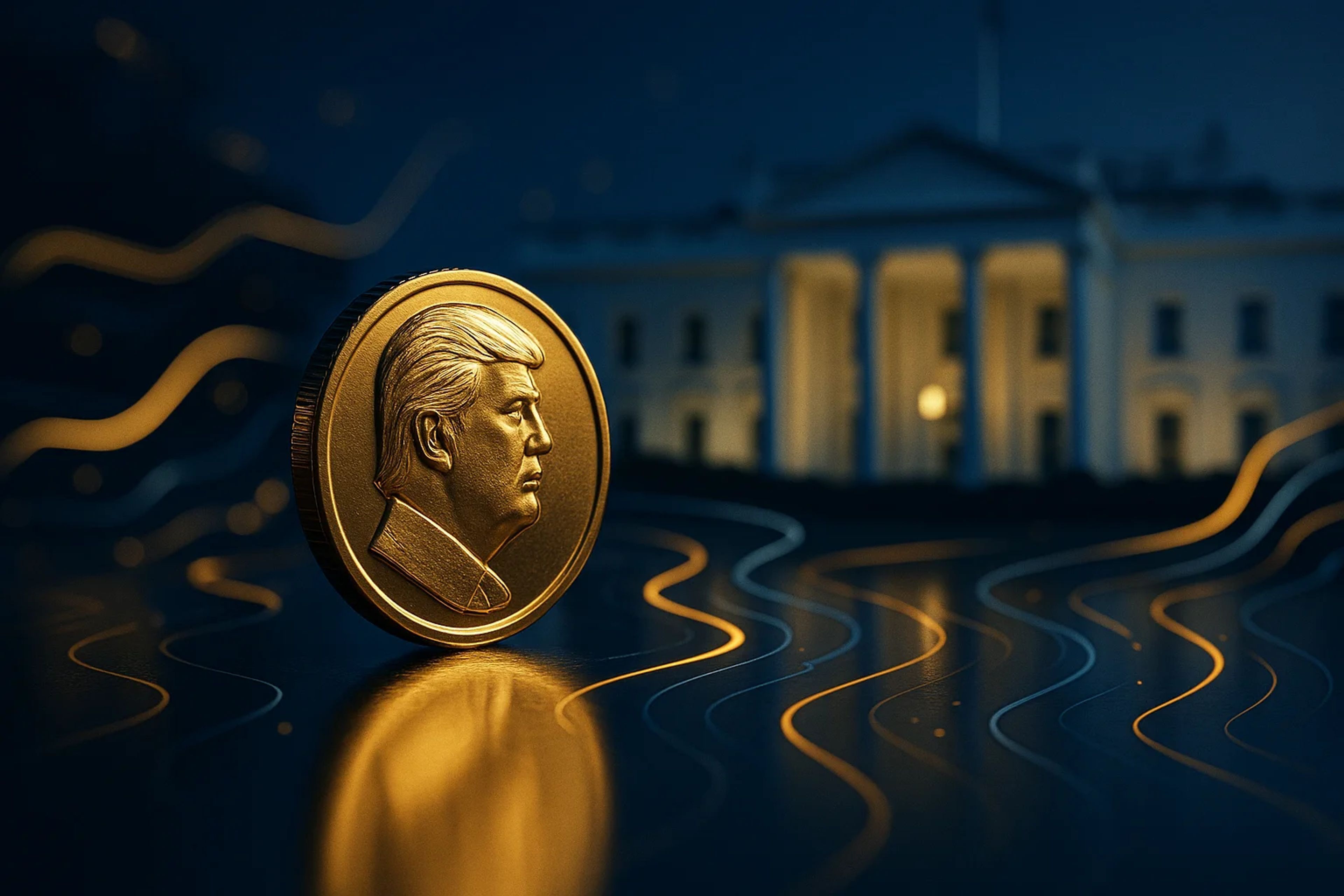
Trump defends ethics filing showing at least $1.4B in 2025 crypto income
The disclosure breaks out memecoin, World Liberty Financial, and a stablecoin-linked line item as critics flag conflicts.
President Donald Trump defended a federal ethics disclosure showing he earned at least $1.4 billion in crypto-related income in 2025, calling it “nothing wrong” and not illegal. The on-camera response, delivered in a CNBC interview at the White House, puts politically linked tokens and U.S. rulemaking optics back on traders’ radar.
Key Takeaways
- A federal Office of Government Ethics filing shows President Donald Trump earned at least $1.4 billion in crypto-related income in 2025.
- The disclosure itemized roughly $636 million tied to a Trump-branded memecoin, about $594 million from World Liberty Financial, and nearly $197 million from a stablecoin venture.
- Trump defended the income in a CNBC interview at the White House, saying there was “nothing wrong” or illegal about it and arguing the U.S. should lead in digital assets.
- Day-to-day business control was transferred to Trump’s two eldest sons before he took office, but he did not divest his assets.
Ethics Filing Puts a $1.4B Crypto Number on Trump’s 2025
A newly released financial disclosure from the federal Office of Government Ethics put a hard number on President Donald Trump’s crypto-linked cashflows: at least $1.4 billion of income tied to crypto-related ventures in 2025.
Trump addressed the filing directly in a CNBC interview conducted at the White House. He framed the income as lawful and defended the arrangement, saying there was “nothing wrong” with it. When asked whether he knew about the ventures, Trump said, “I could know about it. I didn't.”
For markets, the immediate point is not a rule change. It is that a sitting president’s disclosure now quantifies a large, identifiable set of politically linked crypto revenue streams, which can raise headline sensitivity around U.S. policy direction even when no new regulation drops that day.
Where the Money Came From: Memecoin, World Liberty Financial, and a Stablecoin Line Item
The disclosure broke the crypto income into three large buckets.
First was about $636 million tied to Trump’s eponymous memecoin, which the filing links to a launch on the eve of his return to office. Memecoins are branding-driven instruments by design, which makes them unusually reactive to political headlines and attention cycles.
Second was roughly $594 million attributed to World Liberty Financial, described as a crypto firm Trump co-founded with his sons.
Third was nearly $197 million from a stablecoin venture. The filing links that stablecoin line item to Abu Dhabi’s Sheikh Tahnoon bin Zayed Al Nahyan, adding an international dimension that can keep stablecoin policy and cross-border partnerships in the conversation even without additional details on the venture’s name or structure.
Governance and Optics: Control Shift to Sons, No Divestment
Trump transferred day-to-day control of his businesses to his two eldest sons before taking office, but he did not divest his assets. Divestment is the cleanest mechanical way to reduce conflicts of interest, and the absence of it is why this story is likely to persist as an optics overhang.
Critics argue the president is profiting from the office while his administration writes the industry’s rules. The packet does not provide names or specific allegations beyond that characterization, but the governance structure in the disclosure gives the conflict narrative a durable hook for future policy headlines.
Next Catalysts for Politically Linked Crypto Narratives
The next incremental catalysts are mostly disclosure-driven. Any follow-up filings or amendments that clarify what “at least $1.4 billion” means in practice, or that add line-item detail beyond the three cited buckets, can reprice expectations around how persistent these cashflows are.
Trump’s own media cadence also matters. Additional White House-style interviews or statements that expand on his awareness of the holdings, or that repeat the “nothing wrong” legality framing, can keep politically linked token narratives active.
On the stablecoin side, the market will look for basic identifiers that are missing in the packet: the venture’s name, structure, and counterparties, especially given the link to Sheikh Tahnoon bin Zayed Al Nahyan.
Finally, the broader tape is not offering a clean risk-on backdrop. Bitcoin was described as down roughly 50% from the record above $126,000 set in October, with the sector spending the first half of the year in a slump. That context makes this read more about narrative volatility than sector-wide strength.
Why This Disclosure Can Still Move Sentiment Even Without New Rules Today
I treat this as an optics and positioning story with a clear number attached, not a policy event with an immediate timestamp. The disclosure concentrates attention on three politically linked crypto cashflow sources, which is exactly the kind of setup that makes headlines travel faster than fundamentals.
The threshold that matters is whether future disclosures and public statements add enough specificity to turn “at least $1.4 billion” into a trackable, repeatable set of cashflows that traders can map onto policy risk. If that happens, the setup starts to look structural rather than narrative-driven, and politically linked tokens and stablecoin headlines become a more reliable volatility input.


