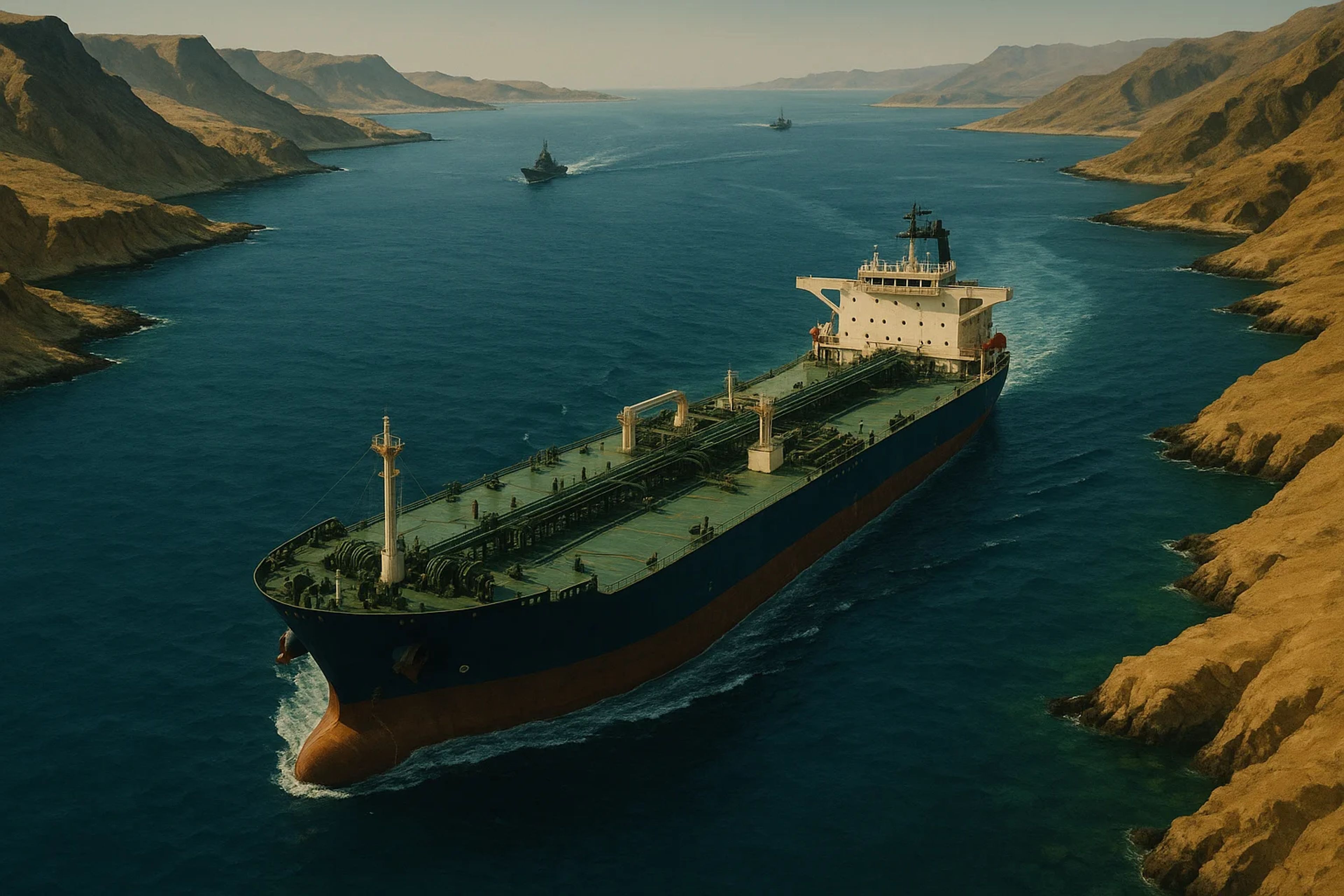
Trump says Strait of Hormuz remains open to commercial shipping
The statement lands as the same alert warns ongoing U.S.-Iran attacks are raising security concerns on the oil chokepoint.
U.S. President Donald Trump said the Strait of Hormuz is open to commercial traffic in comments delivered on NBC’s Meet the Press. The same news alert framed the remark against ongoing U.S.-Iran attacks that are increasing security concerns around the key oil-shipping route.
Key Takeaways
- The Strait of Hormuz remains open to commercial traffic, President Donald Trump said.
- The comments were delivered during an interview on NBC’s Meet the Press.
- The same alert tied the statement to ongoing U.S.-Iran attacks that are elevating security concerns on a critical oil-shipping route.
Trump Says Hormuz Is Open for Commercial Shipping
President Donald Trump said the Strait of Hormuz is open to commercial traffic, a headline-level assertion that hits markets as a real-time read on a major energy chokepoint.
The comments were made during an interview on NBC’s Meet the Press. In the same item, the statement was explicitly set against a backdrop of ongoing U.S.-Iran attacks that are increasing security concerns around the route.
The packet provides no additional operational detail beyond the “open to commercial traffic” phrasing. There is no confirmation in the excerpt about shipping volumes, delays, rerouting, or incident activity in the waterway.
Why a Hormuz Security Headline Can Spill Into Crypto Risk Sentiment
The Strait of Hormuz is one of the world’s most critical oil shipment routes. When security risk rises around a chokepoint like this, the transmission mechanism is usually macro first: energy volatility can bleed into inflation expectations, rates pricing, and broader risk appetite.
For crypto traders, that typically shows up as regime behavior rather than a clean single-asset catalyst. In risk-on tape, higher-beta crypto can catch a bid alongside equities. In risk-off tape, liquidity thins, correlations rise, and positioning gets more defensive.
The immediate tradable input here is the tension inside the same alert. One line says “open,” while the framing says security risk is rising due to ongoing U.S.-Iran attacks. That combination can keep macro risk pricing jumpy even without confirmed disruption.
What the Alert Confirms—and What It Doesn’t
What is confirmed in the packet is narrow: Trump made a public statement that the Strait of Hormuz is open to commercial traffic, and the venue was a national TV interview.
That matters because a Meet the Press appearance reads like a deliberate message to markets and the public, not an offhand comment. But the excerpt does not provide operational verification that shipping is proceeding normally, nor does it include any independent indicators like port advisories, carrier notices, or insurance actions.
The alert also references “ongoing U.S.-Iran attacks,” but the packet does not specify timing, targets, locations, or whether those attacks directly affected commercial shipping. A separate headline snippet on the same page includes the phrase “sistemlerinin hatalı bir parçası” (“a faulty part of their systems”) attributed broadly to “senior U.S. officials,” but the excerpt does not provide enough context to connect it cleanly to the Hormuz claim.
Net: traders should treat “open” as a sentiment headline, not proof of normal operations.
Signals Traders Should Monitor Around Oil-Route Risk
The next incremental edge comes from details that move this from narrative to verification.
First, watch for follow-up official statements or advisories that add operational specificity beyond “open,” such as routing guidance, incident confirmations, or changes in recommended transit behavior.
Second, the alert’s reference to ongoing U.S.-Iran attacks needs timestamps and scope. Any subsequent disclosure that pins down where and when activity occurred will matter more than another generic reassurance.
Third, real-world friction signals are the tell. Carrier reroutes, port or shipping advisories, and insurer actions would validate disruption risk if independently confirmed.
Trading the Gap Between ‘Open’ Headlines and Escalation Risk
I treat this setup as a classic gap between messaging and mechanics. The statement is designed to calm markets, but the same alert’s framing admits the risk backdrop is deteriorating, which is exactly the kind of ambiguity that keeps cross-asset correlations unstable.
The threshold that matters is whether follow-on information adds operational proof points. If “open” stays purely rhetorical while escalation headlines keep printing, this looks more like a sentiment catalyst than a fundamental shift, and the practical impact is higher macro-volatility spillover into crypto rather than a directional crypto-specific driver.


