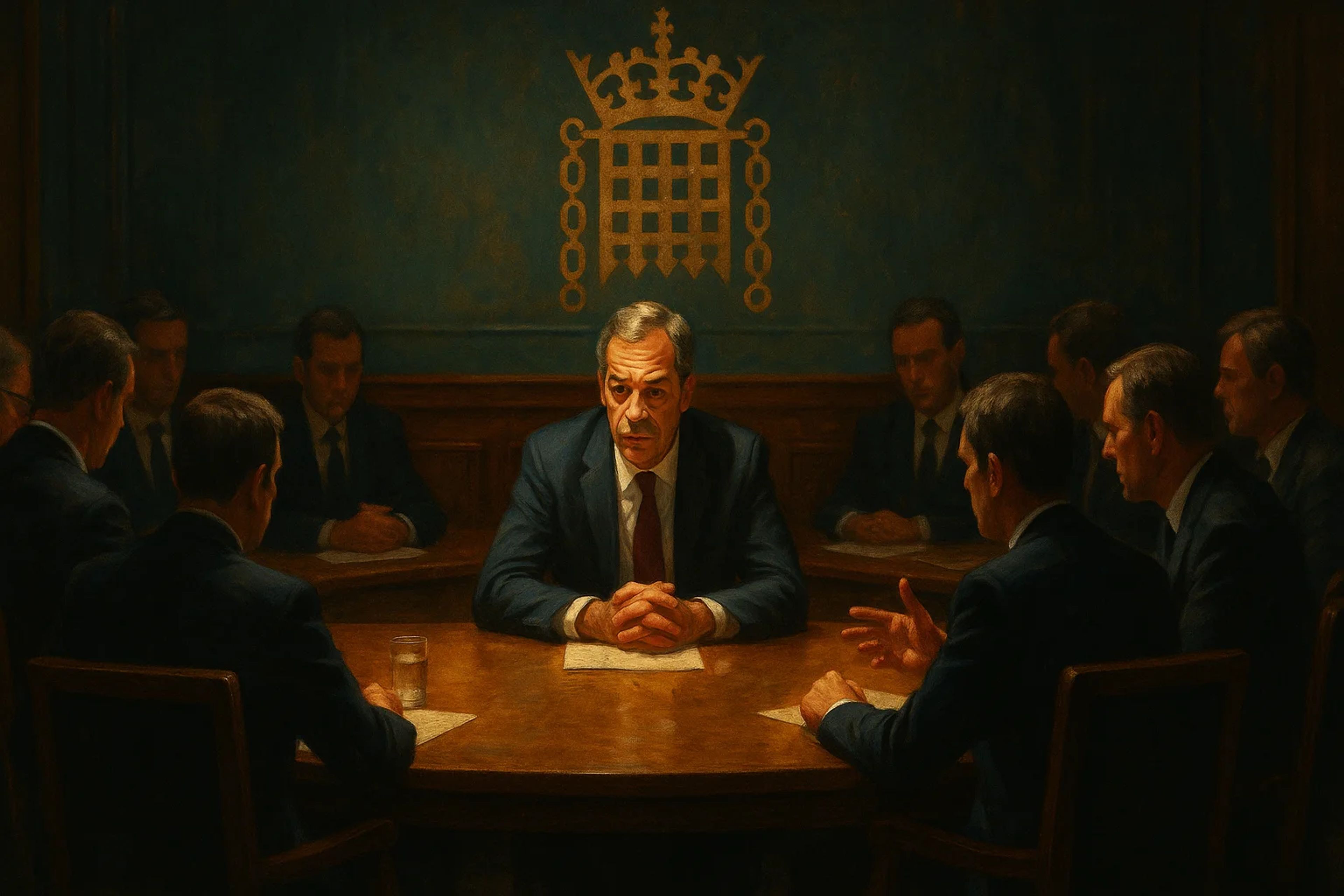
UK standards commissioner probes Farage over unregistered £5M Harborne gift
Conservatives also referred the donation to the Electoral Commission as UK MPs push to pause crypto donations.
A UK parliamentary standards inquiry has opened into whether Reform UK leader and MP Nigel Farage breached Commons rules by not registering a £5 million gift from crypto billionaire Christopher Harborne. The case lands as lawmakers press for an immediate moratorium on political crypto donations until statutory guidance is issued.
Key Takeaways
- A parliamentary standards inquiry is examining whether Nigel Farage failed to register a £5 million (about $6.7 million) gift from crypto billionaire Christopher Harborne.
- Farage argued there was “no obligation” to declare the gift because it was received before he entered Parliament in 2024, while critics say registration should have followed his election.
- Conservatives triggered the standards referral and also escalated the matter to the Electoral Commission, which is weighing whether to open a formal investigation.
- A parliamentary committee has urged a moratorium on crypto donations until statutory guidance is produced, alongside proposals for a new enforcement unit and a lower disclosure threshold.
Farage Faces Commons Standards Probe Over £5M Harborne Gift
The UK Parliamentary Standards Commissioner has opened an inquiry into whether Nigel Farage breached House of Commons rules by not registering a 5 million pound gift from Christopher Harborne. The amount has been described as about $6.7 million.
For market participants, the immediate relevance is not the donation itself, but the direction of travel. The inquiry arrives as UK policymakers are already debating tighter political-finance controls tied to digital assets. That timing increases the odds that today’s relatively permissive posture toward crypto-linked political funding faces near-term constraints, even before the next general election due by August 2029.
Reform UK is central to that debate. The party began accepting crypto donations in 2025 and later disclosed large receipts linked to Harborne, including a $4 million donation in Q4 2025 and a record $12 million gift in the prior quarter disclosed in the same context.
Farage’s “No Obligation” Defense vs. Critics’ Registration Argument
Farage’s defense is straightforward and hinges on timing. He said there was “no obligation” to declare the gift because it was received before he was elected to the Commons in 2024.
Critics argue the opposite, contending the payment should have been registered after he became an MP. The standards inquiry is effectively a test of where the reporting perimeter sits when money changes hands before election, but the reporting obligation is alleged to attach after taking office.
That ambiguity is exactly what lawmakers are trying to close. On March 18, the Joint Committee on the National Security Strategy urged an immediate moratorium on crypto donations to political parties until statutory guidance is produced, and it proposed reducing the minimum declaration threshold for political donations from $14,900 to $668.
Electoral Commission Decision Looms After Conservative Referral
The Conservatives requested the parliamentary standards investigation and also raised the donation with the Electoral Commission, which is deciding whether to launch a formal probe.
That creates two enforcement pathways running in parallel: parliamentary standards and the political-finance regulator. For traders, the second-order effect is headline risk. Two processes increase the probability of additional disclosures, interim findings, or sanctions that can become catalysts for a broader “crypto money in politics” narrative.
Crypto political donations remain legal in the UK under Electoral Commission guidance if they meet permissible donor rules. The policy question now is whether that framework is considered sufficient in a market where donation rails can be faster and harder to contextualize than traditional banking flows.
The scrutiny is not limited to donations. About one month before the standards inquiry became public, the UK Liberal Democrats called on the Financial Conduct Authority to investigate whether Farage breached market rules by appearing in a promotional video for Stack BTC while holding a financial stake. Farage previously disclosed a $286,000 equity investment after acquiring a 6.31% stake through his media vehicle Thorn In The Side in March.
Signals to Watch for Farage probed over undeclared crypto-linked gift
Any update from the Parliamentary Standards Commissioner on scope, timeline, or outcome is the first catalyst, because it will clarify whether the case is a narrow registration dispute or something broader.
The second trigger is whether the Electoral Commission opens a formal investigation following the Conservative referral. A formal step-up would likely extend the news cycle and raise the odds of further document-driven disclosures.
Policy risk sits behind both. Watch for UK government or Electoral Commission movement on producing statutory guidance after the March 18 moratorium recommendation, and for follow-through on the proposed Political Finance Enforcement Unit and the lower declaration threshold from $14,900 to $668.
Why This Inquiry Matters for UK Crypto On/Off-Ramps and Reputational Risk
I treat this as a governance and compliance catalyst more than a direct market driver, but it matters because it targets the rails around crypto’s interface with UK institutions. The standards inquiry is landing while Parliament is already entertaining a pause on crypto donations and a tighter enforcement architecture. If those threads connect, the outcome is not just political fallout. It is a higher compliance bar for any crypto-linked funding channel that touches UK entities.
The threshold that matters is whether the Electoral Commission formalizes its own probe and whether statutory guidance arrives with teeth, like a lower disclosure threshold and a dedicated enforcement unit. If that happens, this starts to look structural rather than narrative-driven, because it would change the operating environment for UK-facing on/off-ramps and the reputational risk premium attached to crypto-adjacent capital flows.


