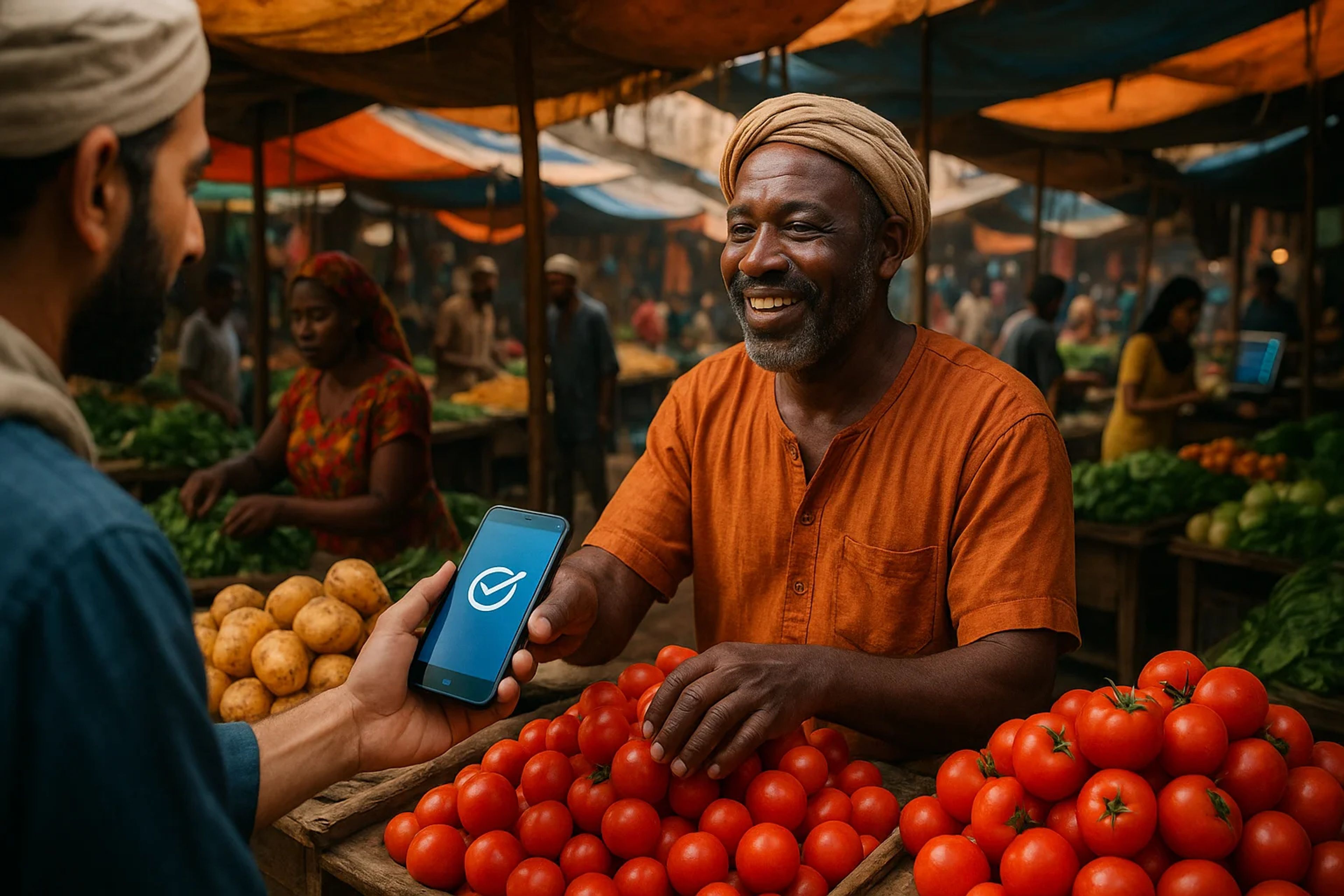
UNDP signs new Stellar deal to expand blockchain payments beyond pilots
UNDP cited a Syria program cutting distribution costs from 10% to 2% and a Haiti pilot that kept paying through an outage.
The United Nations Development Programme signed a new agreement with the Stellar Development Foundation to expand blockchain-based payments beyond pilot projects. UNDP is positioning the next phase as an operational rollout process for country offices, anchored on cost and resilience results from recent pilots.
Key Takeaways
- UNDP signed a new agreement with the Stellar Development Foundation to scale blockchain-based payments beyond pilot-only deployments.
- The expansion follows 16 months of research and pilots in Haiti, Syria, Kenya, Guatemala, and The Gambia, with additional projects referenced in Colombia and Papua New Guinea.
- A Syria Cash for Work program that recorded payments onchain reduced distribution costs from 10% to 2%, UNDP said.
- UNDP reported a Haiti pilot continued processing payments during a cellular network outage as it prepares a broader country-office rollout process.
UNDP Signs New Stellar Agreement to Move Past Pilot-Only Payments
UNDP has signed a new agreement with the Stellar Development Foundation to expand the agency’s use of blockchain-based payments beyond pilot projects. The shift matters less for the headline and more for the operating posture. UNDP is no longer describing one-off experiments. It is explicitly framing blockchain payments as something that can be repeated across programs and geographies.
For Stellar, that is an adoption signal that fits its payments narrative. A UN agency moving from “pilot” language to “process” language is the difference between a demo and a procurement path, even if the rollout timeline and scale are still undefined.
Inside the 16-Month Pilot Run: Countries, Programs, and Reported Metrics
UNDP said the agreement follows 16 months of research and pilot programs in Haiti, Syria, Kenya, Guatemala and The Gambia, and it referenced additional projects in Colombia and Papua New Guinea. The footprint reads like deliberate coverage across multiple operating environments rather than a single showcase jurisdiction.
UNDP anchored the expansion on two operational claims that institutions actually care about.
First, cost. In Syria, UNDP said a Cash for Work program that recorded payments onchain reduced distribution costs from 10% to 2%. Second, resilience. In Haiti, UNDP said a pilot continued processing payments during a cellular network outage.
Those are the kinds of metrics that can compound into broader buy-in if they replicate. They are also the kind of claims that will get stress-tested quickly once more country offices touch the rails.
From Experiments to a Repeatable Playbook for Country Offices
UNDP said the next phase will establish a process for country offices to use blockchain payments across a wider range of programs. That is the operational unlock. A standardized internal pathway is what turns a pilot team’s tooling into something other offices can adopt without reinventing the stack each time.
What remains undisclosed is the part traders will want pinned down before treating this as structural demand for any specific asset. UNDP has not specified which assets or settlement rails are used on Stellar for these payments, whether stablecoins are involved, or how conversion and cash-out are handled in each market. It also did not quantify pilot scale through recipient counts, payment volumes, or transaction totals.
UNDP also launched a Blockchain Advisory Group last month at the Proof of Talk conference in Paris to guide blockchain use across development programs. Beyond payments, UNDP said the group will explore how blockchain can support digital public infrastructure and improve public systems, which widens the scope but also widens the uncertainty on what “blockchain” means in practice.
Signals Traders Can Track as UN Agencies Test Public-Chain Payment Rails
The next information edge is specificity. The first signal is whether UNDP discloses what actually moved on Stellar, including whether the settlement asset was a stablecoin or another instrument.
Second is naming. Any announcement that identifies the first country offices or programs adopting the standardized process will indicate whether this is a narrow continuation of pilots or a broader operational rollout.
Third is scale disclosures. New quantitative reporting beyond the Syria 10% to 2% cost metric and the Haiti outage example, like recipient counts, payment volumes, or transaction counts, would let the market separate narrative adoption from measurable throughput.
Fourth is governance and scope. Updates from UNDP’s Blockchain Advisory Group that clarify how far the mandate extends beyond payments into digital public infrastructure will shape whether this stays a payments story or becomes a broader public-systems rail story.
Why This UNDP Rollout Process Matters More Than a Single Pilot Win
I care less about the Syria and Haiti anecdotes in isolation and more about the institutional behavior change. The threshold that matters is whether UNDP’s “country office process” produces repeat deployments with comparable cost and uptime outcomes, because that is what turns blockchain payments into an internal default rather than a special project.
This looks more like a sentiment catalyst than a fundamental shift until UNDP publishes asset choices and scale. If those details land and the metrics hold across multiple offices, the setup starts to look structural rather than narrative-driven, because it would imply recurring payment flow on public-chain rails instead of a single pilot win.


