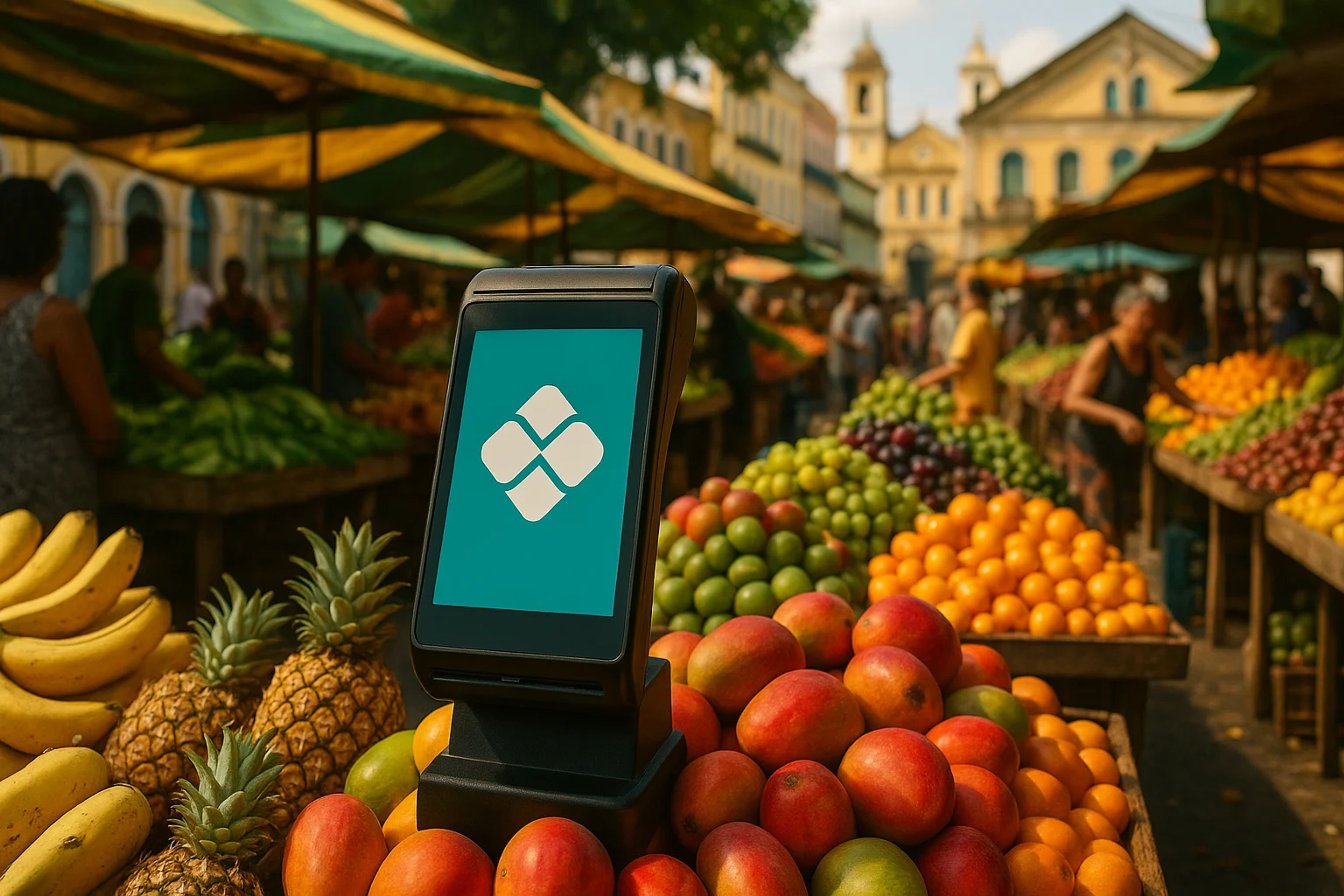
U.S. to hit Brazil with 25% Section 301 tariff tied to Pix payment rules
The move lands as Brazil prepares an Oct. 1 ban on stablecoin settlement for regulated cross-border payments.
The U.S. said it will impose a 25% Section 301 tariff on most Brazilian goods starting July 22, explicitly targeting Brazil’s Pix instant-payment system as an alleged unfair trade practice. The trade pressure arrives as Brazil’s central bank moves to restrict stablecoin settlement in regulated cross-border payments on Oct. 1, even though dollar stablecoins already dominate Brazil’s crypto transaction flow.
Key Takeaways
- A 25% U.S. Section 301 tariff on most Brazilian goods is scheduled to begin July 22, with Pix cited as a practice that disadvantages U.S. payment firms.
- Pix has reached mass-market penetration in Brazil, with more than 90% of adults using it and transaction counts that exceed cards.
- Dollar-linked stablecoins represent roughly 90% of Brazil’s crypto transaction volume, and monthly crypto throughput is estimated at $6B–$8B.
- Brazil Central Bank Resolution 561 takes effect Oct. 1 and is set to bar payment firms from settling regulated cross-border payments in stablecoins or other crypto.
Section 301 Tariff Targets Pix as an ‘Unfair’ Payments Advantage
Washington is turning Brazil’s domestic payments design into a trade dispute. The U.S. said it will impose a 25% tariff on most Brazilian goods starting July 22 under Section 301, a trade authority typically used to respond to practices the U.S. deems unfair or discriminatory.
The unusual part is the target. The action explicitly names Pix, Brazil’s central-bank-run instant payment network, as an alleged unfair advantage in payments. Ambassador Jamieson Greer framed the move as necessary “to address these unfair trade practices to ensure American workers and companies can compete on a level playing field.”
The U.S. Trade Representative also pointed to Pix operating rules that shape competition inside Brazil’s payments market: participating institutions must offer Pix to individuals for free once they exceed 500,000 active accounts, and fees charged to businesses for Pix transactions are capped. The U.S. position is that those rules disadvantage American payment firms such as Visa and Mastercard.
Pix by the Numbers: 90%+ Adult Adoption and Card-Scale Volume
Pix is not a niche fintech rail. It is the default payments interface for Brazil’s consumer base, used by more than 90% of Brazilian adults.
Central bank data cited in the source shows more than 170 million individuals have used Pix since its November 2020 launch. In June, Pix processed nearly 7 billion transactions worth roughly R$3 trillion (about $590 billion), though the year for that June snapshot was not specified.
The scale shows up most clearly against cards. In the second half of 2025, Pix processed 42.9 billion transactions versus 23.8 billion across credit, debit, and prepaid cards. That kind of penetration means any policy shock around Pix is likely to trade as a national payments-rail headline, not a contained dispute about one product’s fee schedule.
Brazil’s Crypto Rails Are Already Dollarized via Stablecoins
While the U.S. frames Pix as part of a push away from dollar-based payment infrastructure, Brazil’s crypto payment and settlement behavior is already heavily dollarized.
Tax authority data cited indicates dollar-linked stablecoins account for roughly 90% of crypto transaction volume in Brazil, with most of that activity tied to payments and settlement rather than speculative trading alone. Brazil processes about $6 billion to $8 billion in crypto each month, much of it routed through dollar-denominated stablecoins instead of the real.
That matters for market structure. Stablecoins function as a parallel settlement layer that can sit behind local payment experiences, which is why pressure on Pix does not automatically translate into reduced stablecoin demand.
Oct. 1: Resolution 561 Tightens Stablecoin Settlement in Regulated Cross-Border Payments
Brazil’s central bank is moving to narrow how regulated payment firms can use crypto rails for cross-border settlement. Resolution 561, effective Oct. 1, is set to bar payment firms from settling cross-border payments in stablecoins or other crypto.
The rule is designed to close a back-end channel that routed reais through dollar tokens. The central bank has framed stablecoins as a threat to monetary sovereignty, tax enforcement, and anti-money laundering controls.
Rodrigo Caggiano, founder of real-world asset monitoring platform RWA Monitor, argued the rails are not pure substitutes. “In practice, they are complementary,” he said. “Pix has addressed domestic instant payments well, while stablecoins expand what is possible by operating on blockchain networks.” Caggiano added that U.S. pressure is likely to accelerate Brazil’s regulatory debate as the central bank builds Drex, a tokenized-settlement system.
Two-Front Pressure on Brazil’s Payments Stack—Trade Heat on Pix, Policy Heat on Stablecoins
The setup is a two-front squeeze that traders should treat as plumbing risk, not ideology. Pix is being pulled into a Section 301 tariff framework, which effectively reframes domestic payment rules as a trade barrier. In parallel, Resolution 561 targets the regulated cross-border settlement path that has helped stablecoins scale in payments-heavy flows.
The threshold that matters is July 22 and whether the U.S. issues follow-on clarifications that expand the Pix-specific theory of harm beyond fee rules. The real test is whether Oct. 1 forces measurable rerouting in Brazil’s $6B–$8B monthly crypto throughput or shifts the roughly 90% dollar-stablecoin share. If Drex timelines firm up while stablecoin settlement is constrained, the setup starts to look structural rather than narrative-driven, because the market would be watching a state-backed alternative compete for the same settlement function that stablecoins currently dominate.


