Warsh sworn in as Fed chair as futures price 2026 hikes and Lepard calls for cuts
FedWatch shows nearly 68% odds of a 25 bps+ hike by December 2026 even as a Bitcoin investor argues the next move is lower.
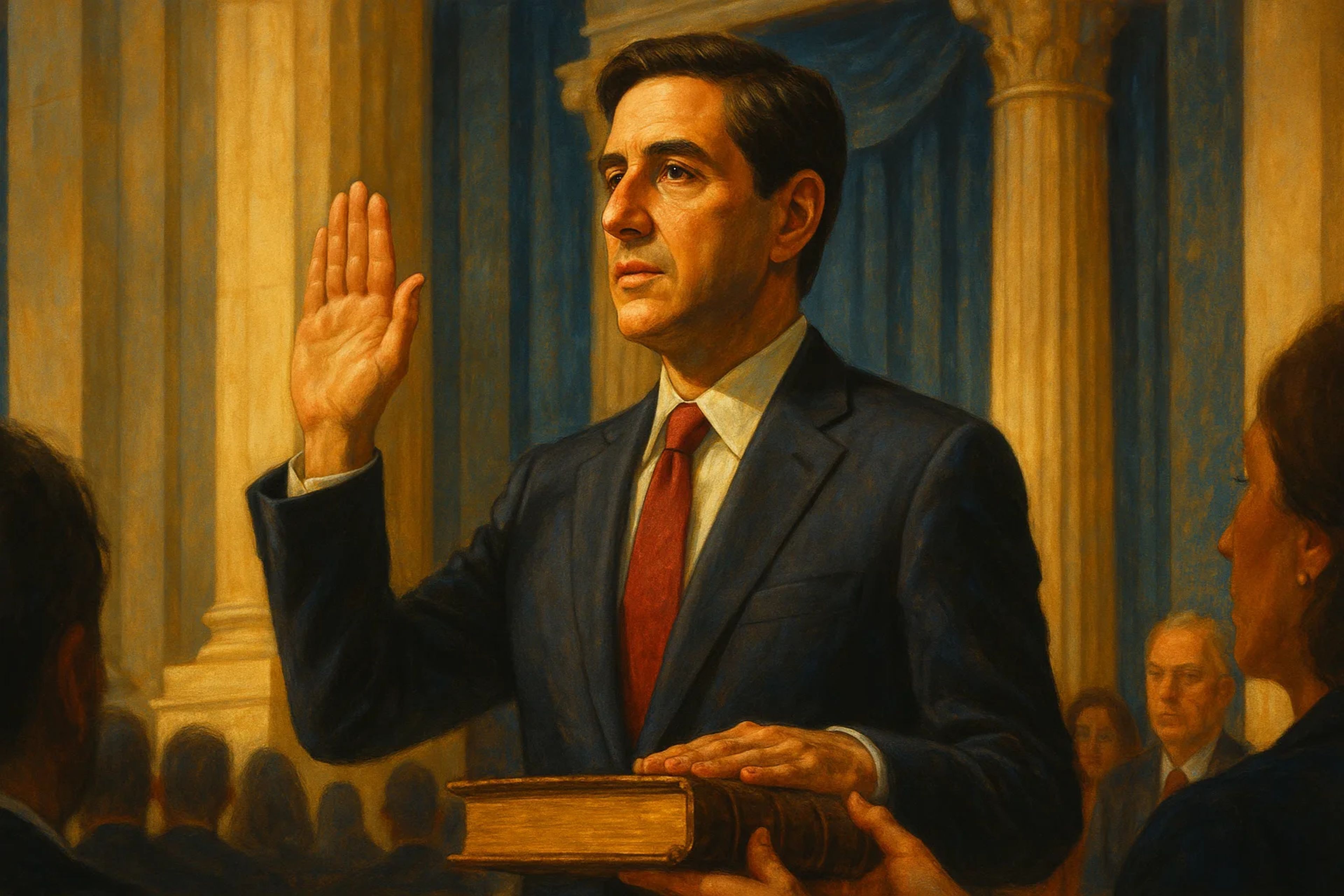
Kevin Warsh was sworn in Friday as chairman of the United States Federal Reserve, immediately putting his policy reaction function under a microscope. Fed funds futures still lean toward tighter policy into late 2026, but Bitcoin investor Lawrence Lepard is publicly arguing Warsh will cut rates, setting up an expectations gap with direct implications for crypto beta.
Key Takeaways
- Kevin Warsh was sworn in Friday as chairman of the United States Federal Reserve.
- The federal funds target rate was described at 350–375 basis points.
- Fed funds futures pricing implies a hike-leaning path, with nearly 68% odds of a 25 bps or larger increase by December 2026.
- Bitcoin investor Lawrence Lepard argued Warsh will cut rates, pointing to comments he attributed to Kevin Hassett and Treasury Secretary Scott Bessent.
Warsh Takes the Helm as Markets Price 2026 Tightening
Warsh’s swearing-in lands at a moment when the market is already anchored to a higher-for-longer baseline. The policy rate is framed at 350–375 basis points, and the futures curve is still telling traders to respect the possibility that the next big move is not easing.
President Donald Trump used the ceremony to frame the administration’s approach to the national debt as a “growth” story, and he said, “We want to stop inflation, but we don't want to stop greatness,” a line that drew skepticism from investors, economists, and market analysts. That skepticism matters because it reinforces a simple point about market structure. Traders will not reprice the curve on vibes. They will demand a clearer signal from the chair or from the data that forces the Fed’s hand.
What stands out here is the timing mismatch. Warsh is new, but the market’s default is not. Futures pricing is a slow-moving consensus machine until it isn’t, and the first weeks of a chair transition are when language gets over-interpreted and then corrected.
Lepard’s Contrarian Cut Call and the Officials He Cites
Lepard is making the opposite call, and he is doing it with high conviction. His view is that Warsh will “likely slash interest rates” despite what he described as a consensus expectation for hikes.
His stated rationale is explicit. Lepard said: “Warsh will cut. He will use the AI productivity and trimmed inflation excuses and will claim that all the war inflation is transitory. Two data points from today's Wall Street Journal support this view.”
He also tied his expectation to other officials, saying comments from Kevin Hassett, the director of the White House National Economic Council, and Treasury Secretary Scott Bessent support the likelihood of rate cuts in 2026. The packet does not include the specific Hassett or Bessent remarks, which is important for traders trying to handicap how much of this is narrative versus a verifiable policy breadcrumb.
The pattern worth noting is that Lepard’s thesis is not just “cuts are coming.” It is “cuts can be justified.” That distinction is why this becomes a tradable expectations gap rather than a generic macro hot take. If the justification gains traction, futures pricing can move quickly. If it does not, the market keeps leaning hike.
Independence and Politics: The Overhang From April Scrutiny
Warsh’s policy path is not being debated in a vacuum. In April, US lawmakers scrutinized his commitment to preserving Federal Reserve independence, raising questions about whether he would resist pressure from the Executive Branch to loosen monetary policy.
Sen. Elizabeth Warren added a second layer by warning that Warsh’s appointment could create potential conflicts of interest, where Trump family crypto businesses benefit from policies enacted by the new Fed chair.
For crypto traders, this is not a civics sidebar. Independence optics can change how markets discount forward guidance. If participants believe policy is being pulled by political gravity, they tend to demand more confirmation from hard data and less from speeches. That can widen the gap between what a chair signals and what futures are willing to price.
The article also flags a risk window: several months of declining asset prices for Bitcoin, crypto, and stocks as uncertainty grows around the leadership transition. That is a forward-looking claim without supporting data in the excerpt, so it should be treated as a risk framing, not a forecast.
The Numbers: 350–375 bps Today, FedWatch Skews to a December 2026 Hike
The market’s anchor is straightforward.
The federal funds target rate is described at 350–375 basis points. Basis points matter here because the debate is about increments. A 25 bps move is 0.25 percentage points, and it is the unit the market uses to express conviction.
On the forward curve, the CME Group’s FedWatch tool shows nearly 68% of traders pricing an interest-rate hike of 25 bps or more by December 2026. The same framing also states traders project the rate to rise by at least 25 bps in December 2026.
FedWatch is not a crystal ball. It is a translation layer from fed funds futures into implied probabilities. But it is the cleanest snapshot of where positioning and consensus expectations sit right now. And right now, that snapshot says the market is not buying the cut narrative as the base case.
Trading the Expectations Gap—Why the Split Matters for Crypto Beta
This is a macro split with real teeth for crypto because the article explicitly links rate cuts to stronger risk-on pricing, including Bitcoin and broader crypto. With the policy rate already framed at 350–375 bps, the direction of the next major shift is the variable that matters. Not the chair’s biography. Not the ceremony. Direction.
I’m looking at this as an expectations gap setup. On one side, futures-implied pricing leans toward tighter policy into December 2026. On the other, a prominent Bitcoin investor is publicly arguing for cuts and pointing to signals from senior officials. When those two stories coexist, the market is effectively short certainty. That is when repricing events get violent.
Scenario 1: the hike-leaning curve holds. Confirmation looks like FedWatch staying near that ~68% probability for a 25 bps+ hike by December 2026, or pushing higher. In that world, Lepard’s cut thesis remains a minority narrative, and crypto’s macro sensitivity stays constrained by the idea that policy is not about to get easier.
Scenario 2: the cut narrative starts to win. The cleanest invalidation of the hike-leaning base case is FedWatch probabilities unwinding meaningfully from current levels for December 2026. The catalyst would need to be something traders can actually anchor to, and the packet gives three candidates to monitor: on-the-record remarks from Warsh that clarify his reaction function, explicit public statements from Hassett or Bessent addressing preferred rate direction, or a shift in the political optics around independence that makes markets believe easing pressure is real.
Scenario 3: politics increases uncertainty without delivering clarity. April’s scrutiny and Warren’s conflict-of-interest warning create a governance overhang that can amplify volatility even if the rate path does not change. If that overhang intensifies through further congressional scrutiny or disclosures, the market can demand a higher bar for dovish repricing, which keeps the curve sticky while risk assets chop.
The decisive point for traders is not whether “Warsh is dovish” or “Warsh is hawkish.” It is whether the market’s own pricing, as expressed through FedWatch into December 2026, starts to converge toward Lepard’s cut call or stays pinned to the hike-leaning consensus, and that convergence is the confirmation line for the thesis.


