
Crypto
Hashed and Solana Policy Institute urge South Korea to phase in stablecoin rules now
A new policy report argues interim licensing guidance should precede the stalled Digital Asset Basic Act.
 Start here
EU stablecoin rules are a two-layer stack: MiCA classifies tokens and actors, while DAC8 turns activity into standardized tax-reporting data from 2026.

EU-licensed exchanges geofence or delist USDT because MiCA treats it as an e-money token that needs an authorized EU issuer.
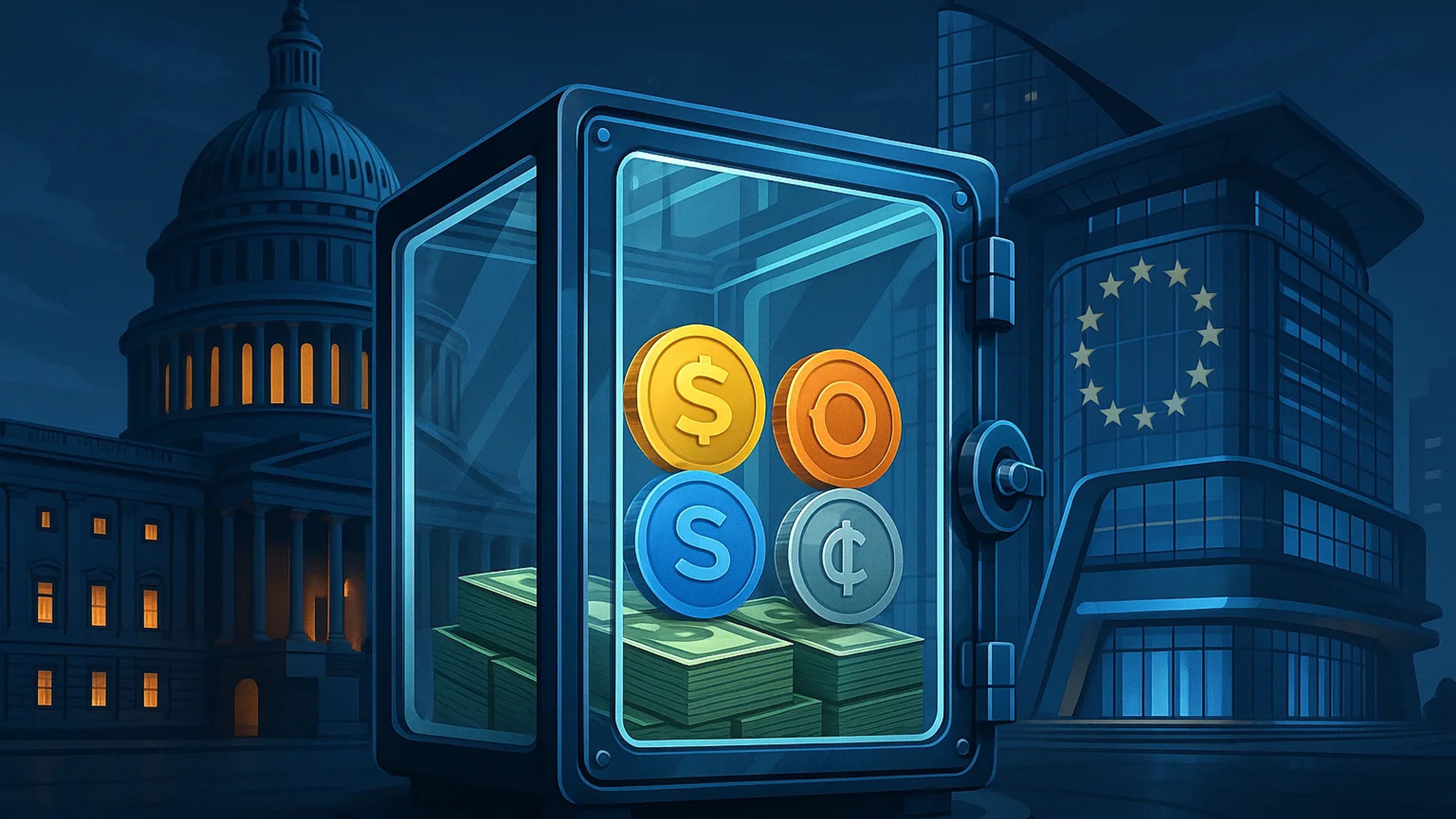
Both regimes treat fiat-backed stablecoins like regulated payment instruments, but issuer eligibility, reserve protections, and freeze controls drive market access.

MiCA’s stablecoin regime started on 30 June 2024 and pushes compliance through issuer licensing plus CASP listing enforcement by Q1 2025.

Stablecoins are generally permitted, but the legal exposure often turns on jurisdiction and whether you can redeem with the issuer or only through an intermediary.

Signed July 18, 2025, the law forces 1:1 cash-like backing, monthly attestations, and a yield ban for USD payment stablecoins.
A new policy report argues interim licensing guidance should precede the stalled Digital Asset Basic Act.

Banking regulators have proposals out for comment as the broader Clarity Act remains unpublished amid an ethics fight.

The plan backs a permissioned-on-permissionless design and flags public-chain settlement-finality risk from reorgs.

The 2026 annual report also argues Bitcoin and Ethereum are structurally unfit for systemic finance rails.
 btc$78,481-0.89%
 eth$2,484.64-0.11%
 usdt$1-0.01%
 bnb$749.43+1.37%
 xrp$1.42+1.47%
 usdc$1+0.01%
 sol$103.3-0.60%
 trx$0.34+1.03%
 doge$0.09-0.54%
 link$12.56-1.56%
 ada$0.22+0.58%
 xlm$0.19-2.18%
 bch$257.08-1.16%
 uni$6.76-2.91%
 ltc$54.22-1.52%
 hbar$0.08-3.46%
 avax$8-0.80%
 sui$0.81-1.87%
 dot$1.27+20.65%
 etc$8.58+9.89%
 pol$0.1+0.40%
 atom$1.8+9.21%
 algo$0.1+6.41%
 fil$0.85+1.97%
 vet$0.01+11.79%