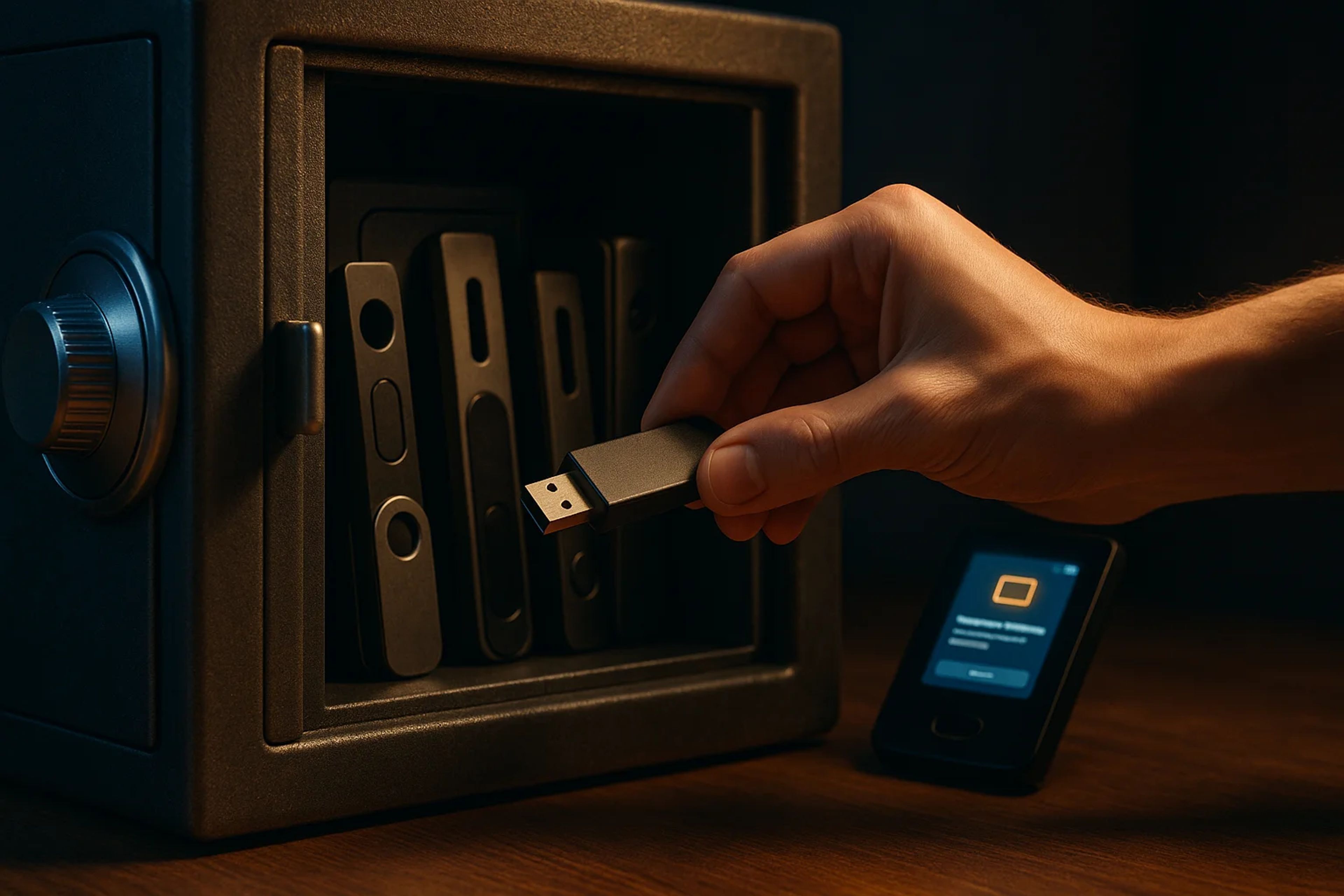
Hot wallet vs cold wallet: Security, speed, and the real risk trade
Hot wallet vs cold wallet is a trade between time-to-liquidity and attack surface: hot wallets are fast because keys live on an online device, cold wallets are safer because keys stay offline. The catch is that “cold” can still become a hot risk the moment it’s used to sign smart-contract approvals, so most users end up running a two-tier setup.
Key Takeaways
- A crypto wallet does not store coins. It manages the public/private keys that authorize on-chain movement, and the seed phrase can restore those keys if backed up correctly.
- A hot wallet keeps keys on an internet-connected device for speed, which increases exposure to phishing, malware, and remote compromise.
- A cold wallet keeps keys offline to reduce online attack surface, but it adds physical-loss risk and can still be drained if it signs malicious smart-contract approvals.
- The most robust setup for most users is two-tier: a small hot balance for activity and cold storage for long-term holdings, refilled on a schedule.
How crypto wallets actually hold value
Control starts and ends with keys, not with where the coins “sit.” Crypto assets live on-chain, and a wallet is the tool that manages the credentials that let an address move those assets. That distinction matters because hot wallet vs cold wallet is really a question about how often those credentials are exposed, not a question about where the blockchain balance is stored.
Three pieces of vocabulary do most of the work:
1. Private key: the secret that proves control of an address and authorizes sending funds. 2. Public key or address: the shareable identifier others use to send funds to that address. 3. Seed phrase: the master recovery secret that can regenerate the wallet’s keys if a device is lost.
Seed phrase discipline is the quiet center of wallet security. BitGo’s comparison makes the point directly: if a wallet is lost, funds can be recovered with a properly backed up seed phrase, regardless of whether the setup was hot or cold. That also implies the darker mirror image. If someone gets the seed phrase, the wallet category label stops mattering because the attacker can recreate the keys elsewhere.
Custody is the other axis beginners miss. A custodial wallet means a third party holds the private keys on the user’s behalf. A non-custodial wallet means the user controls the keys and is responsible for backups and security. Hot wallets and cold wallets can exist in either custody model, but the operational burden lands very differently depending on who holds the keys.
The core difference: online vs offline keys
The first screen-level difference is connectivity. A hot wallet keeps keys in software on an internet-connected device, which makes sending funds and interacting with apps fast. A cold wallet keeps keys offline and only connects, if at all, when a transaction needs to be signed. That is the basic online vs offline wallet split, and it maps cleanly to convenience versus reduced exposure.
Hot wallets show up as browser extensions and mobile or desktop apps. Henley groups them into desktop, mobile, and web wallets, which is a useful way to think about where the risk concentrates. Desktop wallets inherit the security posture of a laptop. Mobile wallets inherit the security posture of a phone that travels. Web wallets inherit the security posture of a browser session, often with extra platform risk if the wallet is tied to an exchange.
Cold wallets show up as hardware devices, paper or metal backups, and more isolated designs. BitGo calls out air-gapped devices as a distinct pattern: transaction details are moved via QR code or removable media so the signing device never goes online. That “air gapped” workflow is slower, but it is explicitly designed to keep the signing environment away from remote attackers.
The definition gets messy around smart contracts. Ledger draws a stricter line than many guides: a “true” cold wallet not only keeps keys offline, it never interacts with smart contracts. That matters because a wallet can keep keys offline and still be used to approve a contract that later drains assets. Under Ledger’s framing, that is no longer cold behavior, even if the keys never left the device.
Security tradeoffs and attack surfaces
The threat model is not abstract. BitGo cites Chainalysis reporting that upwards of $2.2 billion in cryptocurrency was stolen in 2024, with compromised private keys accounting for nearly half of thefts. That statistic is the cleanest reason to start the decision with “how could my keys get exposed?” instead of “which brand should I buy?”
Hot wallets expand the remote attack surface because the signing environment is online. The common failure modes named across sources are hacking, malware, and phishing. Phishing is the one that scales because it does not require breaking cryptography. It requires tricking a human into revealing a secret or approving a malicious action. A hot wallet user who types a seed phrase into a fake site has effectively handed over the wallet.
Cold wallets shrink the online attack surface, but they introduce different risks. BitGo and Henley both flag physical loss, theft, or damage as the obvious trade. Paper or metal backups remove electronic hacking threats but raise the stakes on storage discipline. A cold setup can also fail operationally if the seed phrase backup is mishandled, because the seed phrase is the recovery path for both hot and cold.
The missing third axis is smart-contract exposure. Kaspersky notes that hardware wallets can still be exposed if they are used to sign malicious smart contracts. That is the moment many users misunderstand. The key may be offline, but the user is still authorizing code on-chain to move assets under certain conditions. Ledger’s “true cold” definition is essentially an attempt to firewall long-term holdings from that approval risk by keeping the vault account away from dApps entirely.
Common wallet types and real examples
On a screen, the difference usually looks like “app versus device.” Hot wallet examples named across sources include MetaMask, Trust Wallet, and Coinbase Wallet. These are popular because they are fast to set up, usually free, and built to connect to dApps and DeFi flows without friction.
Cold wallet examples include Ledger and Trezor, which are commonly discussed as hardware wallets. BitGo’s retail and institutional framing is blunt about cost: hot wallets are usually free, while hardware cold wallets typically cost about $50 to $200. Price is rarely the decision variable. The expensive mistakes tend to be operational, like leaking a seed phrase, clicking a phishing link, or signing an approval without understanding what it grants.
It also helps to separate “hardware wallet” from “cold wallet.” Kaspersky treats cold wallets as a subcategory of hardware wallets with stronger isolation, while other sources use the terms more loosely. The practical mapping is straightforward:
1. Hot wallet: best for frequent transactions and dApp interaction, because the signing flow is immediate. 2. Hardware wallet used actively: keys are on a device, but the wallet is still routinely connected to sign transactions, which increases smart-contract and approval exposure. 3. Cold storage: a vault posture where keys stay offline and the account is not used for smart contracts, aiming to minimize both remote compromise and approval blast radius.
That last line is why “cold storage vs hot wallet” is not just a security preference. It is a workflow choice about how often the signing key is brought into contact with the internet and with on-chain code.
How to choose and combine both
Most users end up with both because the trade is structural. BitGo recommends a combined approach: keep daily liquidity in hot wallets and significant long-term holdings in cold wallets. The desk analogy fits because it forces discipline. A checking account exists to be used. A vault exists to be boring.
A clean way to decide is to match wallet exposure to how often the funds need to move:
1. Define “operating balance.” This is the amount needed for weekly activity like transfers, trading, or DeFi interactions. 2. Define “vault balance.” This is the amount that does not need to touch dApps or move frequently. 3. Separate the blast radius. Use a dedicated hot wallet for dApp activity, and keep long-term holdings in cold storage that is not routinely connected. 4. Refill on a schedule. Move funds from cold to hot when needed, rather than keeping excess capital in the online signing environment.
Baseline security practices still matter in both tiers. Seed phrase backup is the recovery key, so it needs to be protected from both theft and loss. Phishing resistance is the daily battle, especially for hot-wallet activity. For readers who want a broader checklist, the right mental model is “how to secure your crypto wallet” as an ongoing process, not a one-time purchase.
When to use which is then simple. A hot wallet is for speed and frequent interaction. A cold wallet is for minimizing key exposure and keeping long-term capital away from both remote compromise and, under stricter definitions, smart-contract approvals. The broader crypto wallet setup works best when it is designed around exposure frequency, not around a single all-purpose address.
Sources
Frequently Asked Questions
Is a cold wallet the same as a hardware wallet?
Not always. Many people use the terms interchangeably, but some security frameworks treat cold wallets as a stricter subset of hardware wallets with stronger isolation. A hardware wallet can still be used frequently to sign dApp transactions, which shifts risk toward malicious approvals and smart contracts.
Can a cold wallet be hacked?
Cold wallets reduce exposure to online threats by keeping keys offline, but they are not invincible. Funds can still be lost through physical theft, loss, or damage, and a user can still authorize harmful transactions by signing malicious smart-contract approvals. The seed phrase remains a critical point of failure if it is exposed.
What is the main risk of a hot wallet?
The signing environment is online, which increases exposure to phishing, malware, and remote compromise. If an attacker obtains the private key or seed phrase, they can recreate the wallet and move funds. That is why hot wallets are typically treated as an operating balance, not a vault.
What does “air gapped” mean for a cold wallet?
An air gapped wallet is designed to never connect to the internet. Transaction details are moved between an online device and the signing device using QR codes or removable media, so the signing keys stay offline. This reduces remote attack surface but adds friction and time to move funds.
Should I use both a hot wallet and a cold wallet?
Many users do, because the tradeoff is between accessibility and key exposure. A common setup keeps daily liquidity in a hot wallet and long-term holdings in cold storage, with periodic transfers between them. The goal is to minimize how often long-term keys and accounts are exposed to online devices and smart-contract approvals.


