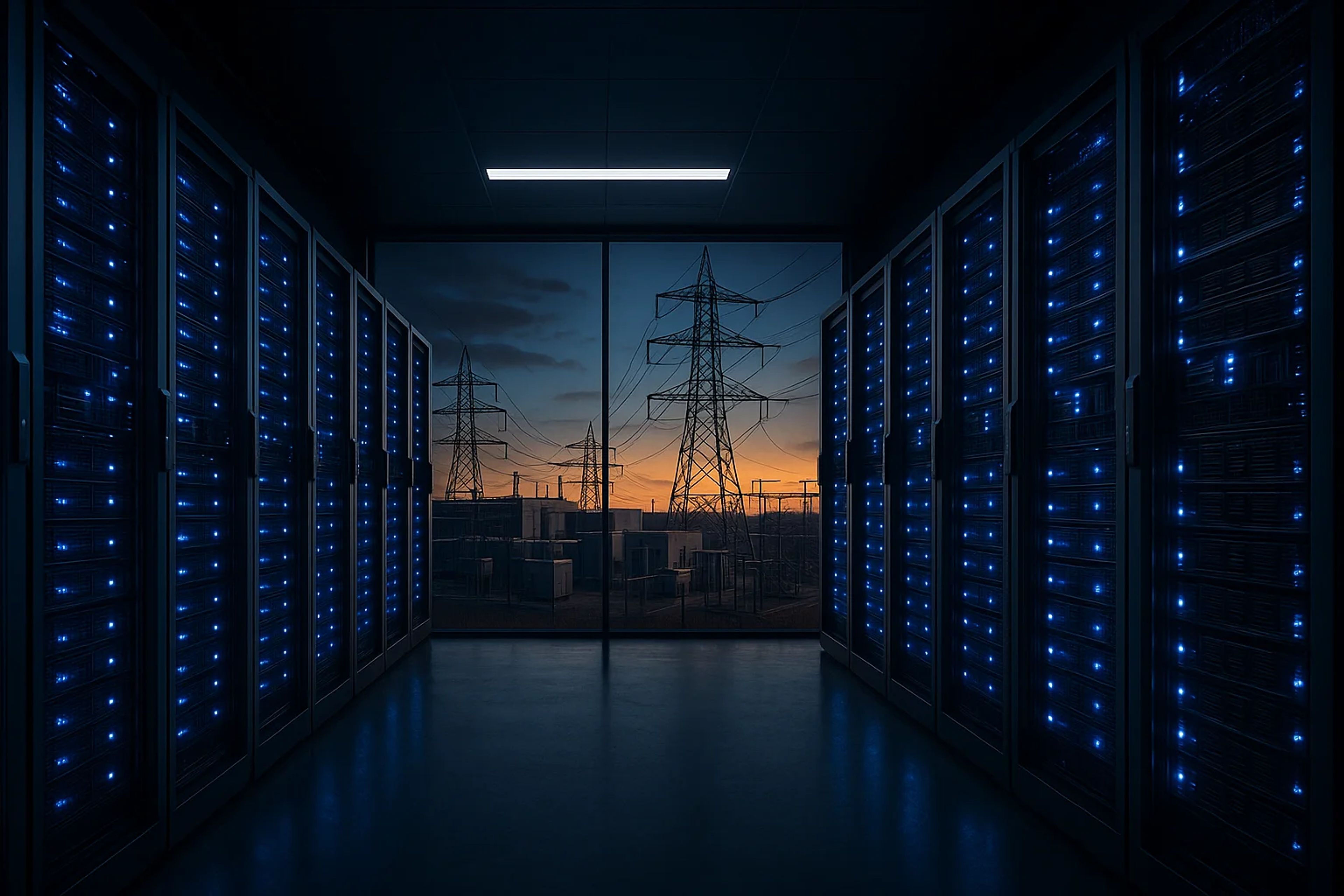
AI data centers bid up premium power as miners pivot and Bitcoin difficulty posts two cuts
Core Scientific and TeraWulf reported stronger AI/HPC economics as hashrate revisited ~900 EH/s after a >1.1 ZH/s peak.
Large Bitcoin miners are increasingly monetizing grid-ready power access through AI/HPC hosting instead of running ASIC fleets at the most infrastructure-rich sites. In 2026, that shift has coincided with repeated hashrate drawdowns toward ~900 EH/s and two double-digit difficulty cuts that point to shutdowns and relocation, not mining’s disappearance.
Premium Power Is Getting Repriced by AI—And Miners Are Responding
The competition is not GPUs versus ASICs. It is for the scarce inputs that make either business work at scale: land with permits, substations and interconnects, fiber, cooling, and most of all reliable electricity that can be delivered at high utilization.
At those “premium” sites, some public miners are now reporting that selling compute and power access to AI/HPC customers beats self-mining. Core Scientific disclosed a negative 56% gross margin from self-mining in Q2, while its data-center colocation business generated nearly $80 million in gross profit in the same quarter. TeraWulf’s segment mix is pointing the same way, with HPC leasing producing about 71% of quarterly revenue.
That spread is the mechanism. If a miner can earn steadier, higher-margin dollars by turning a grid-ready campus into colocation or leased HPC capacity, the rational move is to monetize the power queue position and the built infrastructure, not to keep hashing there. The canonical framing line is blunt: “Bitcoin mining as a profitable business model is becoming harder to justify at the biggest, most expensive sites.”
Hashrate Dips and Difficulty Cuts: The Network’s Stress Readout in 2026
The network-level readout is showing the same pressure. Bitcoin network hashrate climbed above 1.1 ZH/s in October 2025, then fell toward ~900 EH/s several times afterward. Since 1 ZH/s equals 1,000 EH/s, that’s a meaningful swing in aggregate compute coming on and off the network, even if the exact dates of each dip are not specified in the source material.
Difficulty adjustments put harder edges on what “stress” means. Bitcoin mining difficulty dropped 11.16% in February 2026 and another 10.09% in June 2026. Those are double-digit downward moves, consistent with enough machines shutting off that blocks arrived more slowly and the protocol had to lower difficulty to pull block times back toward target.
That feedback loop matters for traders because it is self-correcting in the short run. When miners exit, difficulty falls after the adjustment window, and the miners that remain online earn more BTC per unit of hashing than they did before the cut. The setup is a classic shakeout dynamic: pain forces marginal operators off, then the protocol mechanically improves unit economics for whoever is still standing.
There is also a second-order signal in the narrative around miner balance sheets. An embedded March 14, 2026 X post stated: “Bitcoin mining is seeing declining profits, per Wintermute. Many miners have moved into AI hosting or begun using their Bitcoin reserves as working capital just to keep operations running.” The excerpt does not include the underlying Wintermute series, so the magnitude and timeframe of the profit decline are not independently verifiable here, but the behavior described matches what large difficulty cuts tend to coincide with.
Where the Hashrate Likely Migrates: From Grid-Ready Campuses to Stranded and Curtailable Energy
The forward path implied by these incentives is geographic and energy-source migration. AI training and inference generally need stable, highly available electricity, which makes grid-ready sites with existing substations and fiber unusually valuable. Bitcoin mining is operationally flexible by comparison. ASIC fleets can curtail, shut down, and restart when power is cheap or surplus, which makes them a better fit for constrained renewables and other “stranded energy” pockets where electrons are available but hard to transmit or monetize.
The source’s examples are concrete. A factory with rooftop solar can run a small mining fleet on excess midday generation after production needs are met, capturing value from electricity that might otherwise be curtailed or sold back cheaply. ENGIE has also said it is evaluating battery storage or Bitcoin mining at its Assú Sol solar project in Brazil because transmission constraints prevent all available generation from being absorbed, though no decision date, scale, or outcome is provided.
If premium campuses convert to AI/HPC, the ASIC side does not vanish. It likely gets redeployed. The source argues that machines pushed out of high-cost data centers can remain viable where power is inexpensive, intermittent, or remote, and that secondary-market ASIC pricing can lower capex enough to make older gear pencil out in exceptionally cheap-power locations.
The next few data points that will move this story are mechanical and observable. The near-term test is whether upcoming difficulty adjustments keep printing large downward moves, which would imply ongoing shutdowns, or whether they stabilize, which would suggest a new equilibrium. Hashrate behavior is the other tell: whether the network can sustain above ~1 ZH/s again or keeps revisiting the ~900 EH/s area, consistent with repeated capacity exits or relocations.
Miner disclosures will matter too, especially segment reporting that makes the tradeoff explicit: self-mining margins versus AI/HPC colocation or leasing contribution. Balance-sheet stress is the final leg. ViaBTC’s July 30, 2026 “Miner Poll” results (64 votes) ranked “₿ Bitcoin price” as the biggest challenge (51.6%), followed by “Electricity costs” (26.6%), “Rising difficulty” (12.5%), and “Hardware prices” (9.4%), which is a clean reminder that the pressure point is still revenue per hash versus the power bill.
My Take: This Looks Like a Cost-Curve Re-Sort, Not an ‘AI Kills Mining’ Moment
The threshold that matters is not whether AI “competes” with mining in the abstract. It is whether AI/HPC monetization at grid-ready campuses stays wide enough versus self-mining that operators keep converting premium sites, because that is what forces the hashrate to reprice itself elsewhere.
If the network keeps printing double-digit difficulty cuts, the story is ongoing shutdowns and forced migration. If difficulty stabilizes while hashrate rebuilds toward and above ~1 ZH/s, the setup starts to look structural rather than narrative-driven: premium power gets absorbed by AI, and Bitcoin mining re-anchors around stranded and curtailable energy where flexibility is the product.


