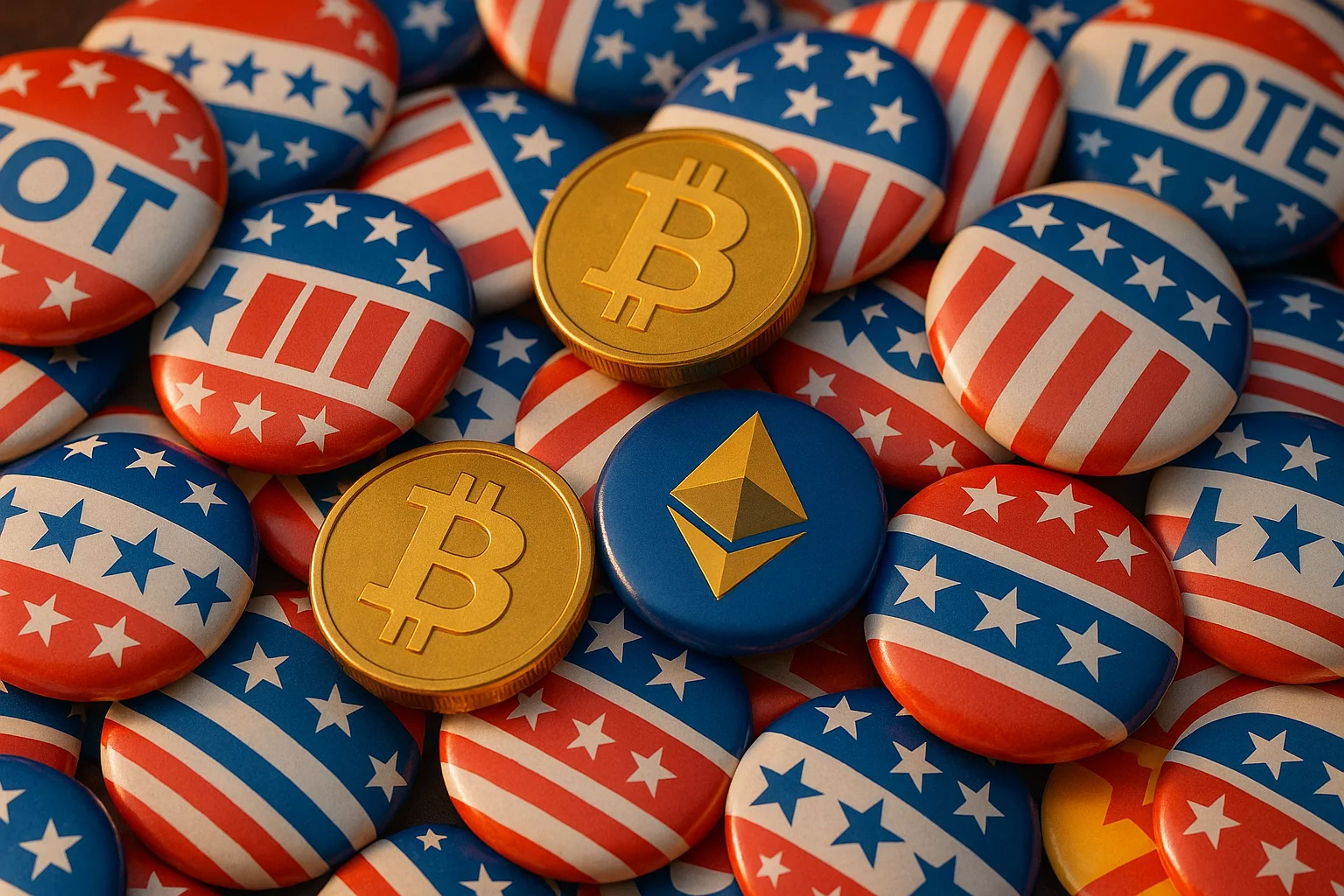
Corporate midterm spending hits $517M early as Fairshake keeps ~$130M for 2026
Public Citizen data shows the 2026 cycle has already cleared the full 2024 record, with crypto-linked super PAC money still positioned for late-cycle races.
U.S. companies have spent $517 million on 2026 House and Senate races over the 15 months through the end of the first quarter, already surpassing the entire 2024 cycle’s $461 million corporate-spending record. Crypto-linked super PAC networks led by Fairshake still have roughly $130 million available, keeping election-driven regulatory risk in play into the Nov. 3 midterms.
Key Takeaways
- Corporate spending on 2026 House and Senate races reached $517 million over the 15 months through the end of the first quarter, topping the prior $461 million record set across the full 2024 cycle.
- Crypto, tech, and online gaming donations made up at least $294 million of that corporate midterm spend from Jan. 1, 2025 through the first quarter.
- Fairshake began the year with $193 million and still had about $130 million left to deploy, keeping a large pool of crypto-aligned capital available for late-cycle races.
- Political ad spending for the midterms is projected at $11.6 billion, above the prior cycle’s $11.2 billion, per AdImpact.
$517M Already: Corporate Midterm Money Breaks the 2024 Record Early
Corporate money is arriving early in the 2026 U.S. midterm cycle, and the scale is already past the last cycle’s high-water mark. U.S. companies spent $517 million on 2026 House and Senate races in the 15 months through the end of the first quarter, based on data compiled by corporate accountability nonprofit Public Citizen.
That figure exceeds the prior record of $461 million in corporate spending over the full two-year 2024 election cycle, using the same Public Citizen compilation. The time-window language in the dataset excerpt is imprecise on the specific year for “end of the first quarter,” but the directional point is clear: the cycle’s corporate spend has already cleared the last cycle’s total well ahead of Election Day.
Public Citizen research director Rick Claypool framed the pace as historically unusual. “The scale of corporate spending in this election cycle is unlike anything we’ve seen previously,” he said.
The broader ad market is also set up for a large finish. Political advertising research firm AdImpact projected $11.6 billion in political ad spending for the midterms, above the 2023–2024 cycle record of $11.2 billion.
Crypto’s Fairshake Network Still Has ~$130M to Deploy
For crypto traders, the most actionable detail is not that money is flowing, but that a crypto-aligned spender still has a large, liquid budget late in the cycle. Fairshake, a crypto-aligned super PAC funded largely by major crypto firms and investors, started the year with a $193 million war chest and had about $130 million left to spend, according to filings.
The funding base is concentrated. Fairshake was financed almost entirely by Coinbase, Ripple, and Andreessen Horowitz, and federal election records analyzed in the report show at least $23.8 million from Andreessen Horowitz went to Fairshake.
That concentration cuts both ways. It makes the crypto influence effort durable because a small set of balance sheets can keep it funded, but it also ties the policy narrative to reputational and legal swings at a handful of firms. If one of the core funders changes posture, the spend can change quickly.
The report also points to the 2024 playbook as the template: crypto spending refused to align with only one party and instead backed candidates seen as supportive of its policy goals regardless of party. Coinbase, Ripple, and Andreessen Horowitz spent heavily through Fairshake in 2024 to help unseat longtime incumbent Democratic Sen. Sherrod Brown in Ohio, and Public Citizen labeled Fairshake a corporate “Death Star” that could “annihilate individual candidates.”
Brown’s posture toward crypto is described as shifting as he seeks a return to the Senate. Campaign manager Patrick Eisenhauer said Brown “recognizes that cryptocurrency is part of America’s economy” and is keeping an open mind.
How Super PACs, Affiliate PACs, and Dark-Money Nonprofits Move Policy Narratives
The mechanism matters because it explains how policy pressure can rise without a single bill moving. A super PAC is a political committee that can raise and spend unlimited money to influence elections, but it cannot donate directly to candidates or coordinate with their campaigns. That constraint pushes spending into independent ads, voter drives, and rally sponsorships rather than direct campaign support.
The networked version adds two more layers. An affiliate PAC is described here as a political committee that receives funding from super PACs and then spends to influence races, often in parallel with other aligned groups. A dark money nonprofit is a nonprofit that can spend on political activity while not having to publicly disclose its donors.
Public Citizen found crypto, tech, and online gaming industry donations accounted for at least $294 million of corporate spending on midterm races from Jan. 1, 2025 through the first quarter. The report describes those sectors as routing money through a “vast network” of super PACs, affiliate PACs, and dark-money nonprofits, alongside direct donations to candidates.
The same architecture is spreading across adjacent “new economy” sectors that share a regulatory agenda. DraftKings, FanDuel, Fanatics, and bet365 donated more than $72 million to the midterms so far, making sports betting the third-largest corporate donor in this cycle, per a Public Citizen estimate. The bulk of that money was directed through two affiliate PACs, American Conservative Fund and American Future, to state races where the industry faces heavy regulation, according to filings.
Prediction market Polymarket, via corporate parent Blockratize Inc., donated $1 million in June to the Congressional Leadership Fund, a Republican super PAC backed by House Speaker Mike Johnson, filings show. The excerpt does not specify which year “June” refers to, but the donation is presented as part of the current cycle’s spending pattern.
Filings, Ad Buys, and Committee Agendas Into Nov. 3
The next leg of this story is going to be visible in paperwork and media buys, not press conferences. New FEC filings for Fairshake and affiliated committees will confirm the burn rate from the roughly $130 million remaining and show which races get the largest late-cycle allocations.
The other key update is definitional. Public Citizen and OpenSecrets updates could clarify the ambiguous timing references in the excerpt, including which specific year “end of the first quarter” and “June” refer to, and provide a fuller industry-by-industry ranking beyond the partial totals cited here.
AdImpact’s $11.6 billion projection is also a moving target. If the forecast rises and the “closing stretch” blitz arrives early, that tends to pull policy messaging forward too, because ads often test regulatory themes before they become committee language.
Crypto-adjacent donations are the last signal traders should treat as a tell. Further large, disclosed contributions by exchanges, market makers, or major venture firms would indicate where the industry expects the next fight to land, whether that is stablecoin rules, market-structure legislation, or enforcement posture.
My Read: For Traders, Election Spend Is a Proxy for the Next Regulatory Battlefield
The threshold that matters is not whether corporate money is high, it is that $517 million has already cleared the entire prior-cycle record with months left before Nov. 3. That setup makes regulation a headline driver by construction, because the spend is explicitly aimed at shaping who writes and prioritizes the rules.
Crypto’s specific tell is Fairshake’s remaining ~$130 million and the concentration of its funding among Coinbase, Ripple, and Andreessen Horowitz. If that capital gets deployed into a small number of pivotal races and committee-relevant seats, the setup starts to look structural rather than narrative-driven, because the policy agenda will be priced off who controls the chokepoints in Congress.


