Dow closes at a record as Nvidia jumps, but Nasdaq slides 0.8% on tech weakness
Musk said SpaceX will be “exclusive to Nvidia” for future AI compute as SpaceX sank 13% on $18.4B capex.
U.S. stocks finished split with the Dow up 263 points (0.5%) to a record close while the S&P 500 fell 0.2% and the Nasdaq Composite dropped 0.8%. Nvidia gained about 4% after Elon Musk said SpaceX will only use Nvidia processors for its future AI computing infrastructure, even as SpaceX fell 13% on an AI-heavy capex surge.
Dow Hits a Record as Nasdaq Slips on Tech Divergence
The tape printed “risk-on” at the index level, but it was a narrow version of it. The Dow Jones Industrial Average gained 263 points, or 0.5%, to a record close and its fifth straight winning day, while the S&P 500 fell 0.2% and the Nasdaq Composite slid 0.8%.
That split matters because it’s the same pattern crypto traders see when beta is being rationed. Old-economy and index-heavy winners can keep the headline green while growth and long-duration tech leak lower, and the Nasdaq’s underperformance is usually where that stress shows up first.
Early in the session, the move looked cleaner. Just after 9:30 a.m. ET, the S&P 500 rose 0.6% and the Dow gained 365 points (0.7%) as both hit new intraday record highs, with the Nasdaq up 0.4%.
Musk’s Nvidia-Only Call Meets SpaceX’s $18.4B AI Capex Shock
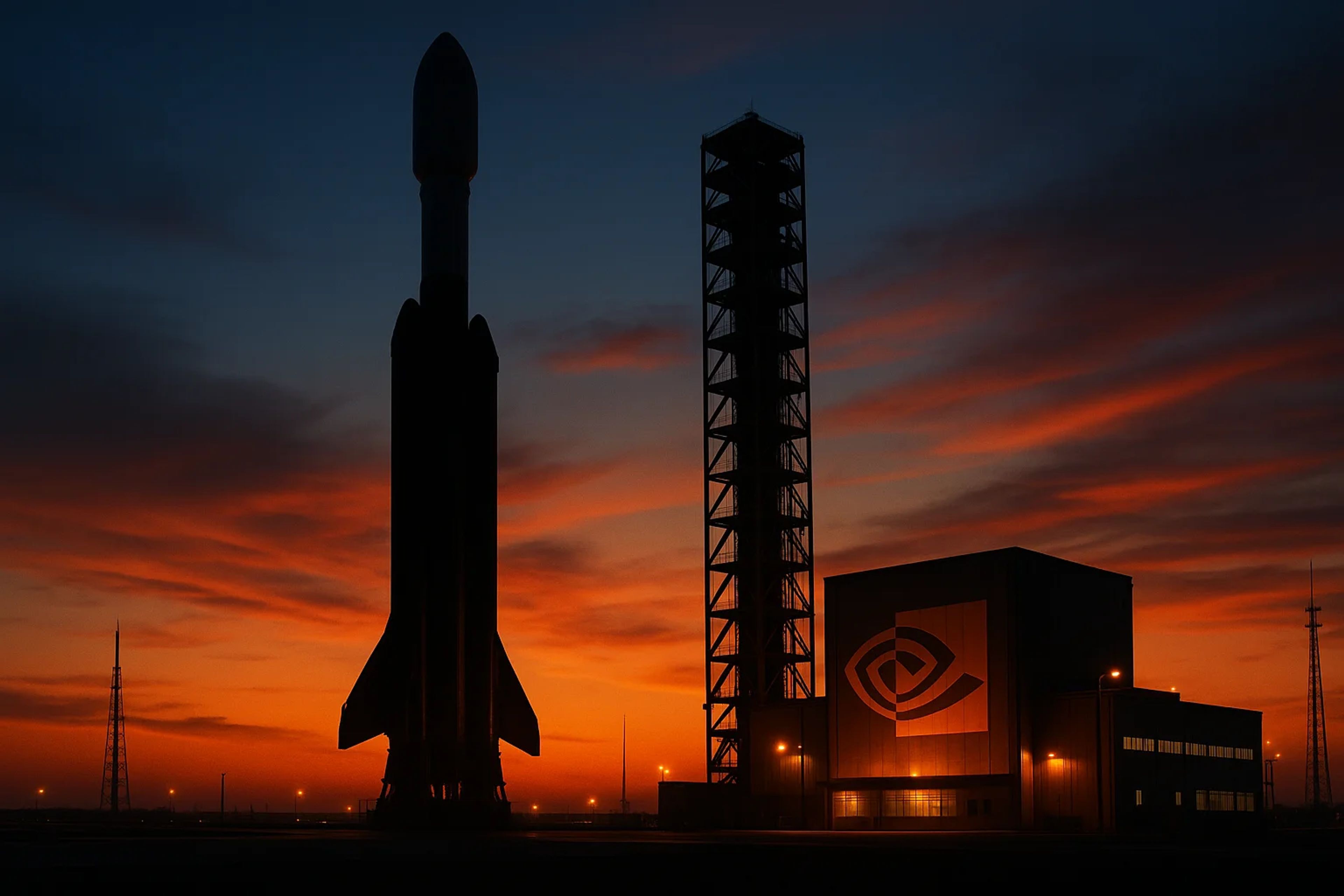
The day’s cleanest single-stock catalyst was Nvidia. Shares rose about 4% after Elon Musk said SpaceX will only use Nvidia processors for its future AI computing infrastructure, calling Nvidia “the best AI computer,” then adding, “We’re exclusive to Nvidia.”
Mechanically, that’s a demand narrative with a single counterparty and a single vendor, which is why it trades like a “picks-and-shovels” endorsement. It also landed inside the Dow, which helped the index hold up even as broader tech softened.
SpaceX traded the other side of the same AI buildout. Shares dropped 13% after the company released its first quarterly report since going public in June and disclosed that capital expenditures jumped sixfold to $18.4 billion in Q2, with most of that spending going toward AI.
Capex is company spending on long-term assets and infrastructure, and markets tend to treat sudden step-ups as a cash-burn problem until the revenue path is visible. The contrast on Wednesday was blunt: Nvidia got paid for being the supplier, while SpaceX got hit for being the spender.
Oil, Hormuz Deal Chatter, and ISM Services: The Macro Inputs Behind Risk Appetite
The macro backdrop stayed two-sided, and the friction points were the usual ones: energy headlines and inflation-sensitive data. West Texas Intermediate (WTI) September futures settled down 0.73% at $75.22 per barrel, while Brent October futures settled up 0.11% at $79.45.
WTI and Brent are the two main crude benchmarks, with WTI anchored to U.S. delivery and Brent used as the international reference. The split settlement followed prior-session declines tied to chatter about reopening the Strait of Hormuz, a shipping chokepoint where disruptions can quickly reprice oil and, by extension, risk appetite.
The problem for positioning is that the “deal” narrative is still unresolved. An Iranian source and two regional officials said Iran and Oman were negotiating a framework that would give Tehran control over inbound ship traffic through Hormuz, and one regional source said, “The concession has already been made regarding some form of control over Hormuz,” while pushing back on claims that a deal was imminent.
On the data side, the Institute for Supply Management’s Services PMI, a monthly survey where readings above 50 indicate expansion, came in at 54.1 for July versus 54.0 in June and a 54.5 consensus estimate. The mix was the issue: the employment index fell to 47.4, its lowest since March, while the prices index rose to 70.3, putting its 12-month average at the highest since April 2023.
For traders, that combination tends to produce rotations rather than a clean bid. Softer services hiring can read as growth cooling, while hotter prices keep rate sensitivity alive, and that’s the kind of backdrop where Nasdaq beta can lag even when the Dow prints records.
My Read: Why This Tape Matters for Crypto Beta
The threshold that matters for crypto isn’t the Dow’s record close, it’s whether the “AI = Nvidia” trade can keep offsetting broader growth pressure. Wednesday’s setup rewarded the supplier and punished the builder, and that’s a useful tell for AI-linked risk assets that have been trading more on narrative than on cash-flow visibility.
The real test is whether the macro volatility switches stay quiet long enough for breadth to improve. If Hormuz headlines keep whipsawing Brent and WTI and the ISM services mix keeps printing hot prices with sub-50 employment, the setup starts to look like fast sector rotation rather than a durable risk-on regime that reliably lifts crypto beta.


