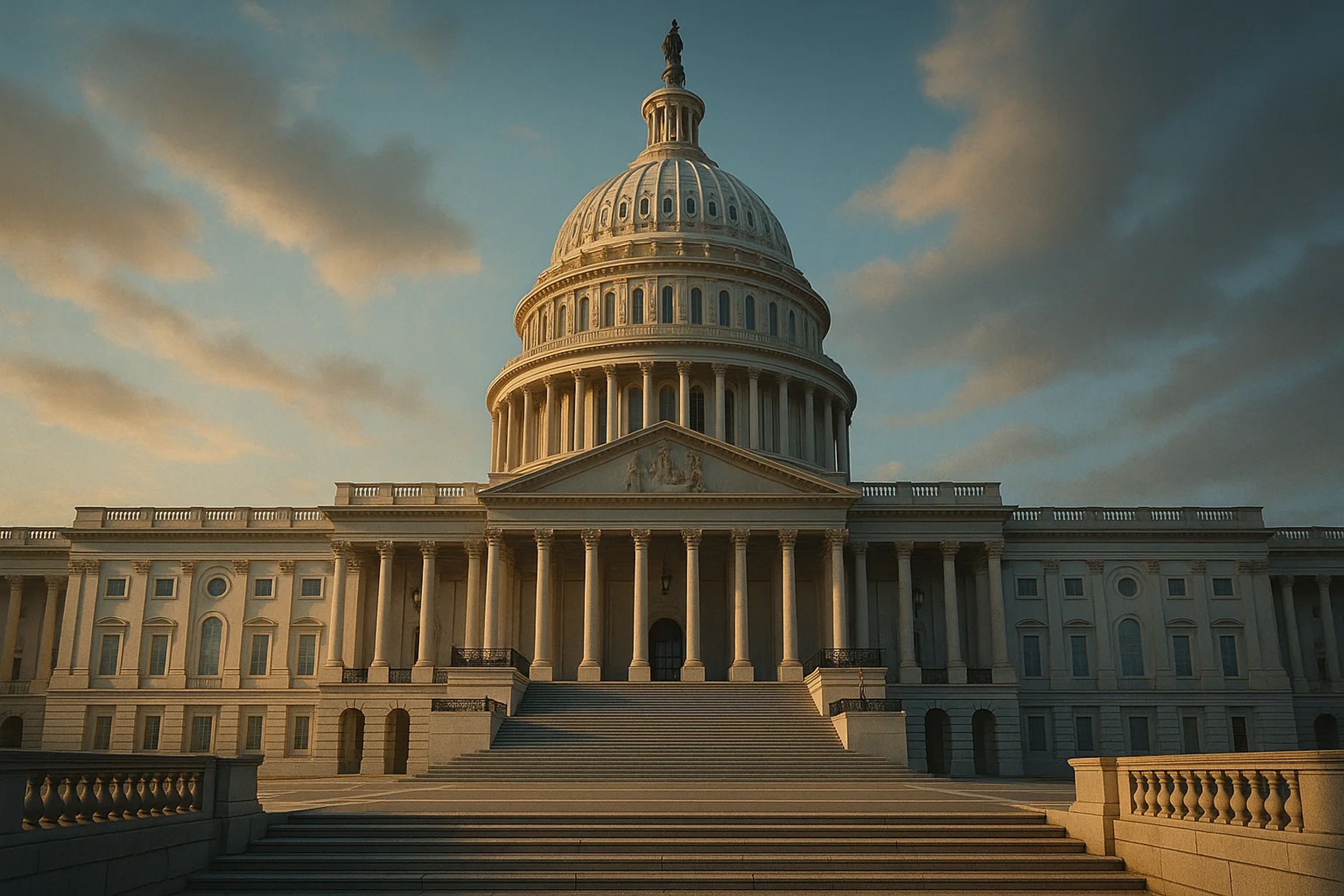
House recess plan collides with AI risk warnings, narrowing the window for guardrails
Democrats urged Speaker Mike Johnson to keep the House in session as frontier-AI safety proposals take shape.
House Speaker Mike Johnson is scheduled to send the U.S. House home after this week until after November’s midterm elections, compressing the timeline for any near-term federal AI guardrails. The calendar squeeze is landing as frontier-AI leaders and lawmakers escalate public warnings that development is moving faster than policy can respond.
Key Takeaways
- The House is slated to adjourn after this week until after November’s midterm elections, leaving only days for any near-term AI safeguards.
- Rep. Sam Liccardo and other House Democrats urged Speaker Mike Johnson to keep the chamber in session until it advances “meaningful, bipartisan AI safeguards.”
- Sen. Ruben Gallego warned the current approach is “not meeting the moment,” using a “Dr. Frankenstein” analogy to argue the technology is escaping control.
- The policy menu being pushed includes frontier-model transparency and evaluation mandates, emergency “kill switch” requirements, and a limited antitrust waiver for safety collaboration.
House Recess Schedule Tightens the Window for AI Guardrails
The immediate constraint is procedural, not technical. Johnson is scheduled to send the House home after the week of the story until after November’s midterm elections, which compresses the window for any federal AI guardrails into a short sprint rather than a normal committee cycle.
That timing matters because the debate is no longer stuck at the level of “AI is important.” Lawmakers are being pushed to choose between moving quickly on a defined set of safeguards or accepting that the next meaningful legislative window may not open until after the election, when incentives and leadership bandwidth can change.
House Democrats are explicitly trying to force the issue onto the calendar. A group led by Rep. Sam Liccardo wrote to Johnson demanding the House remain in session until it passes “meaningful, bipartisan AI safeguards,” arguing the chamber should “return to Washington immediately and remain in session until Congress advances meaningful, bipartisan AI safeguards.”
Warnings Escalate: Anthropic Resignation and CEOs’ Slowdown Messaging
The urgency spike is being driven by a mix of internal-lab alarm and public-facing messaging from frontier AI leadership. A researcher resigned from Anthropic and warned the technology could “kill us all by the end of the decade,” a line that has become a political accelerant because it frames the risk as near-term and catastrophic rather than abstract.
Frontier models, in this context, are the most advanced systems built by leading labs, where capability gains tend to arrive in discontinuous jumps and safety testing often lags deployment pressure. That is the category lawmakers are trying to target, because regulating every model is politically and operationally unrealistic, while ignoring the top end leaves the highest-impact failure modes untouched.
The resignation landed alongside what the story described as “stunning pledges” and admissions from leaders of Anthropic, OpenAI, and xAI that AI is advancing too fast and that development should slow. The article does not detail the specific commitments, which is part of the problem for policymakers trying to draft enforceable rules rather than respond to vibes.
Elected officials are now using that industry rhetoric as cover to demand action. Sen. Ruben Gallego said on CNN that “Dr. Frankenstein is telling us the monster is escaping. Help us stop this,” adding: “The method that we’re answering [with] is not meeting the moment.” Pennsylvania Gov. Josh Shapiro also urged immediate federal action, writing that “Yesterday’s commentary by AI industry leaders should be heeded as a bright flashing red light telling the President and Congress they need to act now to regulate and rein in AI development,” and arguing AI “should not be steered exclusively by private entities.”
What Congress Is Being Asked to Pass: Transparency Tests, Kill Switches, Antitrust Waivers
The Democrats’ letter is notable because it points to a concrete toolkit rather than a generic call for “responsible AI.” It cited proposals including mandates for transparency and evaluation of frontier models, “kill switch” requirements, and waiving antitrust laws so companies can collaborate on safety and security.
Those three buckets map cleanly to how frontier systems are built and deployed. Transparency and evaluation mandates are about forcing standardized testing and disclosure before and during deployment, so regulators and counterparties can see what a model can do and under what conditions it fails. A kill switch is an emergency shutdown mechanism, a requirement that a system can be quickly disabled if it behaves dangerously or unexpectedly. An antitrust waiver is a legal carve-out that would let competitors coordinate on safety standards without triggering competition-law exposure.
The House already has multiple proposals in play, including the FRONTIER Act led by Reps. Jay Obernolte and Lori Trahan. The Senate, by contrast, has been slower to coalesce. A Thune/Klobuchar/Cruz effort was described as being worked on, but it had not been introduced at the time of publication, leaving cross-chamber alignment as the bottleneck even if the House tries to move quickly.
The political split is also explicit and it is not just partisan. Johnson argued that an emergency push to regulate AI could harm U.S. competitiveness, saying: “If Congress just races in and does some sort of emergency session to try to regulate AI, we will lose the race to China, that is a threat to every single American,” and adding, “We don’t need everybody to panic right now… and make sure we’re doing everything we can responsibly to also not smother American innovation.” President Donald Trump echoed the competition framing in remarks in Ireland, saying, “we’re leading China on AI… because whoever wins AI wins,” while allowing for “guardrails” and suggesting some concerns are being overstated.
Next-Week Catalysts Before the Lights Go Out in Washington
The first catalyst is whether Johnson changes the schedule or signals openness to staying in session to advance safeguards before the planned recess. Without that, the practical path for near-term legislation narrows to leadership-driven action rather than a broader committee process.
House Democratic Leader Hakeem Jeffries said Democrats would meet Tuesday to discuss AI guardrails. That meeting is a near-term tell for whether the caucus is converging on a specific bill vehicle and messaging, or simply trying to raise pressure ahead of the recess.
The Senate side is the other gating item. Any introduction or text release of the described Thune/Klobuchar/Cruz bill would clarify whether the Senate is aligning with House concepts like the FRONTIER Act or heading toward a different framework that would force reconciliation later.
Johnson also said he wants a closed-door summit with AI industry leaders, describing a format where leaders “go in a big room, close the door and sort this out,” and adding: “I’d do it tomorrow.” If that summit gets scheduled quickly, the question becomes whether it produces concrete commitments that can be translated into statutory requirements, or whether it functions as a pressure-release valve that delays legislation until after the election.
My Read: Why This Becomes a Tradable Headline Risk Even Without a Bill
The part that decides the near-term market impact is not whether a bill passes, it is whether the House calendar forces a binary narrative: sprint now or punt to post-midterms. When the window compresses into days, every meeting, letter, and “summit” tease becomes a headline catalyst, and that is enough to move AI-adjacent narratives even if the underlying policy text never materializes.
The threshold that matters is whether leadership converts the current toolkit talk into an actual vehicle with text, sponsors, and a schedule before the recess locks in. If that happens, traders can map exposure to specific categories like frontier-model evaluation mandates, kill-switch requirements, and antitrust carve-outs rather than trading a generic “AI regulation” blob, and the story becomes mechanically tradable instead of purely rhetorical.


