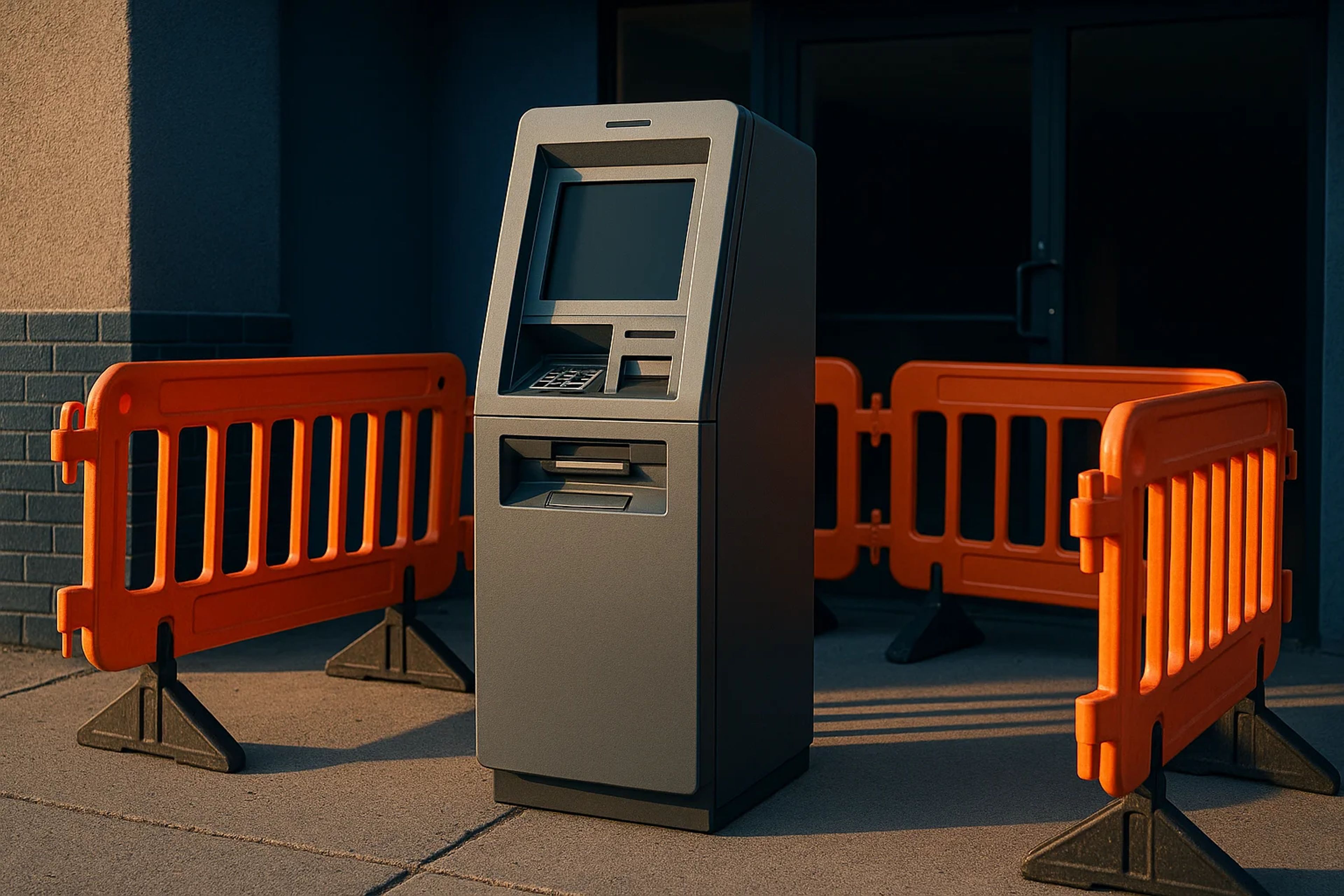
Minnesota’s crypto-ATM ban takes effect, forcing shutdown of 201 kiosks
SF 3868 requires immediate deactivation on Aug. 1 and sets a Dec. 31 deadline to remove machines from public view.
Minnesota’s statewide ban on virtual currency kiosks is now in force, requiring operators to deactivate installed crypto ATMs as of Aug. 1. The law sets a Dec. 31 deadline to physically remove machines from locations “visible or accessible to the public,” after officials cited scam-linked losses.
Minnesota’s Crypto-ATM Shutdown Starts Aug. 1, With Dec. 31 Removal Deadline
SF 3868 is live in Minnesota as of Aug. 1. The statute bars crypto ATM operators from “installing, operating, maintaining, or making available” virtual currency kiosks statewide.
The compliance timeline is deliberately two-step. Operators with machines already placed had to deactivate them by Aug. 1, but they have until Dec. 31 to physically remove kiosks from locations “visible or accessible to the public.” That structure matters because it implies a staggered decline in public-facing access, not necessarily an overnight disappearance of the hardware from retail venues.
The pre-ban footprint was not small. CoinATMRadar listed 201 crypto ATMs and kiosks operating in Minnesota before the statewide ban took effect.
Minnesota’s justification is anchored in fraud loss reporting. The state’s commerce department said residents lost about $1 million from scams tied to crypto ATMs from 2023 to 2025. The FBI’s Internet Crime Complaint Center (IC3) separately reported more than $151 million in Minnesota losses tied to digital assets or crypto wallets in 2025.
Officials described the scam pattern as one that “disproportionately targets seniors,” often using pressure tactics tied to fake emergencies to push rapid payments through kiosks. The reporting does not specify how much of the $1 million in kiosk-linked losses overlaps with the broader $151 million IC3 figure, or how many cases were kiosk-specific versus wallet or other digital-asset channels.
Compliance and Copycat Risk: How State Kiosk Bans Tighten Retail On-Ramps
For traders, the immediate effect is mechanical. Crypto ATMs are a cash-to-crypto rail that can bypass the friction of bank transfers and exchange onboarding, especially for small retail flows. Turning off 201 listed kiosks removes a visible, walk-up purchase channel for Bitcoin and other assets inside the state.
The second-order effect is compliance risk for kiosk operators across jurisdictions. Minnesota’s move lands in a month where other states also tightened the screws. Tennessee began enforcing a total ban on crypto ATMs on July 1. Georgia put transaction limits and other restrictions into force on July 1. Delaware and New Jersey lawmakers have advanced bills proposing similar measures.
The pattern is clear even if the enforcement details are not. Consumer-protection statistics, especially senior-targeting narratives, are increasingly being used to justify outright bans rather than incremental controls. That creates a template other states can copy quickly because it does not require building a licensing regime or supervising ongoing compliance.
The unresolved piece is how Minnesota will enforce the “visible or accessible to the public” standard in practice. The available information does not spell out penalties, inspection cadence, or whether any exceptions exist for non-public settings beyond that public-visibility language.
My Read: The Fraud Narrative Is Becoming the Fastest Path to State-Level Crypto Restrictions
The threshold that matters is not the Dec. 31 removal date. It is whether the Aug. 1 deactivation requirement is enforced cleanly enough that kiosk volume actually goes dark while the machines still physically sit in stores.
This is a fraud-driven restriction, not a market-structure one, and that is why it travels. If CoinATMRadar’s Minnesota count drops quickly from 201 over the next few weeks and other states see the same political payoff, the kiosk business starts to look like a shrinking, multi-state compliance trade rather than a scalable retail on-ramp. The practical impact is a measurable contraction in public cash-to-crypto access that persists beyond Minnesota if Delaware and New Jersey bills turn into signed law.


