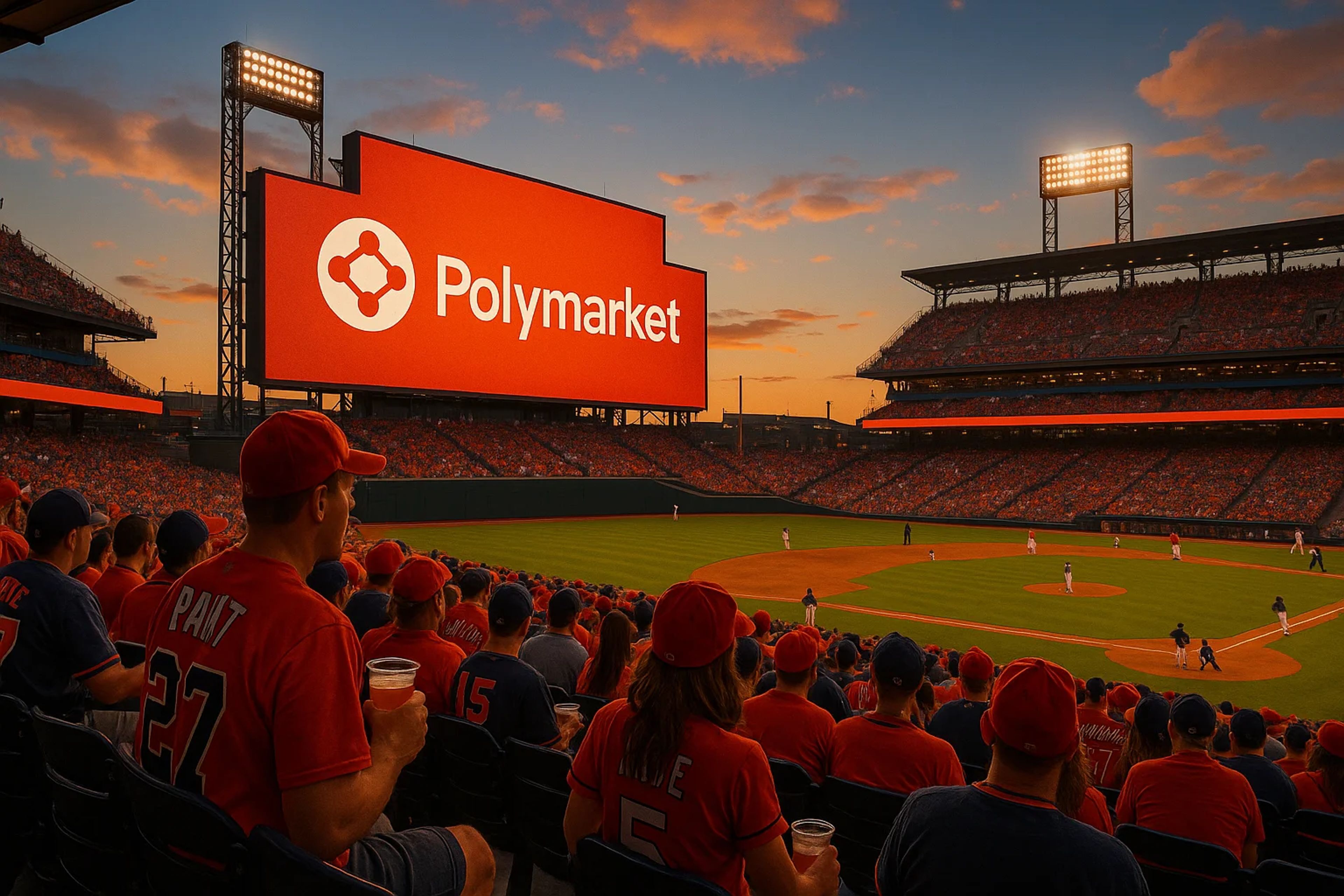
Polymarket launches U.S. influencer and MLB/media push after four-year ban
The campaign pairs viral marketing with a CFTC-supervised sports-betting app launched in December.
Polymarket has kicked off a U.S. comeback campaign built around influencer distribution and partnerships spanning major sports teams, Major League Baseball, and media outlets including CNBC and CNN. The push is designed to rebuild trust after a prior CFTC settlement and arrives weeks after renewed scrutiny of influencer disclosure practices tied to Polymarket promotions.
Key Takeaways
- Polymarket is running a U.S. marketing campaign using influencers and partnership agreements with major sports teams, MLB, and media outlets including CNBC and CNN.
- The company previously agreed to stop serving U.S. customers in a $1.4 million settlement with the CFTC over allegations tied to unregistered event-based derivatives.
- A CFTC-supervised mobile app launched in December now allows real-money sports betting in the U.S.
- A Wall Street Journal investigation last month alleged paid influencers promoted simulated trades and winnings without adequate sponsorship disclosures. Polymarket said it was “committed to maintaining accurate, fair, and transparent markets.”
Polymarket’s U.S. Marketing Blitz: Influencers, MLB, and Major Media
Polymarket is attempting to re-enter the U.S. conversation with a coordinated marketing push that leans on two things traders recognize as distribution accelerants: influencers and mainstream brand adjacency. The campaign includes influencer-driven content designed to go viral on TikTok and other platforms, plus partnership agreements with major sports teams, Major League Baseball, and media outlets including CNBC and CNN.
The stated objective is straightforward. Polymarket is trying to persuade policymakers, regulators, and potential users that it is trustworthy after years of legal scrutiny and a four-year period in which it agreed to stop serving U.S. customers.
For market participants, the signal is less about a single ad buy and more about positioning. Polymarket is trying to rewrite its U.S. identity from an offshore prediction market to a regulated, mainstream-adjacent product by coupling a supervised U.S. on-ramp with high-visibility partnerships that normalize the brand.
From a $1.4M CFTC Settlement to a CFTC-Supervised Sports App
The regulatory backdrop is the constraint that defines the trade. Four years ago, Polymarket agreed to stop serving U.S. customers as part of a $1.4 million settlement with the Commodity Futures Trading Commission (CFTC), which alleged the platform offered unregistered event-based derivatives.
Event-based derivatives are contracts whose payoff depends on the outcome of a specific event. In practice, that is the same core mechanic that makes prediction markets useful for hedging and speculation, and the same mechanic that draws regulatory attention in the U.S.
Polymarket’s rehabilitation effort has been routed through a narrower, supervised product. In December, it introduced a CFTC-supervised mobile app that lets users bet real money on sports events. The packet does not provide additional compliance or operational details beyond CFTC oversight and the sports-betting focus.
Influencer-Disclosure Scrutiny Returns as Polymarket Seeks Legitimacy
The marketing blitz is landing in a credibility-sensitive window. Last month, a Wall Street Journal investigation alleged Polymarket used paid influencers to promote simulated trades and winnings on social media without adequate sponsorship disclosures. Polymarket responded that it was “committed to maintaining accurate, fair, and transparent markets.”
That matters because influencer distribution is doing double duty here. It is the growth channel and the reputational risk surface. If disclosures and controls are tight, the campaign supports the “regulated” narrative. If not, it hands critics an easy line that the company is still operating with offshore-style marketing norms.
Competition sharpens the framing. Rival platform Kalshi has operated under CFTC supervision since 2020. Polymarket’s reach looks larger on social, with 1.7 million followers on X versus Kalshi’s 431,400, suggesting Polymarket may be competing on mindshare while it rebuilds U.S. acceptance.
Signals That Could Validate the U.S. Re-Entry Narrative
The first external signal is whether the CFTC responds publicly or takes any action related to Polymarket’s U.S. marketing practices or product positioning after the renewed influencer-disclosure scrutiny.
The second is execution proof. Traders should watch whether the MLB, team, and named media partnerships translate into visible placements and active campaigns, or whether they remain limited-scope agreements without sustained distribution.
Third, Polymarket’s own compliance posture needs to become legible. Any updates on influencer sponsorship disclosure standards, required labeling, or audit processes would clarify whether the company is treating the WSJ allegations as a one-off PR issue or as a structural compliance gap.
Finally, Kalshi’s next moves matter because it is already a regulated reference point in the category. If Kalshi uses its CFTC-supervised status to pressure Polymarket’s rollout or narrative, the U.S. market could consolidate around whichever platform can pair access with the cleanest compliance story.
Marcus Hale’s Take: Why This PR Push Matters for Prediction-Market Access
I read this as a distribution play wrapped around a regulatory wedge. The CFTC-supervised sports app is the credible anchor, and the influencer plus MLB/media layer is the attempt to turn that anchor into mainstream acceptance. That is a rational strategy after a $1.4 million settlement and a period where U.S. access was supposed to be off-limits.
The threshold that matters is whether Polymarket can run an influencer-heavy campaign without creating fresh disclosure or positioning problems that invite regulator attention. If the partnerships show up as real placements and the disclosure standards tighten in a way that is visible, the setup starts to look structural rather than narrative-driven, and that is what would make U.S. prediction-market access expand in practical terms.


