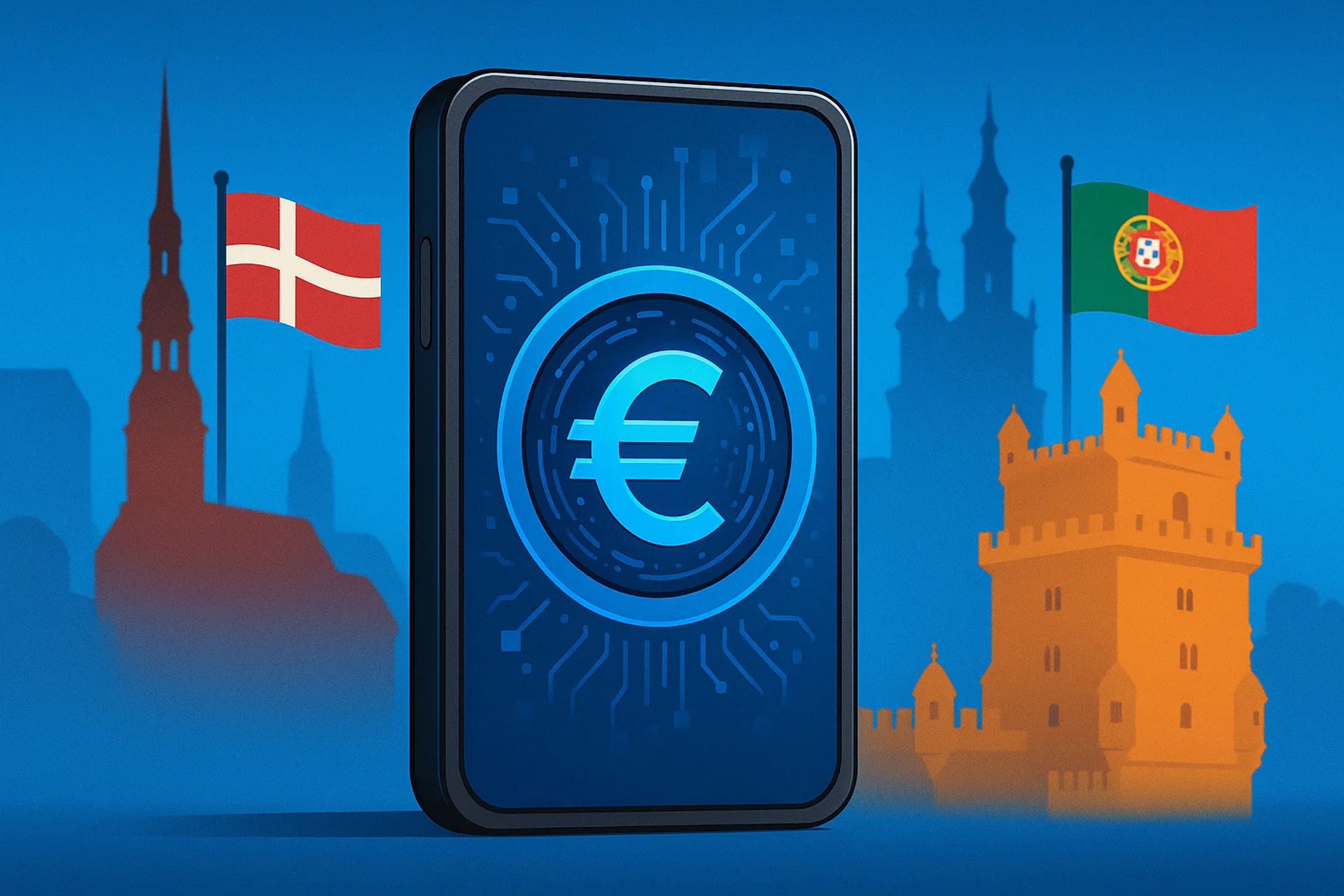
Revolut begins phased EURR euro stablecoin rollout in Denmark, Poland and Portugal
The MiCA-aligned token launches first on Ethereum as Revolut prepares to withdraw USDT in the EEA and Switzerland.
Revolut has started rolling out its first stablecoin, the euro-pegged EURR, to selected customers in Denmark, Poland and Portugal. The launch lands as Revolut moves to withdraw Tether’s USDt in the EEA and Switzerland, with remaining balances slated for conversion after Aug. 31.
Revolut has begun a phased rollout of EURR, its first stablecoin, to selected customers in Denmark, Poland and Portugal. The company framed the launch as an in-app stablecoin rail that will broaden across the European Economic Area later in 2026, but only if “product, operational and regulatory readiness” lines up.
EURR is issued by Bridge Building S.A., the Luxembourg-based entity of Bridge, a stablecoin infrastructure company owned by Stripe. Revolut said the token is designed to maintain a value of one euro and is backed by reserves held and managed by Bridge in line with the European Union’s Markets in Crypto-Assets regulation, the rulebook that sets requirements for crypto-asset issuers and stablecoin reserve management in Europe.
The initial distribution scope is not small for a “selected customers” rollout. A Revolut spokesperson said Denmark, Poland, and Portugal were selected “for their market size,” adding that “approximately 2 million customers will be involved in the initial rollout,” which gives a rough sense of how quickly EURR could become a default quote asset inside Revolut’s retail crypto app.
On the plumbing, EURR will initially launch on Ethereum. Revolut said it plans to support multiple blockchain networks over time and to enable transfers to external wallets, but the company is explicitly staging that functionality rather than turning it on for everyone on day one.
USDT Off-Ramp Meets a New MiCA-Compliant Rail: What Changes for Revolut Users
The timing is the point. Revolut is adding a MiCA-compliant euro stablecoin at the same moment it is withdrawing Tether’s USDt from the European Economic Area and Switzerland, and it has previously said remaining USDT balances would be converted into customers’ base currencies after Aug. 31. For users who treated USDT as the default “cash” leg inside Revolut, EURR is the obvious candidate to absorb some of that stablecoin flow, but it changes the denomination and, potentially, the onchain exit routes.
Mechanically, the early phase looks more like an internal rail than a broad onchain stablecoin launch. The Revolut spokesperson said, “External wallet transfers will be available immediately for select customers and more broadly as liquidity builds,” which implies that the ability to send EURR out to self-custody or third-party venues will expand only after Revolut and Bridge are comfortable with depth and operational throughput. Until that happens, EURR can still matter for Revolut-native trading and remittance, but it is a different product than a stablecoin you can freely arb across venues.
Revolut said its standard crypto trading and remittance limits will apply to EURR activity. It also said fiat transactions will carry no fees or spreads, a detail that matters for users toggling between bank balances and stablecoin balances inside the app, even if the company did not publish numeric limits in the rollout note.
The next milestones are mostly about sequencing rather than technology. Revolut has not published the country list or dates for the broader EEA expansion “later in 2026,” and it has not named which additional blockchains EURR will support beyond Ethereum. Revolut also described EURR as the first step in a broader stablecoin strategy and said it is developing tokens denominated in other currencies through “separate regulatory pathways,” but it did not identify which currencies it is pursuing or what those pathways look like in practice.
My Read: EURR’s Real Test Is Transferability and Liquidity, Not the Peg
The rollout is being read as a stablecoin product launch, but the more useful lens is a rail swap inside one of Europe’s biggest retail crypto apps, timed to coincide with a USDT withdrawal and an Aug. 31 conversion cutoff. If EURR is going to matter beyond Revolut’s own walled garden, the threshold that matters is when external wallet transfers move from “select customers” to broad availability, and whether Revolut is willing to support enough liquidity that EURR can be used as a real settlement asset rather than a UI balance.
MiCA alignment and a Luxembourg issuer structure are table stakes for keeping the product usable across the EEA as the rollout expands, but they do not solve distribution onchain. If transfer access broadens and liquidity deepens while Revolut adds major EEA markets and additional networks beyond Ethereum, EURR starts to look like a structural euro stablecoin rail rather than a one-app replacement for USDT balances.


