Robinhood says 150,000 users opened AI “agentic” accounts that can trade crypto
At its HOOD Summit, the broker also cited nearly 30 million daily “tool uses,” but did not define what counts.
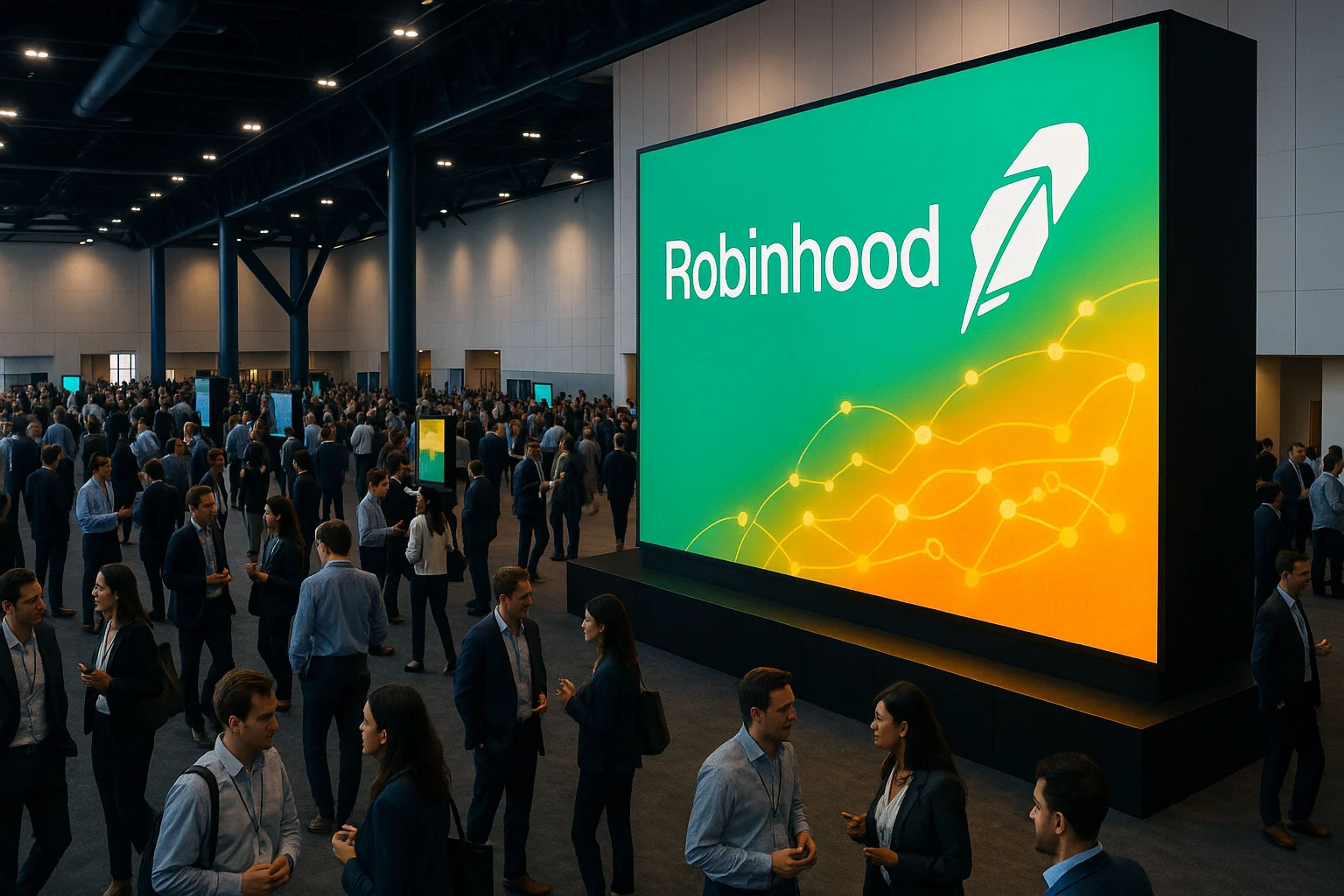
Robinhood is pitching early traction for its in-app “Robinhood Agents” feature, which can draft and, with opt-in automation, execute stock and crypto trades. At the company’s HOOD Summit in Houston, Robinhood said more than 150,000 customers opened agentic trading accounts and that agents used Robinhood’s tools nearly 30 million times per day.
Robinhood launched “Robinhood Agents” in May as an in-app feature that lets customers connect AI models, including OpenAI and Anthropic, to analyze markets, build strategies, and trade stocks and cryptocurrencies. The company is positioning the product as a retail-facing wrapper around agentic workflows: the model can take a user’s instructions, call into Robinhood’s tooling, and turn that into drafted orders.
At its recent HOOD Summit in Houston, Robinhood disclosed its first adoption snapshot. More than 150,000 customers have opened what it called “agentic trading accounts,” and those agents were using Robinhood’s tools nearly 30 million times per day. The company also framed the feature as early-stage relative to its base, saying the 150,000 accounts equal about 0.5% of Robinhood’s 28.4 million funded customers.
CEO Vlad Tenev pitched the product as institutional-style tooling packaged for retail, saying the integration gave retail traders the “tools once reserved for hedge funds, big banks, and quant firms.” The metric that will get debated is the 30 million figure, because Robinhood did not define what a “tool use” is in a way that maps cleanly to executed trades.
How Agentic Crypto Trading Works on Robinhood: Sub-Accounts, Approvals, and Risk Boundaries
The core mechanism is account isolation. To use AI-driven trading, a customer has to open a new sub-account with a defined balance. That sub-account is the only bucket the agent can touch, and the structure is designed to block the agent from accessing the user’s main Robinhood account.
Execution is also gated by default. Robinhood Agents can draft stock and crypto trades, but the user must manually approve them before they are placed unless the user explicitly enables automated trading. That default matters because it keeps the agent in “proposal mode” until the customer chooses otherwise.
If a user opts into automated execution, Robinhood says the agent can only trade within boundaries the user sets. The examples Robinhood gave were a capped allocation size and specific risk thresholds. In practice, that turns the product into a constrained executor: the model can generate ideas and place orders, but only inside a sandboxed balance and a rule set the user defines.
The PFOF Incentive: Why Robinhood Thinks Agents Can Lift and Smooth Trading Activity
Robinhood’s business case is straightforward: more trades, more transaction revenue. The company does not charge commissions, and it earns most of its transaction-based revenue from payment for order flow (PFOF), where customer orders are sold in bundles to high-frequency trading firms that pay for that flow.
That creates a direct incentive to increase trading frequency and reduce the peaks and troughs that come with retail risk appetite. Robinhood’s pitch is that agents could “smooth out” trading volumes by automatically executing more trades, which would support PFOF-linked revenue during periods when customers are less inclined to trade manually.
The next disclosures that matter are definitional and behavioral. Robinhood has not said what counts as a “tool use” inside the nearly-30-million-per-day metric, and it has not tied that number to executed orders, notional volume, or changes in transaction-based revenue. Product defaults also matter: any shift in the default from manual approval toward automation, or any expansion of boundary controls that changes how much can happen without user intervention, would change the expected volume impact.
Adoption is the other threshold. Robinhood’s own framing puts agentic accounts at about 0.5% of funded customers today. Updates showing that share moving meaningfully higher, alongside evidence in future company updates that transaction-based revenue is rising or becoming less cyclical, would be the cleanest confirmation that Agents are doing more than generating in-app activity.
My Take: Adoption Is Real, but the ‘30 Million Uses’ Metric and Live-Market Behavior Are the Unknowns
The mechanism that decides whether this matters is not the model brand names, it is the execution path: isolated sub-accounts, manual approval by default, and automation only after explicit opt-in inside user-set limits. That design reduces blast radius for retail, and it also means the product’s volume impact depends on how many users actually flip the automation switch.
The threshold that matters is whether Robinhood can translate “nearly 30 million tool uses per day” into measurable executed flow and steadier transaction-based revenue. If Robinhood tightens the definition of “tool use,” shows that it correlates with filled orders, and grows agentic accounts beyond the current ~0.5% penetration, Agents start to look like a revenue smoothing mechanism rather than a high-engagement feature.


