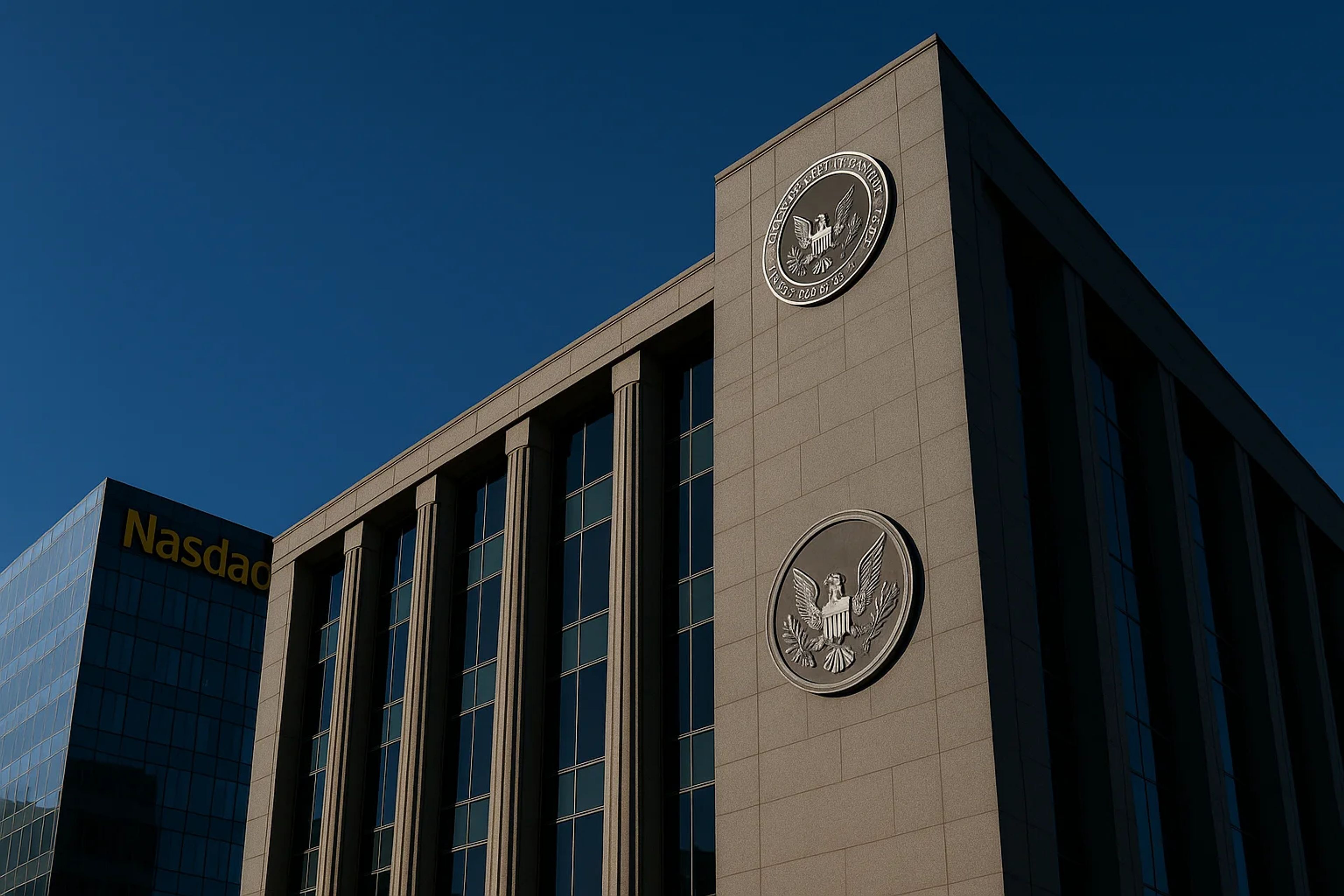
SEC keeps Nasdaq PHLX QBTC bitcoin index options stayed as CME petition gets review
Commissioners invited written statements due Aug. 24, extending uncertainty for US-listed BTC index options timing.
The Securities and Exchange Commission has kept Nasdaq PHLX’s proposed QBTC bitcoin index options frozen, even after the agency’s Division of Trading and Markets had approved the listing under delegated authority. At the same time, the commission granted a petition for review tied to CME Group’s challenge, turning what looked like a near-term listing path into a commissioner-level jurisdiction fight.
The Securities and Exchange Commission has kept Nasdaq PHLX’s QBTC bitcoin index options from launching, maintaining a stay on the earlier approval while commissioners take up a petition for review filed by CME Group.
The procedural posture matters more than the headline. The SEC’s Division of Trading and Markets had approved Nasdaq’s proposal through delegated authority on May 22, a route that can move routine exchange rule changes faster when they are not escalated to the full commission. CME then petitioned for commission review, and in a July 29 order the SEC granted that petition and kept the approval stayed, meaning Nasdaq PHLX cannot proceed on the strength of the delegated approval while the commissioners re-examine the matter.
The commission also set a written-statement process around the review. Written statements supporting or opposing the approval are due Aug. 24, which effectively re-opens the fight in a format that tends to stretch timelines because it invites broader argument and gives commissioners more procedural cover to ask for more record-building.
CME’s core argument is jurisdictional. CME has argued the contracts are commodity option swaps that fall under the exclusive oversight of the Commodity Futures Trading Commission, rather than the SEC, and that Nasdaq could not begin trading the proposed options without first obtaining exemptions from the CFTC.
Deadlines, Jurisdiction Fight, and What It Means for Where BTC Options Liquidity Could Land
For traders expecting a clean “approved, then listed” sequence for US-listed bitcoin index options, the SEC’s split decision reads as a reset. The commission did not deny the product. It also did not let the delegated approval stand long enough to become a live market.
The immediate timeline marker is Aug. 24, the deadline for written statements supporting or opposing the Nasdaq PHLX approval. After that, the next market-relevant signal is not a press release. It is whether the SEC issues a commissioner-level order that lifts the stay, keeps it in place, or extends it while the petition review is underway.
The other gating item sits outside the SEC’s docket. CME’s position implies Nasdaq would need CFTC exemptions before trading can begin, so any CFTC action granting or declining those exemptions becomes a parallel catalyst that can either de-risk the launch path or hard-stop it regardless of what the SEC does next.
If the product ultimately proceeds, the structure points to a TradFi-style volatility instrument rather than anything that touches spot delivery. The proposed options are European-style, meaning they can be exercised only at expiration, and they would settle entirely in U.S. dollars rather than bitcoin. The underlying reference for QBTC options would track the CME CF Bitcoin Real Time Index divided by 100, and the final settlement value would use the CME CF Bitcoin Reference Rate New York Variant, also divided by 100.
That design choice shifts the trading question away from on-chain settlement narratives and toward venue concentration. Index-referenced, cash-settled options tend to pull liquidity toward the rulebook that clears the jurisdiction hurdle cleanly, and this petition review is explicitly about which rulebook applies.
My Read: This Is a Venue-and-Regulator Risk Trade Until the SEC Signals Which Rulebook Applies
The filing is being read as a directional call on regulated bitcoin options, and that misses what the SEC actually did. The commission kept Nasdaq PHLX’s approval stayed and agreed to review CME’s challenge, which is a procedural move that pushes timing risk back onto desks that had treated the May 22 delegated approval as the last meaningful hurdle.
The threshold that matters is whether the SEC uses the petition review to clarify the SEC-versus-CFTC boundary CME is arguing for, because the July 29 order granted review without indicating agreement on the merits. If the commission’s next order frames these contracts as commodity option swaps needing CFTC exemptions, the setup becomes a jurisdiction-driven bottleneck rather than a standard options-listing cycle, and that is what will determine where US-regulated BTC volatility liquidity can actually scale.


