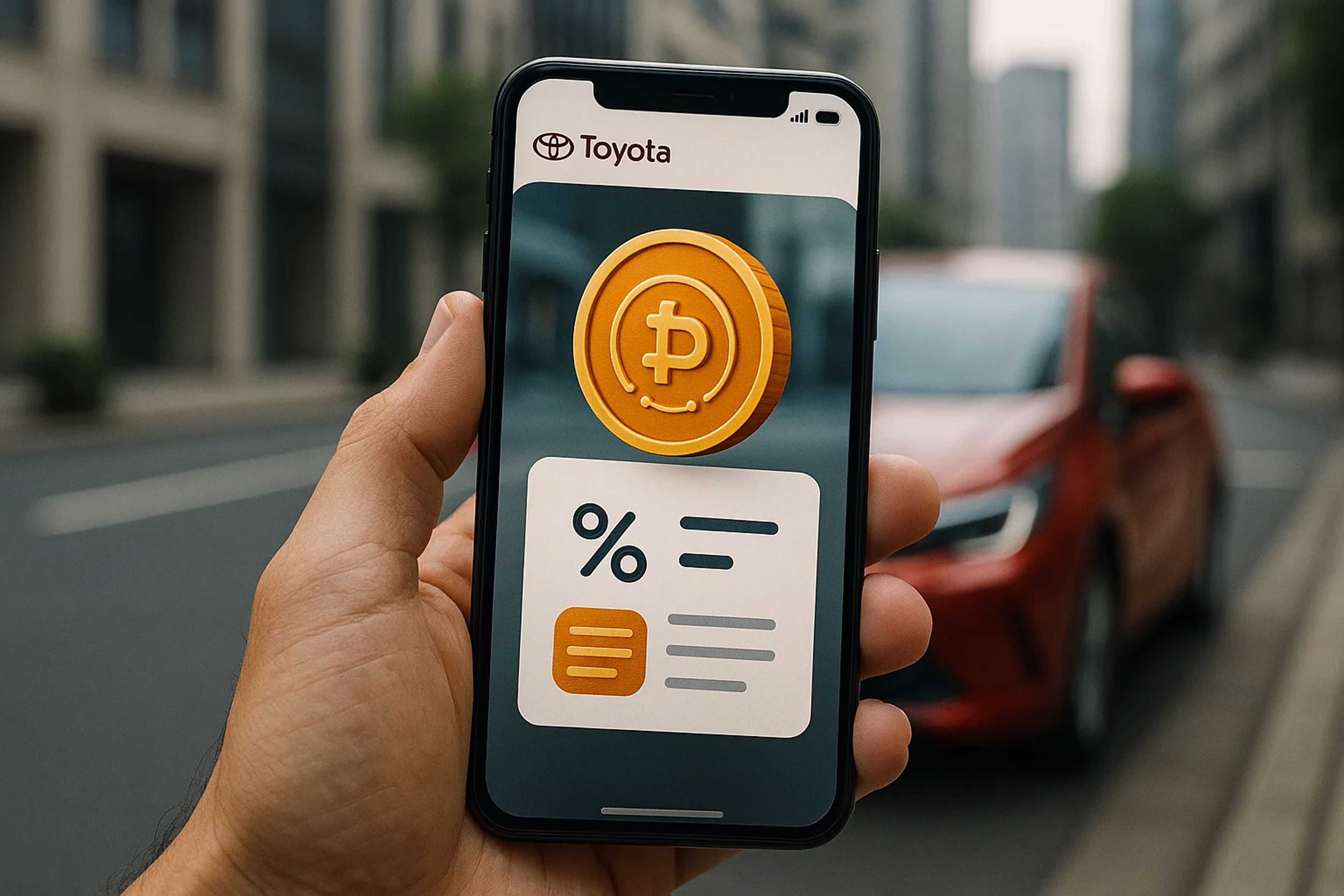
Toyota Finance sells a 1B yen tokenized bond directly inside Toyota Wallet
The one-year security token pays 1.72% with a 100,000 yen minimum and bypasses securities firms used in March 2025.
Toyota Finance opened retail applications for a 1 billion yen, one-year tokenized bond that can be purchased directly inside Toyota Wallet without opening a securities account. The security token pays 1.72% annually and starts at 100,000 yen, positioning the deal as a distribution test more than a balance-sheet event.
Toyota Finance opened applications for a one-year tokenized bond that retail investors can buy directly through Toyota Wallet without opening a securities account. The deal size is 1 billion Japanese yen, the annual interest rate is 1.72%, and the minimum investment is 100,000 Japanese yen ($676).
The infrastructure layer is being handled by BOOSTRY, a Japanese security-token firm providing the blockchain rails used to manage the bond. Toyota Finance framed the direct distribution model as a way to keep the full investor lifecycle inside its own ecosystem, including applications, communications with bondholders, and investor benefits.
Those benefits are explicitly part of the pitch. Toyota Finance said investors may receive Toyota Wallet balances and may qualify for perks including Fuji Speedway tickets and test-drive experiences, including Lexus and selected classic Toyota vehicles. The packet does not specify whether perks are guaranteed for all participants or limited by allocation, timing, or other conditions.
Direct Distribution Signals a New Playbook for Corporate RWAs—But Key Mechanics Are Still Unclear
The structural change is the channel. Toyota Finance’s first security token bond in March 2025 was sold through securities companies. This August 2026 issuance moves distribution in-house, with the wallet acting as the front end for onboarding and ongoing issuer-to-holder communication.
For RWA traders, that matters less as a yield product and more as a template for how corporates can scale tokenized fixed income without relying on broker-led placement. A 1 billion yen tranche is not an institution-sized book. It is large enough to validate operational flow, small enough to keep execution risk contained, and retail-friendly enough to test whether a consumer payments app can become a repeatable capital markets pipe.
The catch is the missing market-structure detail. The materials do not disclose the application window or the bond’s issuance and settlement date. They also do not specify investor eligibility or geography, which matters because Toyota Wallet access and local securities rules will determine who can actually participate.
Secondary liquidity is the other unresolved piece. BOOSTRY is named as the blockchain infrastructure provider, but the specific chain or ledger design is not stated, and neither are custody and transfer rules. Without clarity on transferability, whitelisting, and whether holders can move the token outside Toyota’s rails, it is hard to handicap whether this becomes a tradable instrument or stays a closed-loop product with bond-like economics and app-like distribution.
My Read: This Is Less About Yield and More About Owning the Investor Channel
The threshold that matters is whether Toyota Finance turns this from a one-off wallet feature into a repeat issuance program with disclosed issuance dates, eligibility rules, and transfer mechanics. A 1.72% one-year coupon on a 1 billion yen deal is not the story. The story is Toyota moving from securities-firm placement in March 2025 to direct-to-wallet distribution in August 2026.
If Toyota clarifies custody and transfer rules and repeats the model at larger sizes or longer tenors, the setup starts to look structural rather than narrative-driven. The practical difference is whether these tokens can form a secondary market or remain an in-app savings product with perks attached.


