Xi touts new US-China trade agreement after White House summit, but offers no details
Trump called the talks a “great meeting,” while the day’s recap flagged no breakthroughs on AI, Taiwan, or Iran.
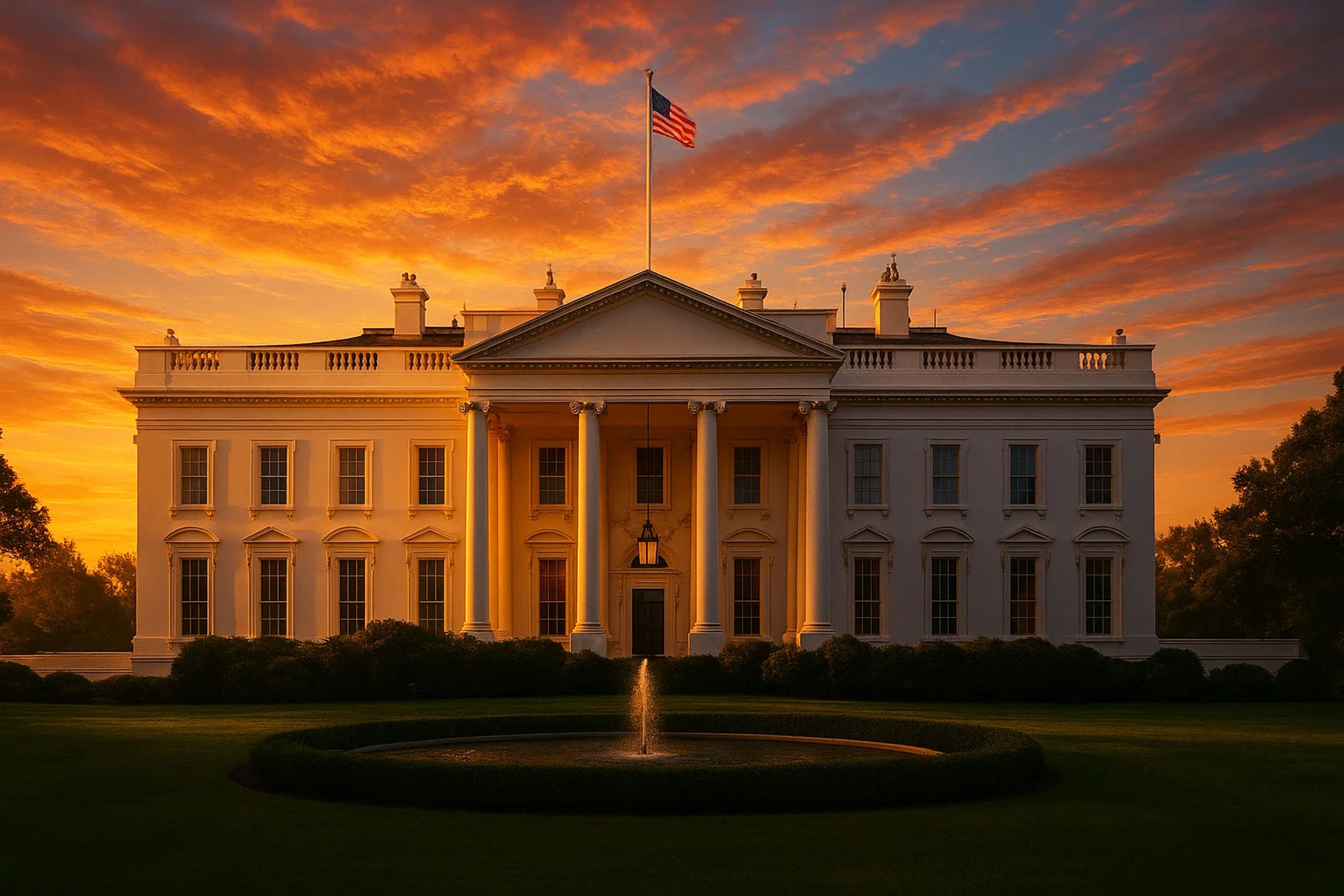
Donald Trump hosted Chinese president Xi Jinping at the White House on Thursday, with both leaders projecting cooperation in public remarks. Xi said US and Chinese economic and trade teams reached a “new joint agreement,” but the same-day recap pointed to “no sign of breakthroughs” on major flashpoints, leaving markets with headline risk and little policy clarity.
Key Takeaways
- Trump hosted Xi Jinping at the White House on Thursday and later described the talks as a “great meeting.”
- Xi said US and Chinese economic and trade teams reached a “new joint agreement” and framed it as “good news for the global economy,” without disclosing terms or timing.
- The day’s closing recap said there was “no sign of breakthroughs” on contentious issues including AI, trade, Taiwan, or the Iran war.
- The state dinner for Xi was set not to be televised amid a White House dispute over CNN’s access despite a court order.
Xi Claims a New US-China Trade Deal After White House Talks—But Details Are Absent
The mechanism markets trade here is simple: a leader-level headline can move risk fast, but only a written scope can hold the move. After meeting Xi Jinping at the White House on Thursday, Donald Trump said he and Xi had a “great meeting.” Xi, speaking before the talks, went further on substance, saying US and Chinese economic and trade teams had reached a “new joint agreement,” calling it “good news for the global economy”.
The gap is that the public record provided no details on what the “joint agreement” contains, when it takes effect, or whether it is binding. For macro-sensitive crypto desks, that matters because “trade deal” is not a policy input until it resolves into tariff schedules, export-control carveouts, licensing rules, or a timeline for follow-on negotiations. Without that, the headline is tradable, but it is not yet modelable.
Trump also framed the relationship in personal terms on Xi’s arrival, emphasizing his “truly great friendship” with the Chinese leader. He said the two powers had made strides on trade since his trip to China in May and added: “Our teams have been working to encourage a more balanced trading relationship.”
The Lines Markets Will Quote: “Great Meeting,” “Balanced Trading,” and the “Thucydides Trap”
Thursday’s remarks produced a set of clean, quotable lines that can drive intraday risk sentiment even in the absence of policy text. Trump’s “great meeting” characterization is the kind of language that tends to compress perceived near-term tail risk, at least until a readout contradicts it. His “more balanced trading relationship” framing points traders toward the usual pressure points, including market access and trade flows, without committing to any specific action.
Xi’s framing was more strategic. He called for extensive cooperation with Washington to avoid the “Thucydides trap” that could put the US and China on a military collision course. The Thucydides trap is the idea that rivalry between a rising power and an established one can slide into conflict even if neither side wants it, which is why the phrase often lands as a de-escalation signal when it is paired with cooperation language.
Xi also described competition as something that should be “healthy,” said US companies were welcome in China, and expressed hope Chinese companies would be “treated fairly” in the US. Those lines read like an invitation to keep commerce running while the strategic disputes stay parked, but they do not answer the market’s immediate question: what changes on AI and tech restrictions, and what changes on trade enforcement.
Flashpoints Still Unresolved: AI, Taiwan, and the Iran War in the Same-Day Recap
The day’s closing recap cut against any assumption that the summit produced a broad reset. It stated there was “no sign of breakthroughs on contentious issues such as AI, trade, Taiwan or the Iran war.” For traders, that is the tell that the “joint agreement” claim, even if real, may be narrow, preliminary, or simply not ready for disclosure.
Taiwan remained a live tail-risk input in Xi’s public messaging. He said Beijing hoped the US adhered to the “correct” position of opposing “Taiwan independence” and that Washington should handle the Taiwan question with prudence. That is a reiteration of core demands rather than a sign of resolution, and it keeps the risk of future headline shocks intact.
On the US-Israeli war with Iran, Xi said China supported the US and Tehran returning to a June memorandum of understanding meant to end the war and reopen the Strait of Hormuz. An MOU is typically non-binding and outlines intentions rather than enforceable obligations, which is why it can be cited as progress without guaranteeing delivery. The Strait of Hormuz is also a critical oil-shipping chokepoint, so any credible step toward reopening it can matter for energy prices and risk sentiment, but the recap’s “no sign of breakthroughs” language suggests the summit did not lock in a clear path.
Operational frictions also surfaced alongside the geopolitics. The head of Airlines for America said US carriers opposed adding more direct flights from China to America, while Xi said it “might happen,” with no decision or schedule disclosed.
The information environment around the visit was messy too. Xi’s state dinner was set not to be televised because the White House continued to deny full access to the event to CNN journalists on Thursday despite a court order, a dispute that increases the odds of fragmented readouts and rumor-driven trading.
Next Catalysts to Validate the “Joint Agreement” Claim
The next move for markets is not another adjective from either leader. It is a document, a timeline, or a concrete action that pins down what “new joint agreement” means in practice.
First, any official US or Chinese readout that specifies scope, deliverables, and timing will decide whether this was a narrow trade facilitation step or something that touches tariffs, export controls, or AI-related restrictions. Second, follow-on statements or actions tied to Taiwan will matter after Xi’s public call for the US to oppose “Taiwan independence,” because that issue tends to reprice risk through sudden headlines rather than scheduled policy.
Third, developments around the June MOU referenced on Iran will be watched for concrete steps affecting the Strait of Hormuz, since shipping and energy narratives can bleed into broader risk appetite quickly. Fourth, operational items like direct US–China flight capacity are a useful tell for whether “might happen” becomes a defined decision or schedule, especially given the stated opposition from US carriers.
My Read: Cooperation Optics, Thin Substance—So Position for Volatility, Not Certainty
The threshold that matters is whether the “new joint agreement” turns into a scoped, dated set of commitments that can be priced, rather than a summit headline that fades into ambiguity. Thursday produced market-friendly language, but the same-day recap explicitly said there was “no sign of breakthroughs” on AI, trade, Taiwan, or Iran, which is the list that actually drives macro risk premia.
If a detailed readout lands and it touches the hard constraints traders care about, like trade enforcement or AI and tech restrictions, the setup starts to look structural rather than narrative-driven. Until then, the summit reads as cooperation optics with unresolved flashpoints, and the practical impact is higher headline sensitivity without a clear policy map to anchor positioning.


