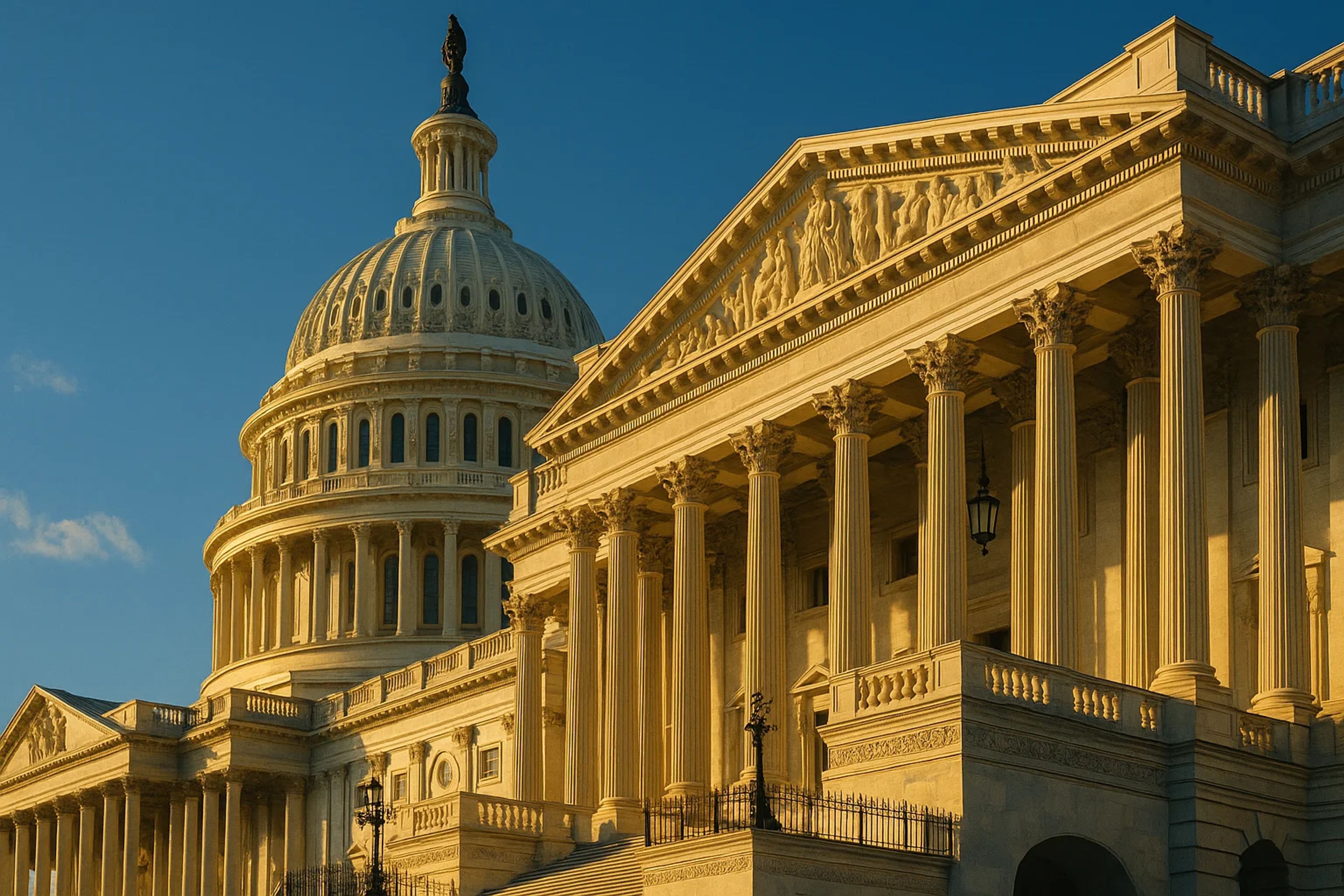
Crypto spent $13M lobbying in H1 2026, but the Clarity Act still stalled in the Senate
Disclosures tie about $8M to the market-structure bill, pushing the next catalyst toward SEC and CFTC rulemaking.
Crypto firms and trade groups spent more than $13 million on U.S. federal lobbying in the first half of 2026, with about $8 million explicitly tied in disclosures to the Digital Asset Market Clarity Act. The bill still failed to advance in the U.S. Senate, shifting near-term market-structure catalysts away from legislation and toward SEC and CFTC rulemaking.
Crypto’s $13M Lobbying Tab Meets a Senate Wall on the Clarity Act
The crypto industry’s H1 2026 lobbying spend cleared $13 million in federal disclosures. About $8 million of that total was explicitly linked to pushing the Digital Asset Market Clarity Act, a market-structure bill intended to clarify how U.S. digital asset markets are overseen.
The immediate problem for traders pricing “regulatory clarity” as a catalyst is that the money did not translate into a Senate win. A Senate vote on the Clarity Act took place in September, and the effort failed to move the bill forward. Even optimistic observers were not confident the bill would get another clean shot in the brief end-of-year lame duck session.
That mismatch matters because market-structure legislation is the cleanest way to compress enforcement risk across venues and tokens. When the legislative path stalls, the center of gravity shifts back to agency action, where timelines are less predictable and outcomes can be narrower, more technical, and easier to challenge.
Where the Clarity Money Went: In-House Teams, Trade Groups, and 42 Outside Shops
Inside the $8 million Clarity-linked push, disclosures break the spend into three buckets. About $2.4 million went to third-party lobbying firms. About $2.1 million supported trade association lobbyists. The remainder funded in-house influence operations at crypto companies.
Coinbase was the largest single spender in the period, with about $2.2 million in lobbying that included Clarity Act advocacy. Kraken spent almost $1 million. Other major spenders tied to the bill included Digital Currency Group, Jump Crypto, and Paradigm.
Coinbase’s spend also stands out outside crypto. Its lobbying outlay was large enough to place it in the top ten of the overall securities and investment lobbying category, per OpenSecrets.org, ranking above Goldman Sachs Group Inc. and Andreessen Horowitz. For public-market traders, that reinforces COIN as the most direct corporate proxy for U.S. policy exposure in the sector.
The execution risk is in the fragmentation. Crypto-related lobbying money was distributed across at least 42 outside lobbying shops in the first six months of 2026, on top of trade groups and in-house teams. Checkmate Government Relations took in about $1.8 million in crypto-related money in H1 2026, with most of that coming from Binance. Sternhell Group took in $660,000 from digital-asset names in the same period, and three of its four most lucrative lobbying clients were from crypto.
The disclosures also leave a measurement gap. The remaining $5.4 million in H1 2026 lobbying spend was not explicitly linked to Clarity in filings, and some of it may still have supported the same market-structure push under broad labels like “issues relating to cryptocurrency” or “financial services.” That ambiguity makes it harder to tell whether the industry actually pivoted, or just changed the language it used to describe the same work.
Lame Duck Odds and the Pivot Toward SEC/CFTC Rulemaking
With the Senate path uncertain, industry messaging is already shifting toward regulators. Blockchain Association Chief Policy Officer Lindsay Fraser said, “Following this month’s Senate vote on Clarity, we’re taking stock of where things stand and making sure our time and resources line up with our members’ priorities,” including “deepening our work with the SEC and CFTC.”
Coinbase framed the legislative push as setup rather than failure. Coinbase spokesperson Julia Krieger said, “We’re proud of what Coinbase’s in-house team and outside advisers achieved,” adding the effort “helped bring comprehensive, bipartisan market structure legislation to the brink of passage, and laid the groundwork for regulatory action,” now progressing at the Securities and Exchange Commission and the Commodity Futures Trading Commission.
The counterpoint is coordination. Corey Frayer, director of investor protection at the Consumer Federation of America and a former SEC official, said he saw “very big internal infighting and a lack of unification among the industry on significant policy decisions in the bill.” If that diagnosis is right, the same fragmentation that complicated a single bill could also complicate agency engagement, where comment letters, meetings, and technical proposals need to converge into a coherent ask.
The next signals are concrete. Any move to reintroduce Clarity or schedule renewed consideration in the 2026 lame duck session would reset legislative odds. Absent that, the actionable catalyst becomes public SEC and CFTC prioritization on crypto market-structure rulemaking, especially after industry groups explicitly signaled deeper agency work. H2 2026 lobbying disclosures will also matter for positioning, showing whether Clarity-linked language persists or spending rotates toward other issues like tax, AML and illicit finance, or GENIUS Act implementation.
My Take: The Trade Is on Regulatory Pathways, Not Lobbying Headlines
The threshold that matters is not the $13 million headline. It is whether the industry can turn a stalled Senate vote into a narrower, faster regulatory win at the SEC or CFTC that actually changes enforcement and listing risk.
If Clarity does not reappear with real scheduling momentum in lame duck, “passage soon” is a low-probability catalyst and the market will keep discounting it. What would make this lobbying wave matter in practical terms is a visible agency rulemaking agenda that pulls market structure out of case-by-case enforcement and into written standards.


