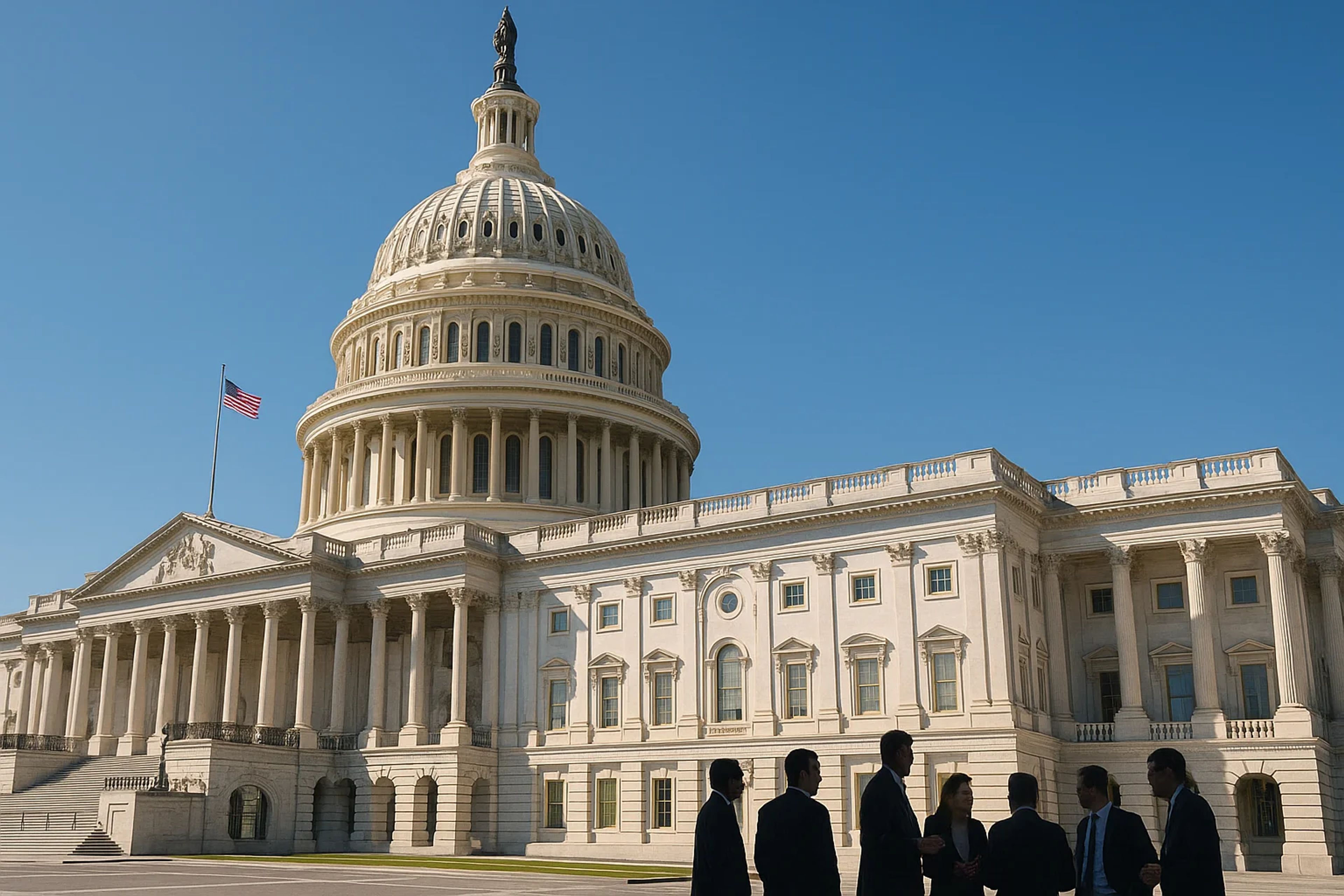
Fidelity urges Senate to pass CLARITY Act as ethics dispute clouds 60-vote path
Republicans released updated bill text this week, but some Democrats say the ethics language still falls short.
Fidelity publicly called on the US Senate to pass the CLARITY Act, adding major traditional-finance weight to a market-structure bill backed by crypto trade groups and industry leaders. The legislation still faces a 60-vote hurdle in a Senate where ethics provisions have become a key point of Democratic resistance.
Key Takeaways
- Fidelity called for Senate passage of the CLARITY Act, arguing clearer digital-asset rules would boost investor confidence, market certainty, and US competitiveness.
- The CLARITY Act is a US digital-asset market-structure bill that requires 60 votes to pass the Senate.
- Updated bill text was released by Republicans on Wednesday, while some Democrats said the ethics provisions do not go far enough to address corruption concerns.
- A coordinated lobbying push has formed around the bill, including pressure for a floor vote from major crypto trade groups and Coinbase CEO Brian Armstrong.
Fidelity Joins the CLARITY Act Push in the Senate
Fidelity urged the US Senate on Friday to pass the CLARITY Act, framing the bill as a needed step toward clearer digital-asset rules. The firm said “clear digital asset regulations are needed to strengthen investor confidence, provide certainty for market participants and reinforce US leadership in global crypto markets.”
For market structure, the messenger matters. Fidelity is not a niche crypto-native operator trying to reduce enforcement risk. It is ranked as the world’s third-largest asset manager by the Sovereign Wealth Fund Institute and reported $7.1 trillion in managed assets in its 2025 annual report. That scale turns a policy statement into a signal that large traditional asset managers are willing to advocate publicly, not just lobby quietly.
CLARITY Act Basics: A US Market-Structure Framework With a 60-Vote Hurdle
The CLARITY Act is described as digital-asset market-structure legislation intended to establish a US regulatory framework for digital assets. In practice, market-structure bills are where the real plumbing gets defined, including who oversees what, how assets are categorized, and what obligations apply to intermediaries.
The immediate constraint is procedural. The bill needs 60 votes to pass the Senate. With Republicans holding a 52-47 majority as described in the source material, the math forces bipartisan buy-in. That makes Democratic concerns the practical bottleneck, even if the majority party is aligned on moving the bill.
Updated Text, Ethics Objections, and the Senate Vote Math
Republicans released updated CLARITY Act text on Wednesday, but the source material does not specify what changed. That missing detail matters because the same update cycle is now colliding with a clear objection: some Democrats argued the bill’s ethics provisions do not go far enough to address corruption concerns.
This is the gate for traders watching regulatory catalysts. A 60-vote threshold means a handful of senators can turn ethics language into a hard stop, regardless of broader industry support. Without clarity on what revisions are on the table, it is difficult to handicap timing beyond one point: the bill’s path likely runs through an ethics compromise, not through intra-party vote wrangling.
Signals to Watch for Fidelity urges Senate to pass CLARITY
The first tell is whether Senate leadership schedules a CLARITY Act floor vote and attaches an actual date. A schedule would confirm that the same-week lobbying push is translating into procedural movement.
The second is whether the bill’s ethics provisions get revised again after Democratic criticism. Any public change there is effectively a live read on whether leadership believes the votes exist.
Third, watch for public whip-count signals, including named senators committing support or opposition, that indicate whether the bill can approach the 60-vote threshold.
Finally, additional statements from other large asset managers or major US financial institutions would matter. Fidelity’s intervention is notable because of its size, and copycat alignment would suggest the push is becoming institutional rather than purely industry-led.
Why Fidelity’s $7.1T Megaphone Matters—But the Ethics Fight Is the Gate
Fidelity stepping out front changes the optics and potentially the urgency. When a $7.1 trillion manager argues that clearer rules strengthen confidence and market certainty, it gives senators political cover to treat market structure as a mainstream financial-market issue rather than a niche crypto carve-out.
The threshold that matters is still 60 votes. If the ethics language remains a credible Democratic objection, the setup looks more like a sentiment catalyst than a fundamental shift. If the ethics fight gets resolved in a way that produces visible bipartisan commitments, the CLARITY push starts to look structural rather than narrative-driven, with real implications for how US-facing venues price compliance risk.


