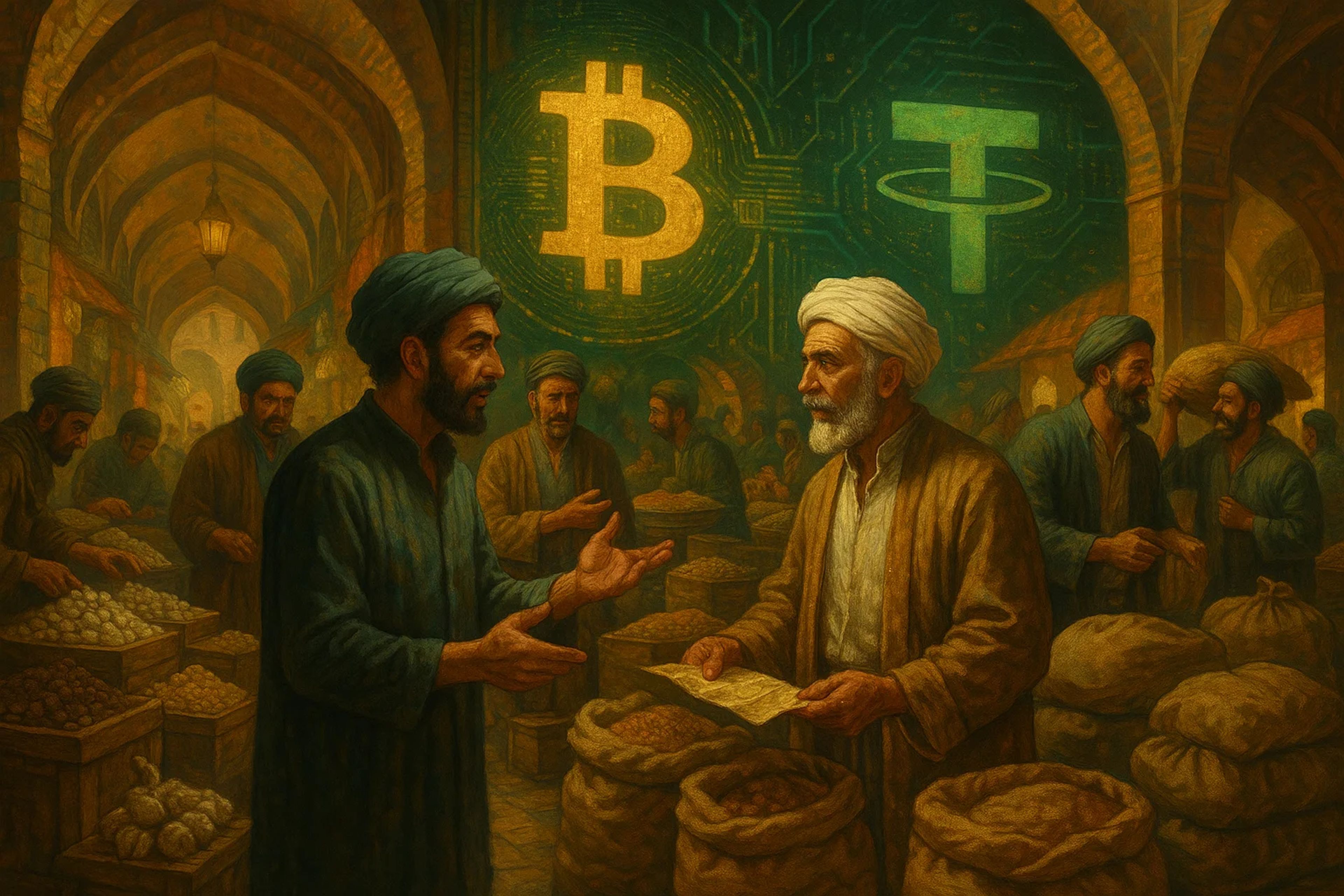
Iran’s central bank reportedly eases FX rules and routes trade settlement via USDT and BTC
The shift lands as the US sanctions four Iranian crypto exchanges and cites $1B seized plus $130M+ frozen.
Iran’s central bank has reportedly eased foreign-currency controls so exporters can finance imports with overseas earnings without first converting through the state platform at official rates. The same report describes USDT and BTC being used to settle cross-border transactions through Iranian cryptocurrency exchanges as US enforcement pressure intensifies.
Iran’s Reported FX Rule Change Puts USDT and BTC in the Trade-Settlement Loop
The reported change is mechanical, not ideological. Exporters can reportedly fund imports directly with overseas earnings without first selling foreign currency through the government’s exchange platform at official rates.
That matters because it reduces forced interaction with the official conversion channel. If exporters can keep value offshore and still clear imports, the settlement rail becomes the product. The report explicitly places Tether’s USDt (USDT) and Bitcoin (BTC) inside that loop, describing cross-border transactions settled through Iranian cryptocurrency exchanges.
The catch is documentation. The policy details are described in a report, and no primary regulation, circular, or implementation guidance is provided in the packet. Iran’s central bank did not respond to a request for comment in connection with the report, leaving traders with an operational claim but no confirmed legal text, start date, or named venues.
Sanctions Pressure Is Rising: Exchange Designations, Seizures, and Wallet Freezes
The timing is the tell. The reported FX easing lands after a run of US actions that target both intermediaries and assets tied to Iran-linked crypto activity.
In early June, the US Treasury sanctioned four Iranian crypto exchanges as part of its “Economic Fury” campaign. Days before those sanctions, Treasury Secretary Scott Bessent said the US had seized “about $1 billion” in Iranian crypto assets.
The enforcement posture did not stop at designations. On July 14, Bessent said US authorities directed a freeze of “more than $130 million” in crypto held in wallets linked to Iran’s central bank.
For market participants outside Iran, the signal is less about incremental spot demand for BTC or USDT and more about counterparty and venue risk. When messaging pairs sanctions with seizure and freeze actions, the second-order effect is compliance tightening. Exchanges, market makers, and stablecoin rails tend to de-risk first and ask questions later, especially when wallet attribution is part of the public narrative.
What Traders Can and Can’t Infer From the CoinEx Flow Claims
One data point in the packet is large and disputed. In June, TRM Labs reported more than $3.8 billion in flows between CoinEx and sanctioned Iranian entities over more than seven years.
CoinEx rejected the framing. The exchange denied any commercial relationship with the Iranian government or domestic Iranian exchanges and said it never provided funding channels to sanctioned parties.
Traders should treat that gap as unresolved rather than tradable certainty. The packet does not provide the underlying methodology, the entity list, or the wallet clusters behind the flow estimate, and it does not identify which Iranian exchanges are allegedly being used for USDT/BTC settlement.
The practical monitoring points are straightforward. Confirmation would look like primary documentation detailing the FX-control change and whether crypto settlement is formally authorized, plus follow-on identification of specific Iranian venues and whether USDT/BTC settlement volumes are material rather than anecdotal. On the enforcement side, the next escalation would be additional US Treasury actions beyond the four sanctioned exchanges, including new designations, advisories, or named wallet clusters tied to Iran’s central bank. Updates to third-party tracing reports and any further public responses from exchanges named in those reports will also move the risk picture.
My Take: This Is a Sanctions-Rail Story More Than a ‘Crypto Adoption’ Story
The threshold that matters is not whether Iran “uses crypto.” It is whether the reported FX change is implemented in a way that structurally reduces reliance on the official conversion channel, because that is what makes USDT/BTC settlement operational rather than incidental.
If US enforcement keeps pairing designations with asset actions, the setup starts to look like a venue-risk problem for any route alleged to intermediate Iran-linked flows, not a demand catalyst for majors. This matters in practical terms only if named venues and measurable settlement volumes emerge alongside enforceable policy text.


