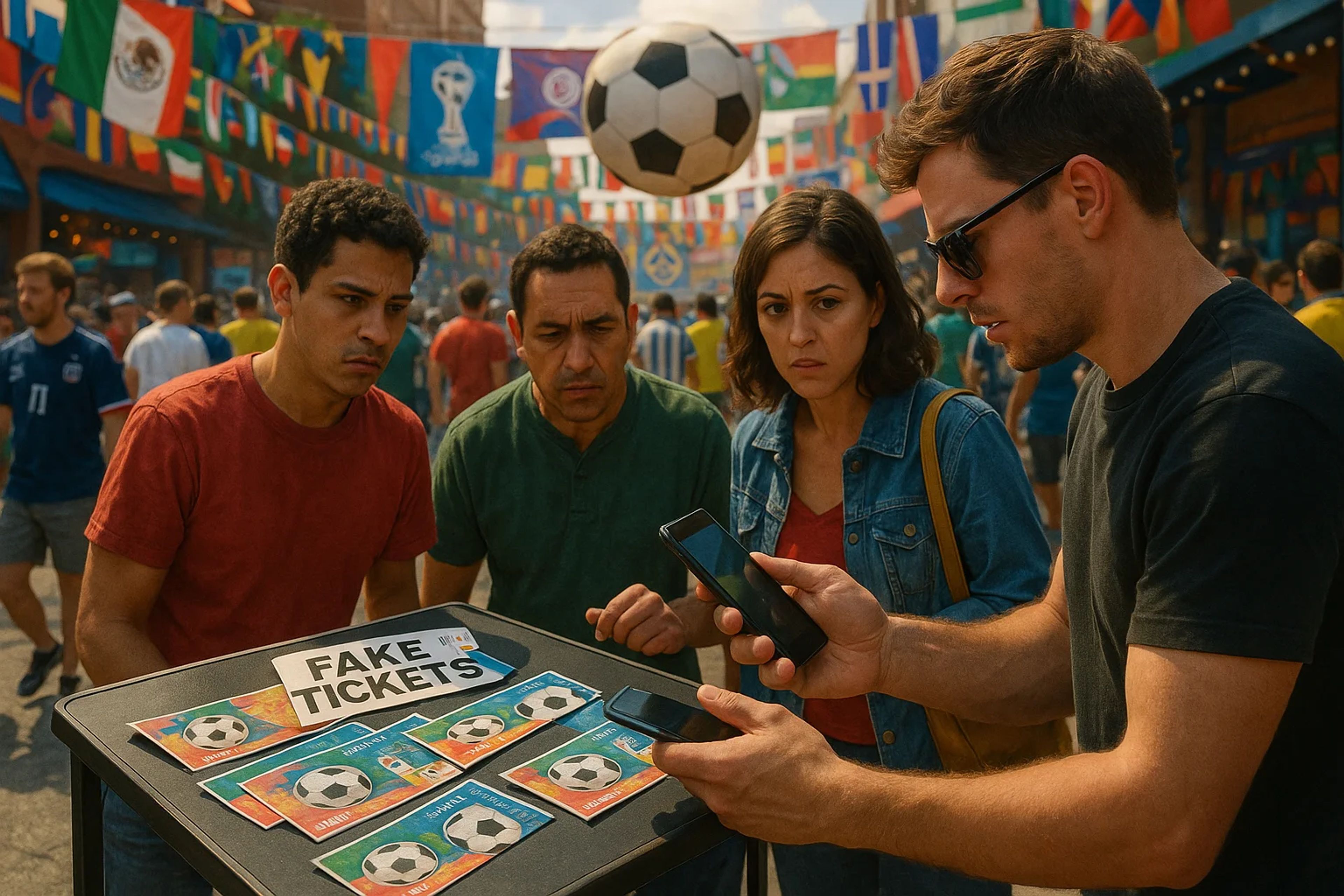
TRM Labs ties World Cup-themed scams to four crypto addresses as 2026 tournament opens
The firm flagged fake ticketing sites and a fixed-match betting pitch as FIFA and the FBI warned about spoofed domains and unofficial sales.
TRM Labs said it identified multiple 2026 FIFA World Cup-themed fraud operations, including two fake-ticketing sites and one fixed-match betting pitch, tied to four crypto addresses. The warning landed as the tournament opened across Canada, Mexico, and the United States and as FIFA and the FBI reiterated alerts on ticket fraud and spoofed web properties.
Key Takeaways
- Multiple World Cup-themed scam operations were linked to four crypto addresses, including two fake-ticketing sites and a fixed-match betting pitch.
- The fraud playbook centers on fake ticket checkout flows, “guaranteed picks” betting pitches, and event-branded crypto promotions designed to capture payments during peak attention.
- A May FBI alert warned threat actors were spoofing FIFA web properties to harvest personal data and sell fake tickets and products.
- FIFA said tickets purchased outside its official website may be fraudulent and can be deemed invalid and canceled without notice.
TRM Links World Cup Scam Campaigns to Four Crypto Addresses
TRM Labs said it identified several 2026 FIFA World Cup-related scam operations and tied them to four crypto addresses. The set included two fake-ticketing sites and one fixed-match betting pitch, giving investigators and compliance teams concrete onchain identifiers to track rather than treating the threat as generic phishing noise.
Ari Redbord, TRM Labs’ global head of policy, framed the timing as predictable. “Criminals always look to exploit major events and cultural moments and they don’t wait until kickoff,” he said. “Scammers build and position their infrastructure weeks in advance, then scale it the moment public attention peaks.”
Redbord also pointed to the onchain nature of crypto payments as the operational edge. When payments route through public blockchains, exchanges and investigators can trace flows and potentially act earlier in the cycle, before losses compound.
How the Scam Funnel Works: Fake Tickets, Fixed-Match Pitches, and Event-Themed Crypto Promos
TRM’s warning described a familiar event-driven funnel with a World Cup wrapper. Fake ticketing sites mimic legitimate purchase paths to push victims into sending crypto, while fixed-match schemes sell the illusion of inside information by offering “guaranteed” outcomes for a fee. The third leg is broader event-themed crypto promotions that ride social attention and direct users toward payment requests or wallet addresses.
The second-order risk for markets is less about a single token and more about liquidity and compliance responses. When a cluster of addresses becomes associated with fraud, screening tightens, deposits get delayed, and counterparties become more selective. That can create short-lived dislocations in flows around exchanges and stablecoin rails even if the underlying scam volumes are not disclosed.
FBI and FIFA Warnings Raise the Stakes on Spoofed Domains and Unofficial Ticket Sales
The FBI warned in May that threat actors were spoofing FIFA websites ahead of the tournament to collect personal information, sell fake tickets and products, and potentially conduct other malicious activity. A spoofed domain is a lookalike web address designed to impersonate an official site and trick users into sharing data or making payments.
FIFA separately warned that tickets purchased outside its official website may expose buyers to fraud. It also said tickets obtained through unofficial channels may be deemed invalid and subject to cancellation without notice.
The overlap between the FBI’s spoofed domains and the specific operations TRM linked to four crypto addresses was not detailed in the available information. The operators behind the campaigns and the total funds received by the addresses were also not disclosed.
Signals to Monitor as Tournament Attention Peaks
The next actionable datapoint is whether the four TRM-linked addresses, or related clusters, are published by TRM, exchanges, or law enforcement in a form that enables broad screening. Without that, the market is left with a general warning rather than a reusable compliance artifact.
Traders should also expect more official advisories as demand spikes around marquee matches, especially if spoofed domains proliferate. On the social layer, watch for bursts of World Cup-themed token promotions or “guaranteed picks” betting pitches that route payments to crypto addresses.
The enforcement tell will be whether exchanges or stablecoin issuers move to freeze or blacklist addresses tied to World Cup-themed fraud. That is where narrative turns into measurable friction in settlement and liquidity.
Event-Driven Scam Cycles Create Tradable Risk Around Wallet Flows and Social Hype
I treat this as a catalyst-window story, not a new structural threat. Redbord’s point about scammers pre-positioning infrastructure weeks ahead matters because it implies the heaviest activity often arrives after the first wave of attention, when users get complacent and links spread faster than verification.
The threshold that matters is whether the four-address linkage becomes operationalized through published indicators and enforcement actions. If that happens, the setup starts to look structural rather than narrative-driven because it can directly change how funds move through exchanges and stablecoin rails during the tournament’s highest-volume moments.


