Trump expected at White House meeting with CFTC Innovation Advisory CEOs
The sit-down is planned ahead of the CFTC committee’s inaugural Thursday session on crypto market structure and clarity.
People briefed on planning said President Donald Trump is expected to attend a White House meeting next week with CEOs tied to the CFTC’s new Innovation Advisory Committee. The gathering is positioned as a prelude to the committee’s inaugural Thursday meeting, where crypto market-structure and regulatory clarity are on the agenda.
People briefed on planning said President Donald Trump is planning to attend a White House innovation meeting next week with a roster of CEOs spanning crypto, prediction markets, and AI.
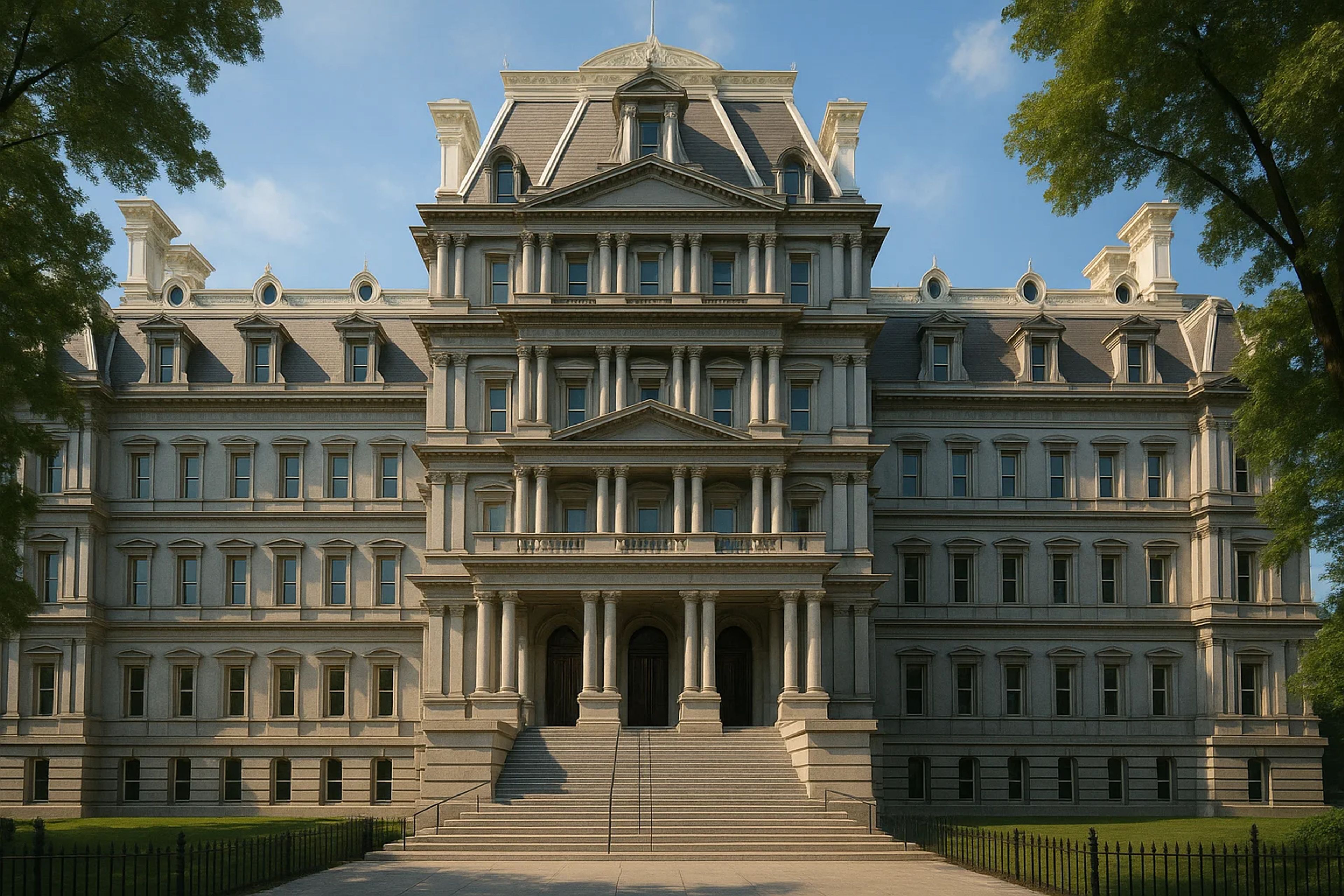
The meeting is expected to take place Wednesday at the Eisenhower Executive Office Building, next door to the White House, and is described as a prelude to the Commodity Futures Trading Commission’s new Innovation Advisory Committee inaugural meeting on Thursday afternoon.
On the industry side, CEOs from Coinbase, Ripple, Gemini, Robinhood, Polymarket, and Kalshi are members of the new CFTC advisory committee and are expected to be part of the broader two-day sequence. The roster for the Wednesday sit-down is also expected to include CFTC Chairman Mike Selig and other advisers.
Two parts remain unconfirmed in the packet. White House spokespeople did not immediately respond to requests for comment on the plans, and Trump’s attendance is described as expected by people briefed on planning rather than officially confirmed. Treasury Secretary Scott Bessent and Commerce Secretary Howard Lutnick are described as possible attendees, not confirmed.
Why This Two-Day Sequence Matters for U.S. Crypto Market Structure
The setup is simple. A White House room on Wednesday, then a CFTC room on Thursday. That compresses headline risk into a tight window where confirmation, cancellation, or even a change in attendee mix can move sentiment around U.S.-facing venues.
The CFTC matters here because it is the federal regulator for U.S. derivatives markets and sits closest to crypto’s regulated futures and related market plumbing. The Innovation Advisory Committee is not a rulemaking body, but it is a venue where the regulator and industry leaders can align on what “market structure” should mean in practice, including how trading venues, brokers, clearing, and settlement fit together.
The attendee mix points to that plumbing focus. Alongside crypto and prediction-market CEOs, the committee membership includes leaders from CME Group, Nasdaq, and Intercontinental Exchange, plus DTCC head Frank La Salle. That is not a roster built only for token taxonomy debates. It is a roster that can talk about how products get listed, how risk is cleared, and where oversight lands when the same underlying exposure trades across venues.
For traders, the near-term relevance is less about immediate rule changes and more about narrative drift around U.S. regulatory direction. A coordinated message can tighten perceived policy risk premia for U.S.-linked platforms. A messy one can do the opposite, especially with the Clarity Act debate sitting in the background.
Thursday’s CFTC Agenda and the Clarity Act Backdrop
The Thursday afternoon CFTC meeting is scheduled to open with a session titled “Crypto’s Regulatory Evolution: From Uncertainty to Clarity.” Suggested topics include “the remaining challenges to a durable federal market structure.” Those are broad words, but they are the right words if the goal is to frame what a federal architecture would look like rather than to litigate one-off enforcement outcomes.
The nearer-term catalyst is not the agenda title. It is whether anyone puts timelines, sequencing, or concrete proposals on the record. The packet does not specify what deliverables, if any, the committee will produce from its inaugural session.
The legislative constraint is clearer. The White House and Trump are described as being mired in debate over advancing the Digital Asset Market Clarity Act through final votes in the U.S. Senate, and further action may depend on whether Trump accepts tighter ethics restrictions governing his personal involvement in the crypto industry.
That linkage matters because it can turn “pro-innovation” messaging into a non-event if the gating item is political and personal rather than technical. It also creates a second-order risk: even a constructive market-structure conversation can be overshadowed if ethics restrictions become the headline.
The next signals are straightforward. First, any official confirmation or denial of Trump’s attendance and the final attendee list for the Wednesday meeting at or near the Eisenhower Executive Office Building. Second, whether Bessent and Lutnick ultimately attend, which would read as a proxy for how coordinated the administration’s market-structure push is across agencies. Third, what comes out of Thursday’s inaugural session, especially any concrete references to “durable federal market structure” proposals or timelines. Fourth, any public movement on the Clarity Act’s path to final Senate votes, including whether ethics restrictions tied to Trump’s personal crypto involvement are addressed directly.
My Read: Headline Risk Rises, but Policy Signal Depends on What Gets Said on Thursday
The threshold that matters is confirmation. If Trump’s appearance is formally locked in, the market gets a clean two-day catalyst window where the first tradable move may be the attendee list itself.
The real test is whether Thursday produces anything more specific than “clarity” language. If the committee conversation stays at the slogan level while the Clarity Act remains gated by ethics restrictions, this looks more like a sentiment catalyst than a structural shift, and the practical impact will be limited to short-term repricing of U.S. policy risk rather than a change in how products reach U.S. markets.


